

Tucker Carlson claims Netanyahu seeks US nuclear action against Iran
Political commentator Tucker Carlson has alleged that Israeli leadership is pressuring the incoming Trump administration to initiate a nuclear strike on Iran.
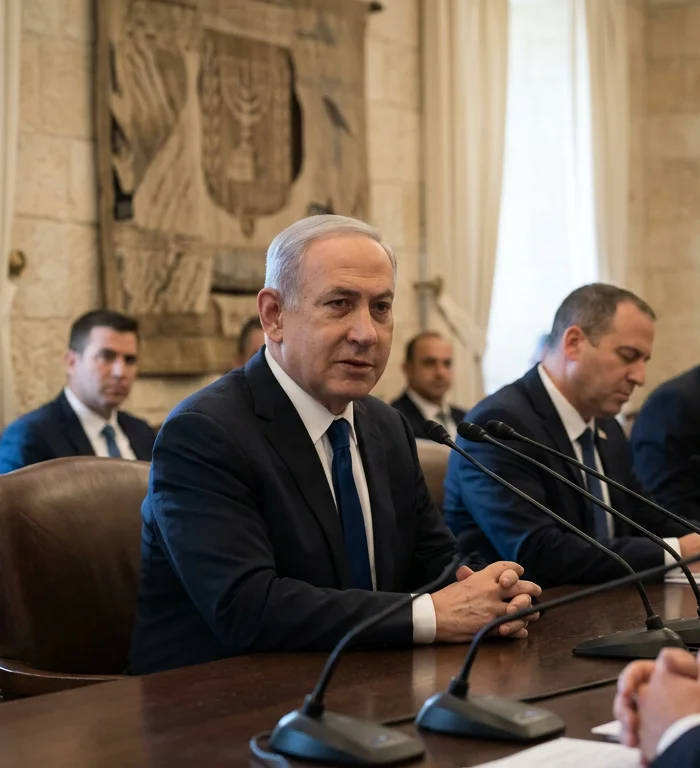
Unverified claims emerge regarding transition policy
Tucker Carlson, a prominent political commentator, has alleged that Israeli Prime Minister Benjamin Netanyahu is attempting to influence the incoming Trump administration toward authorizing a nuclear strike against Iran. The claims, which appeared in commentary circulated via regional media channels, suggest an effort to shift US military posture during the current presidential transition period.
The assertions have circulated rapidly through regional security circles, heightening geopolitical anxiety across the Middle East. No official transition team members or representatives of the Israeli government have confirmed the substance of these claims, which remain entirely speculative.
Regional security and nuclear doctrine
The status of Iran’s nuclear program has been a focal point of regional instability since the 2018 withdrawal from the Joint Comprehensive Plan of Action (JCPOA). Iran has since steadily increased its uranium enrichment levels, with the International Atomic Energy Agency reporting stocks reaching 60% purity, a level nearing weapons-grade capability.
Israel has historically maintained a doctrine of preventing Iran from achieving nuclear breakout capability, often referring to these thresholds as red lines. The lack of active diplomatic architecture between Washington and Tehran has increased reliance on intermediary channels, primarily through Oman and Qatar, to prevent miscalculation during periods of heightened tension.
Macroeconomic and security implications
Any move toward kinetic escalation in the region poses a severe risk to global energy markets. The Strait of Hormuz, which hosts approximately 20% of the world’s total oil consumption, remains the primary maritime chokepoint for crude exports from the Gulf. Previous surges in geopolitical friction have historically led to immediate spikes in Brent crude futures as market participants price in supply-chain disruptions.
Tucker Carlson
Beyond energy, the stability of Gulf Cooperation Council states relies on managing the friction between the US, Israel, and Iran. A shift in US policy toward direct confrontation would likely force regional partners to navigate competing security guarantees, potentially triggering capital flight and delaying large-scale infrastructure investment across the Gulf.
Monitoring the transition signal
The primary indicator of US policy direction will be the official stance taken by the incoming administration regarding its Iran strategy and the future of International Atomic Energy Agency inspection access. Markets and diplomatic observers are watching for whether the transition team prioritizes a return to regional containment via established diplomatic channels or adopts a more assertive stance toward Iranian infrastructure.
More stories
- Germans oppose Ukraine aid as poll shows support slipping
- Kim Jong-un receives 10 envoys after constitutional shift
- Ukraine claims Libya strike sinks Russian naval corvette
- COP31 climate talks collapse over fossil fuels and funds
- Russian military faces 1,087 recorded suicides in Ukraine war
- US faces China, Russia in Africa minerals contest
- Nigeria state police plan wins 30 assembly endorsements
- Nigerian banks lift prime rates in 8 sectors despite CBN cuts
- Six Black Sea ship attacks reach Romanian waters
- Israel condemns West Bank attack on European delegation
Latest news
- Trump prepares tariffs on China and other major exporters
- New-car buyers pay record average $50,087 in October
- Banks face ECB reserve debate over liquidity and profits
- Investors see Anthropic debut gains fade below $83 a share
- Iraq orders federal control over Kurdish-area oilfields
- Nvidia shares retreat as AI rally cools before PCE data
- Macy’s parade faces balloon limits as storm winds approach