

Trump transition advisory board demands faster aid delivery into Gaza
The informal group, signaling early foreign policy priorities, labels current Israeli humanitarian efforts insufficient as winter flooding worsens conditions.
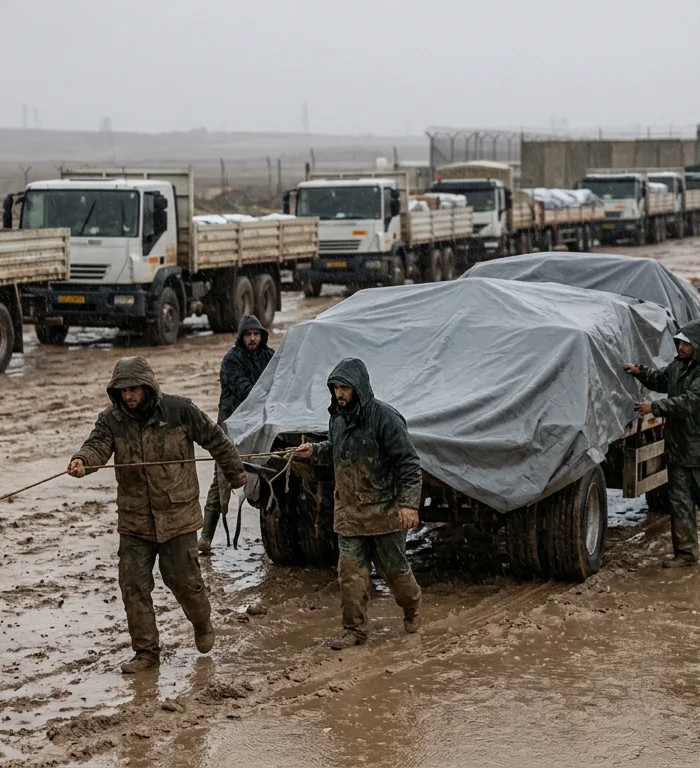
Advisory group pressures aid transit
A transition advisory group established by President Trump to address Middle East policy has issued a formal assessment labeling current Israeli humanitarian aid access to Gaza as inadequate. The group, known as the Board of Peace, stated that while it acknowledges the initial steps taken by the Israeli government, the current rate of supply entry remains insufficient to meet the region's needs.
The assessment comes as severe winter flooding has devastated infrastructure across the Gaza Strip, complicating an already constrained aid distribution network. The advisory board’s intervention serves as a departure from traditional diplomatic channels, signaling that the incoming administration may prioritize direct pressure on regional actors regarding humanitarian access before taking office in January.
Complex shifts in regional diplomacy
The establishment of this advisory board represents a transition-era strategy to influence policy through informal networks rather than solely relying on the Department of State. Observers suggest this structure allows the incoming administration to exert influence on the Netanyahu government while testing the limits of policy conditionality regarding military and diplomatic support.
Tensions between the Biden administration and Israel have centered on the logistical constraints of aid delivery, a point the Board of Peace now targets as a primary concern. By focusing on humanitarian metrics, the board effectively bridges domestic political demands with the operational realities of the conflict, creating a new layer of friction for regional stakeholders to navigate.
Global implications for aid logistics
The effectiveness of this pressure remains a critical question for international aid organizations attempting to navigate the humanitarian corridor. Any shift in how aid enters Gaza has immediate consequences for the stability of the regional supply chain and influences the broader diplomatic environment surrounding the conflict.
President Trump
Furthermore, the board’s public stance introduces a secondary mechanism for accountability that acts independently of the incumbent government.
If the transition team persists with this demand for improved access, it could alter the bargaining power held by the Israeli government in upcoming negotiations with U.S. representatives.
Conditional path for policy change
The primary uncertainty lies in whether these statements reflect a temporary strategy or the foundation of future policy conditions. The efficacy of the board’s pressure will likely be measured by whether the Israeli government adjusts its existing aid passage protocols prior to the formal inauguration on January 20, 2025.
More stories
- Germans oppose Ukraine aid as poll shows support slipping
- Kim Jong-un receives 10 envoys after constitutional shift
- Ukraine claims Libya strike sinks Russian naval corvette
- COP31 climate talks collapse over fossil fuels and funds
- Russian military faces 1,087 recorded suicides in Ukraine war
- US faces China, Russia in Africa minerals contest
- Syria rejects Yemen role after 600-troop Saudi border report
- Pangilinan questions Davao assessor on 379 sqm SALN lot
- Burnham faces Brexit test over 55% EU return support
- Swedish agency opened 50 cases tied to Microsoft datacentres
Latest news
- Trump prepares tariffs on China and other major exporters
- New-car buyers pay record average $50,087 in October
- Banks face ECB reserve debate over liquidity and profits
- Investors see Anthropic debut gains fade below $83 a share
- Iraq orders federal control over Kurdish-area oilfields
- Nvidia shares retreat as AI rally cools before PCE data
- Macy’s parade faces balloon limits as storm winds approach