

Trilateral Nuclear Arms Control Negotiations Face Significant Diplomatic Hurdles
President Trump is seeking a trilateral nuclear arms control agreement with China and Russia, though significant geopolitical tensions and policy…
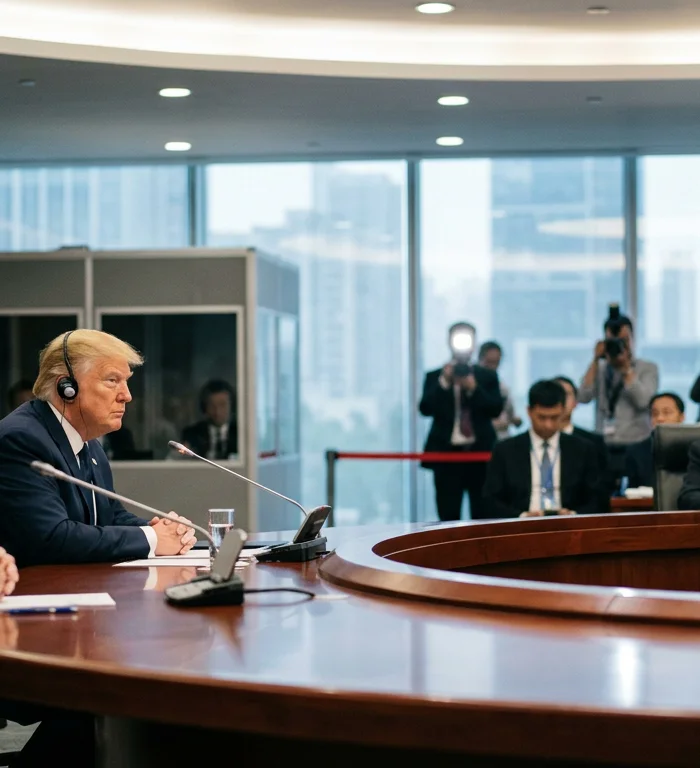
President Donald Trump is pursuing a trilateral nuclear arms control framework involving China and Russia during a summit in Shenzhen. Despite the administration’s focus on nonproliferation, both Beijing and Moscow have signaled limited interest in formalizing new limitations on their respective nuclear arsenals. The U.S. objective remains the inclusion of China in a binding agreement, a departure from the traditional bilateral structure of previous treaties.
Russia’s current status remains a primary obstacle to formal negotiations, following its 2022 suspension of the New START treaty and the subsequent cessation of site inspections. While Russia has committed to maintaining existing arsenal limits through February 2026, the lack of verification mechanisms complicates the security environment. Concurrently, China maintains that arms control should remain a bilateral issue between the U.S. and Russia, citing the significant disparity in warhead counts between the three nations.
Pentagon estimates indicate China currently possesses approximately 600 nuclear warheads, with projections suggesting a potential increase to 1,000 by 2030. This expansion, coupled with recent shows of force—including U.S. intercontinental ballistic missile testing and Russian strategic bomber deployments—underscores the volatility of the current security landscape. The administration acknowledges that the transition from bilateral to trilateral frameworks will require extensive negotiation and may not yield immediate results.
Diplomatic efforts are currently focused on establishing a baseline for nuclear risk reduction. Analysts suggest that while a comprehensive disarmament treaty is unlikely in the near term, the meeting may serve as a catalyst for future formal discussions. The primary goal for stakeholders remains the prevention of an escalatory arms race and the potential reaffirmation of the principle that nuclear conflict is unwinnable. Future progress will depend on whether the three powers can align on basic stability measures despite divergent strategic interests.
More stories
- Germans oppose Ukraine aid as poll shows support slipping
- Kim Jong-un receives 10 envoys after constitutional shift
- Ukraine claims Libya strike sinks Russian naval corvette
- COP31 climate talks collapse over fossil fuels and funds
- Russian military faces 1,087 recorded suicides in Ukraine war
- US faces China, Russia in Africa minerals contest
- Russian man faces 15 years over alleged Palantir spying
- BN-PN takes 24 of 28 Melaka seats
- Iran crisis prompts UAE call for a diplomatic resolution
- Russian state-affiliated media raise UK posts 15% in September
Latest news
- Trump prepares tariffs on China and other major exporters
- New-car buyers pay record average $50,087 in October
- Banks face ECB reserve debate over liquidity and profits
- Investors see Anthropic debut gains fade below $83 a share
- Iraq orders federal control over Kurdish-area oilfields
- Nvidia shares retreat as AI rally cools before PCE data
- Macy’s parade faces balloon limits as storm winds approach