

Township wards trail suburbs in South Africa’s 52% local-election turnout
National participation recovered from 2021, but Gauteng data show affluent suburban wards voting at far higher rates than townships.
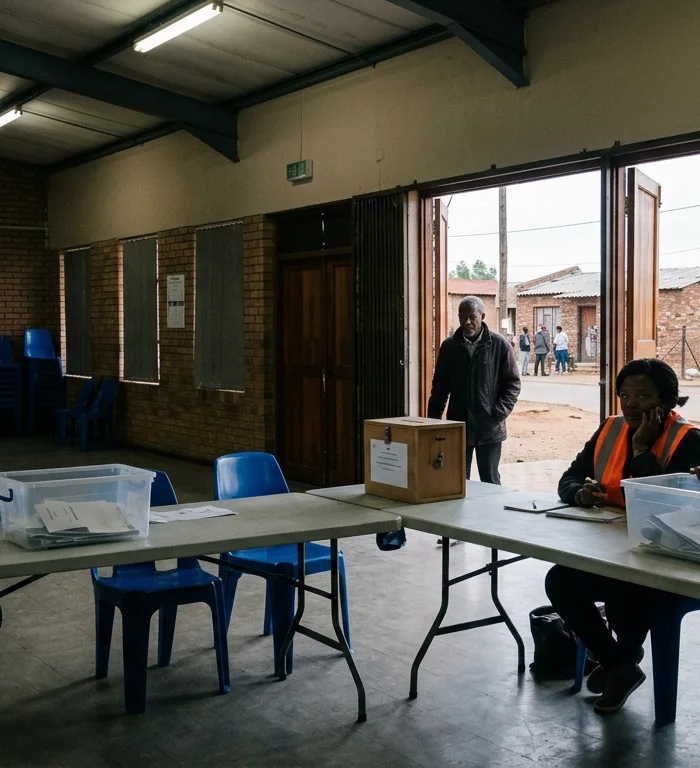
South Africa’s Independent Electoral Commission confirmed on Nov. 8 that 15.9 million people voted in the 2026 local elections, a 52% registered-voter turnout, Daily Maverick reported in a Nov. 10 news article.
The figure marked a rebound from 45.86% in 2021, when Covid-19 affected participation, but it remained below the 57.95% recorded in the 2016 local elections.
Daily Maverick reported that turnout improved across provinces compared with 2021. Its election data showed national turnout at 52.3%, with the Northern Cape highest at 57.7% and Limpopo lowest at 48.3%.
Elections analyst Wayne Sussman told Daily Maverick that the result reversed part of a longer decline. “We’re back over the 50% mark. Turnout in South Africa has been on a downward trajectory in the last two national elections, the last two local elections, and here in this election we see that turnout grows by a number of percentage points, well back above the 50% mark,” he said.
The broader electorate picture was weaker. Daily Maverick cited Ipsos as estimating 44.9 million South Africans were eligible to vote, while IEC figures showed 29.23 million registered voters, or 65.1% of the eligible population. About 35.4% of eligible voters cast ballots.
The turnout gap was sharp in Gauteng, according to data from the Gauteng City-Region Observatory cited by Daily Maverick. Ward 85 in Tshwane’s eastern suburbs, including Willow Park Manor, De Wilgers and Equestria, recorded turnout of 73.31%.
By contrast, Ward 24, which includes Devland, Eldorado Park, Naturena, Power Park, Diepkloof and Pimville, recorded 44% turnout. Soweto wards averaged about 50%, up from 40% in 2021, while northern Johannesburg suburbs averaged above 60%.
Graeme Gotz, research director at the Gauteng City-Region Observatory, told Daily Maverick the divide also appeared in the 2021 local government elections. He said the difference was “significant” but difficult to explain with certainty.
“We know from our own Quality of Life Survey data that township residents see local government as less important than national and provincial government, and are also less satisfied with municipal governance than their suburban counterparts. So apathy and disaffection may drive lower interest in these areas,” Gotz said.
Daily Maverick reported that turnout averaged 70% in the wealthier Tshwane areas of Centurion and Pretoria East. The IEC declared the 2026 local-election results on Nov. 8.
More stories
- Monrovia mayor-designate seeks $14.5m city budget
- Iran's attacks hit 25 tankers near Strait of Hormuz
- Russia strikes Ukraine as Odesa faces electricity strain
- Bahrain reports two injuries after Iranian aerial attacks
- Baltic responders fight Sparta II fire after drone strike
- Estonia to close 5 Russia road crossings for six months
- Royal Navy expands 10-country drone plan after Russian activity rises 41%
- Megaspeed faces US scrutiny over $3bn asset jump
- Iran threatens Gulf infrastructure if air strikes resume
- Enterprise Singapore urges firms into China niches
Latest news
- Nvidia board gets Trump input on Jensen Huang return as CEO
- Rwanda faces budget strain from 85% electricity access push
- ICE arrests at Seattle airport draw protests and scrutiny
- AI doubts leave Asian stocks facing a new investment test
- EU rejects COP31 deal as fossil fuel divisions block pact
- Deal Sheet: Fortis shutdown costs over 400 jobs
- Germany to pay about $11 a month into child pension accounts
- Laura Brand curbs prison messages after YouTube dispute