

New Computational Method Accelerates Development of Room-Temperature Quantum Computing Materials
Researchers have developed a faster method to identify diamond-based quantum materials, enabling room-temperature qubits with diverse optical properties.
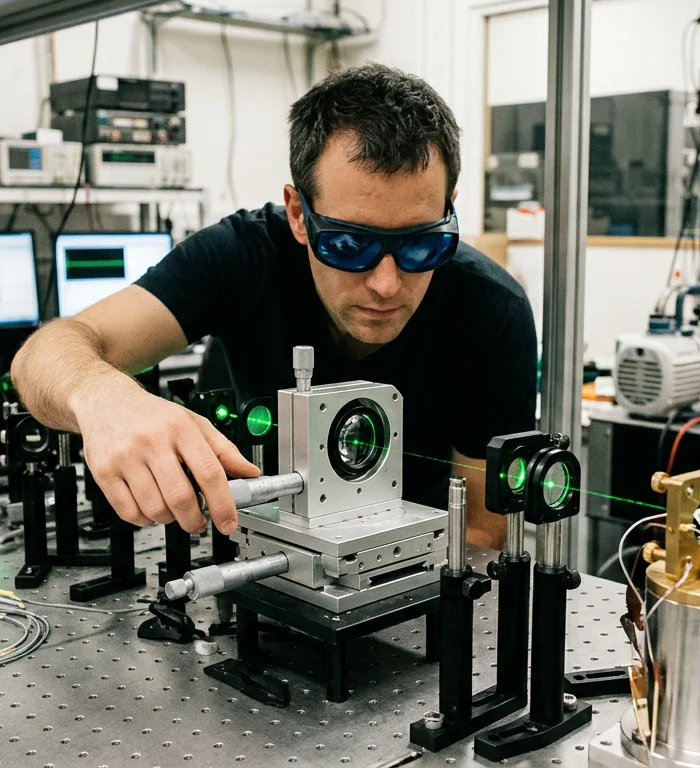
A new computational technique has been developed to identify diamond-based materials suitable for quantum computing and sensing applications. By treating atomic defects within diamond crystals as individual molecules rather than simulating entire crystal structures, researchers can now evaluate potential quantum building blocks with significantly reduced computational requirements.
This method addresses a primary bottleneck in quantum technology development: the high resource cost of modeling materials that maintain stable quantum states at room temperature. Traditional approaches required massive computational power to simulate large crystal lattices, whereas this new approach isolates small clusters of 16 to 30 atoms, allowing for rapid analysis of quantum properties.
The research has identified new candidates for qubits, including defects involving boron and oxygen. These materials exhibit distinct optical responses—emitting blue or ultraviolet light—which differ from the red light emitted by traditional nitrogen-vacancy centers. The ability to utilize multiple types of qubits within a single device, each responding to different light frequencies, offers a pathway for more complex and addressable quantum architectures.
This shift toward applying chemical modeling techniques to quantum physics research is expected to accelerate the discovery of materials capable of operating outside of extreme cryogenic environments. Such advancements are critical for the development of next-generation sensors and high-performance computing systems that exceed the capabilities of current supercomputers. The findings indicate a transition toward engineering specific quantum defects, potentially shortening the development lifecycle for practical quantum hardware.
More stories
- Europe faces attribution gap after 16 cyber, physical incidents
- PIF backs Grand Theft Auto as Saudi players embrace game
- Signal limits screenshots to curb AI access to messages
- Cognition runs Devin Mac workspaces on EC2 in 6 AWS regions
- Salesforce engineers cut 600-failure triage to 90 minutes
- Türkiye Desk: GTA 6 puts console access and network demand in focus
- Groq funding resets startup value after Nvidia talent deal
- Colorado River reservoirs hit records as drought deepens
Latest news
- Trump prepares tariffs on China and other major exporters
- New-car buyers pay record average $50,087 in October
- Banks face ECB reserve debate over liquidity and profits
- Investors see Anthropic debut gains fade below $83 a share
- Iraq orders federal control over Kurdish-area oilfields
- Germans oppose Ukraine aid as poll shows support slipping
- Kim Jong-un receives 10 envoys after constitutional shift
- Ukraine claims Libya strike sinks Russian naval corvette