The Hormuz Premium: How Rising War Risks Are Quietly Putting Billions Back Into Iran's Economy
Rising Gulf tensions boost global oil prices, increasing Iran’s export revenue. Discover how this paradox turns economic pressure into leverage.
Omar Farouk ·
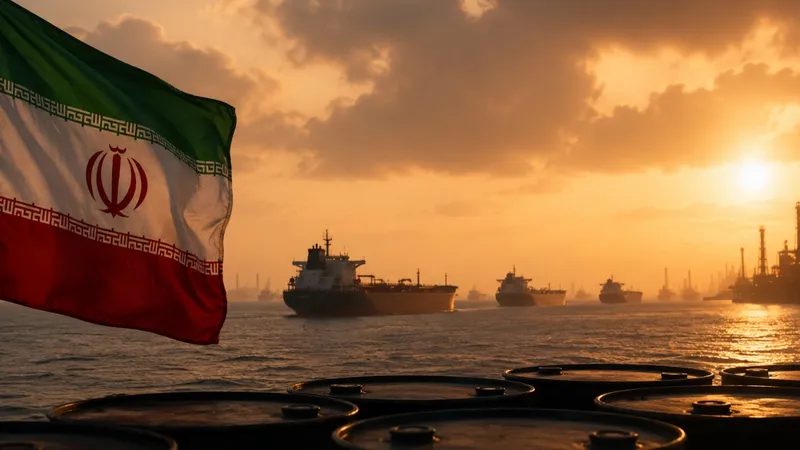
The latest Gulf crisis has produced a paradox that energy traders understand better than politicians: efforts to pressure Iran can also make Iran’s remaining oil more valuable. The Strait of Hormuz is not just a military flashpoint. It is one of the world’s most important pricing mechanisms. Roughly one-fifth of global oil consumption moves through the waterway, meaning even limited tension can quickly raise crude prices, insurance costs, tanker rates and inflation expectations across global markets.
Iran does not directly profit when marine insurers charge higher war-risk premiums or when tanker owners demand more expensive charter rates. Those payments mostly go to insurers, shipowners and freight intermediaries. But Tehran benefits from the broader repricing of risk. When the Gulf becomes more dangerous, oil becomes more expensive. And when oil becomes more expensive, every barrel Iran manages to export under sanctions is worth more.
That is where the real money is. Iran is estimated to export roughly 1.4 million to 1.8 million barrels of crude and condensate per day, mostly to China. At an export level of about 1.6 million barrels per day, every $10 increase in crude prices can add nearly $5.8 billion in gross annual revenue. Even a short two-month risk premium can be meaningful: a $10 per barrel increase sustained for 60 days would be worth close to $1 billion in additional gross revenue before discounts, sanctions leakage and payment costs.
The Real Money in Oil Prices
This is why the shipping-cost story is less important than the oil-price story. Higher tanker insurance does not become an Iranian tax. But it helps create the conditions for a higher global oil price. In market terms, Iran is not collecting the toll booth revenue. It is benefiting from the fear premium embedded in the commodity.
The timing matters. Iran’s sanctioned oil trade has become far more resilient than many Western policymakers expected. Chinese independent refiners have continued buying Iranian crude through shadow-fleet tankers, ship-to-ship transfers, disguised cargo origins and non-dollar payment systems. These mechanisms are inefficient, but they work well enough to keep Iranian crude moving. Once global supply anxiety rises, buyers become more willing to tolerate compliance risk, logistical complexity and political exposure in order to secure discounted barrels.
Higher prices can also narrow the practical discount Iran must offer to keep buyers interested. In normal conditions, sanctioned Iranian crude often trades below Brent because buyers demand compensation for legal, financial and logistical risk. But in a tighter market, that discount can shrink. Even recovering a few dollars per barrel in lost discount value can generate hundreds of millions of dollars over a short period.
A Political Dividend with Economic Costs
There is also a political dividend. External confrontation often strengthens authoritarian governments in the short run by allowing them to redirect public anger toward foreign threats. Iran’s economy remains weak, inflation remains punishing, and public frustration is real. But during a national security crisis, the regime can frame domestic dissent as disunity, elevate the role of the security establishment and consolidate hardline narratives.
None of this means conflict is an economic win for Iran overall. The costs are serious. Military spending rises. Infrastructure becomes more vulnerable. Foreign investment remains frozen. The currency comes under pressure. Insurance and shipping costs also hurt Iranian trade. If the Strait of Hormuz were actually closed for a prolonged period, Iran would damage its own export lifeline.
The point is narrower but important: Iran can benefit from controlled instability. A crisis that raises oil prices without fully stopping Iranian exports can generate meaningful financial upside. Tehran’s ideal scenario is not total closure of Hormuz. It is enough danger to keep the market nervous, but not enough disruption to prevent Iranian barrels from reaching China.
That is the central paradox of the Gulf crisis. Washington may seek to weaken Tehran through pressure, but markets may reward Tehran through higher oil prices. Iran does not need to dominate global energy markets to benefit. It only needs to keep exporting while the world pays more for risk.
In the end, Iran’s windfall is not really a shipping windfall. It is a geopolitical risk premium. The more dangerous the Gulf appears, the more valuable Iranian crude becomes. And as long as the Strait of Hormuz remains one of the most important chokepoints in the global economy, Tehran will retain the ability to turn instability into leverage—and, at least temporarily, into cash.