

Thaksin University launches dolphin project across 60 communities
Songkhla Lake has an estimated 10 to 14 Irrawaddy dolphins left, making local income alternatives part of the conservation plan.
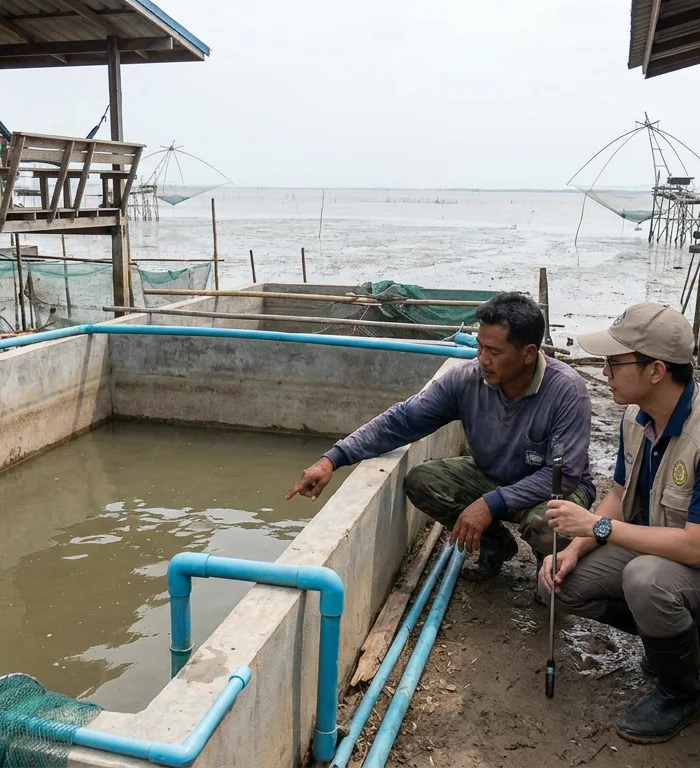
Thaksin University's Phatthalung campus joined partners in 2026 to launch an Irrawaddy dolphin initiative covering 60 fishing communities around Songkhla Lake, the Bangkok Post reported on Oct. 19.
Thaksin University's project puts income support into wildlife policy because the lake had an estimated 10 to 14 Irrawaddy dolphins remaining in 2026, far fewer than the 60 communities covered.
The programme spans 32 communities in Songkhla province and 28 in Phatthalung province. Partners include state agencies, the World Bank, businesses, civil-society groups and local fishing communities, according to the report.
Assoc Prof Naphatpong Chintanirat, president of Thaksin University, said dolphin protection cannot be separated from social and economic conditions around the lake. "The important concept is to move beyond seeing dolphins, people and the lake separately," he said.
Naphatpong said alternative work is central to reducing pressure on natural resources. "Creating alternative occupations from natural resources is not simply about increasing income," he said.
Fishing households around the lake depend on natural abundance, and the report said falling aquatic resources have made traditional occupations harder to sustain. The initiative is designed to make conservation compatible with the needs of residents who rely on the lake.
Assoc Prof Samak Kaewsuksa, the university's vice-president for research and innovation and project leader, said the programme uses university research, technology and innovation alongside community participation. Community Implementing Committees, local bodies that identify problems and design activities, are central to the model.
Communities are exploring recirculating aquaculture, laying-hen farming, rubber-thread bag weaving, coastal rice cultivation, preserved catfish production, hydroponic vegetable growing and stingless-bee farming. The report said diversified income sources could reduce household reliance on fishing while building on local skills and resources.
Chawanon Kalaya, a fisheries biologist at the Marine and Coastal Resources Research Centre under the Department of Marine and Coastal Resources, said local participation is essential for dolphin protection and sustainable livelihoods. "The initiative also seeks to connect community products with wider markets," he said.
The programme's central test is whether those activities can become viable sources of income. The Bangkok Post report did not give a budget, completion timeline or measured dolphin-population target for the initiative.
Thaksin University is also extending the effort to children and young people through the Songkhla Lagoon Gyotaku programme, which introduces lake ecosystems, biodiversity and Irrawaddy dolphins through creative activities. Participants use discarded fabric and old fishing equipment to produce artwork.
Chawanon said the broader aim is to connect wildlife protection with community welfare. "It is about building a shared future: the Irrawaddy dolphins can survive, the lake can endure and people can live well," he said.
Source: newspaper report, Bangkok Post, Oct. 19, 2026.
More stories
- Germans oppose Ukraine aid as poll shows support slipping
- Kim Jong-un receives 10 envoys after constitutional shift
- Ukraine claims Libya strike sinks Russian naval corvette
- COP31 climate talks collapse over fossil fuels and funds
- Russian military faces 1,087 recorded suicides in Ukraine war
- US faces China, Russia in Africa minerals contest
- French police arrest more than 1,800 after cost-of-living protests
- Godongwana faces 80% debt test in budget update
- Magyar puts Hungary's euro plans before first budget test
- Israeli settlers attack West Bank olive harvest, hurt two
Latest news
- Trump prepares tariffs on China and other major exporters
- New-car buyers pay record average $50,087 in October
- Banks face ECB reserve debate over liquidity and profits
- Investors see Anthropic debut gains fade below $83 a share
- Iraq orders federal control over Kurdish-area oilfields
- Nvidia shares retreat as AI rally cools before PCE data
- Macy’s parade faces balloon limits as storm winds approach