

Thailand cuts refining margin to lower fuel prices
The change targets charges tied to Singapore-based pricing and comes as Bangkok seeks relief for households and transport-heavy sectors.
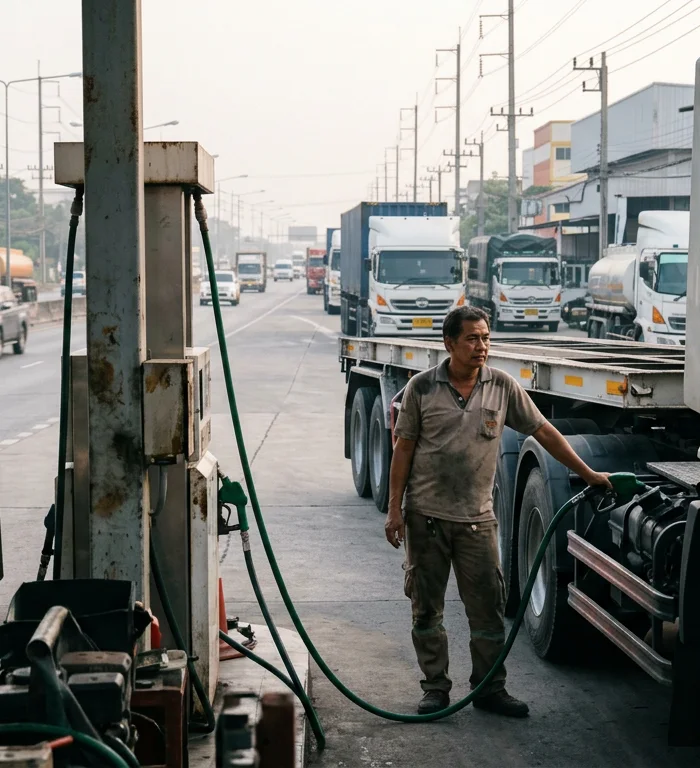
Thailand Energy Minister Akanat Promphan signed an order on Wednesday to cut gross refining margins after disputed oil-pricing costs burdened consumers by 10.8 billion baht a year, the Bangkok Post reported Oct. 29.
The Energy Ministry believes the charges add around 30 million baht a day to fuel prices and have inflated domestic oil costs by about 230 billion baht since their introduction, the newspaper reported.
Gross refining margin, the spread between refined-product values and crude input costs, is part of Thailand's domestic fuel-pricing structure. The ministry says the structure includes so-called "untrue costs," according to the report.
The disputed charges have been included in fuel prices through a formula based on Singapore refined-oil prices since 2004, plus freight, shipping fees, marine insurance, losses during sea transport, port charges and storage costs, the report said.
Akanat said the expenses are unjustified because Thailand produces enough refined oil for domestic consumption and does not actually import those fuel products from Singapore. "These costs are unfair to oil users," he said.
The new policy takes effect Thursday through the Energy Policy Administration Committee, the body responsible for implementing the change, Akanat said. The ministry is also advancing a wider restructuring targeting transport fees, insurance costs, handling losses and reserve expenses.
The Energy Policy Administration Committee has prepared implementation guidelines that have been reviewed by the Council of State and are ready for approval, the Bangkok Post reported. The reform is expected to generate savings of more than 10 billion baht a year, according to the report.
Retail effects are not yet fully specified. Akanat said discussions with the Oil Fuel Fund Office will determine which fuel products see reductions first, with diesel expected to be prioritized.
"Lower retail diesel prices should help reduce inflationary pressures throughout the supply chain," Akanat said. "Diesel is widely used for logistics, public transport and agriculture."
The Oil Fuel Fund currently carries a deficit of about 105 billion baht, the report said. Akanat said the revised pricing mechanism would reduce the need for government borrowing to support fuel prices.
The Bangkok Post report did not include a response from domestic refiners. Akanat said domestic refiners should share responsibility during economic hardship rather than benefit from windfall profits while consumers face rising costs.
The next operational step is for the Oil Fuel Fund Office to determine the first fuel products covered by the reductions.
Source: newspaper report, Bangkok Post, Oct. 29.
More stories
- Germans oppose Ukraine aid as poll shows support slipping
- Kim Jong-un receives 10 envoys after constitutional shift
- Ukraine claims Libya strike sinks Russian naval corvette
- COP31 climate talks collapse over fossil fuels and funds
- Russian military faces 1,087 recorded suicides in Ukraine war
- US faces China, Russia in Africa minerals contest
- Boakai seeks Liberia mining investment with $30m survey
- South Africa health department faces call on boys' HPV shots after 3.6M girls vaccinated
- Sudan teachers seek 20% budget share with 8m children outside school
- Spain rail network faces scrutiny after 64 killed near Toledo
Latest news
- Trump prepares tariffs on China and other major exporters
- New-car buyers pay record average $50,087 in October
- Banks face ECB reserve debate over liquidity and profits
- Investors see Anthropic debut gains fade below $83 a share
- Iraq orders federal control over Kurdish-area oilfields
- Nvidia shares retreat as AI rally cools before PCE data
- Macy’s parade faces balloon limits as storm winds approach