Tehran damage report counts 50,849 homes, 650 strikes in war
Tehran damage reached 50,849 homes and 650 reported strikes in a municipal account that places District 4 at the center of the capital's losses.
Omar Farouk ·
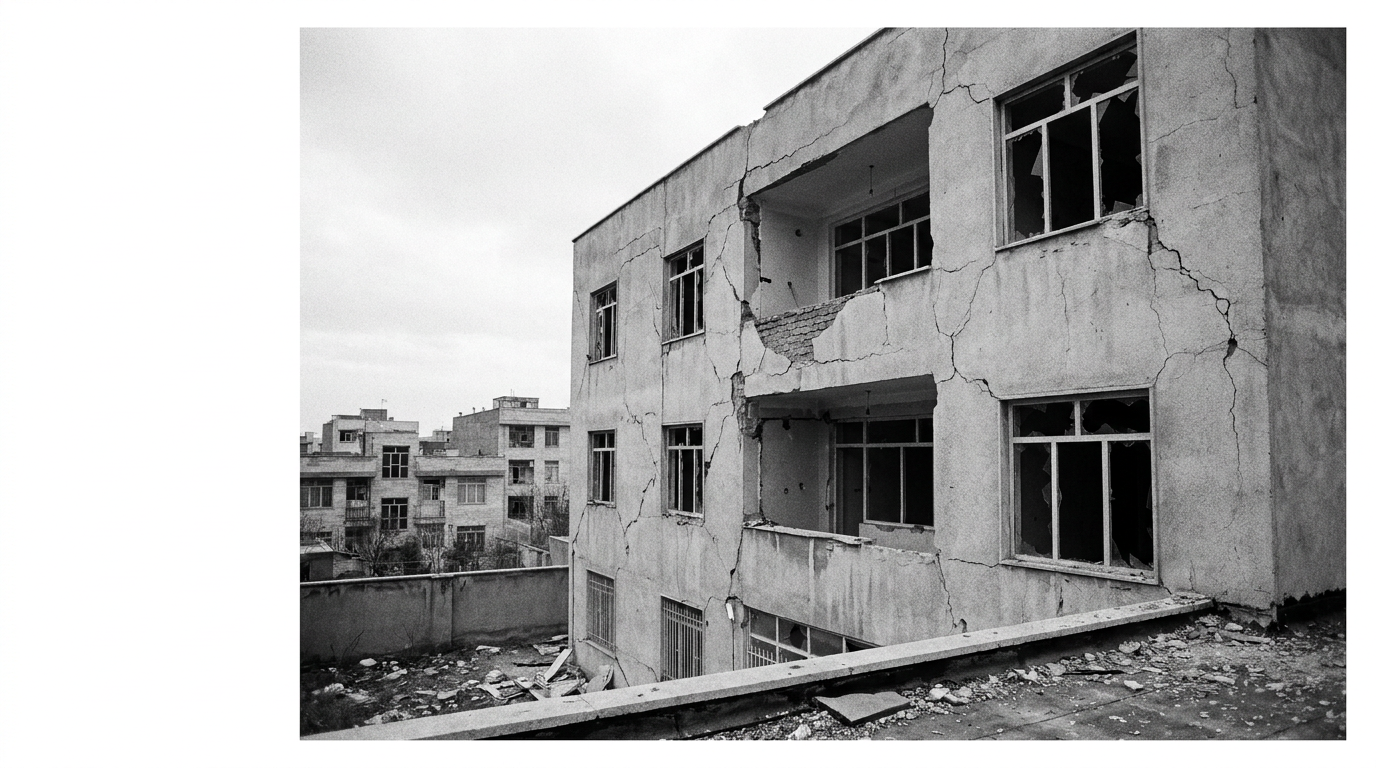
Tehran damage reached 50,849 homes and 650 reported strikes, a municipal report said, giving the clearest district-level account of the capital's losses.
The report, published on Monday by Tehran Municipality's Urban Planning and Architecture Department, was presented at a public event hosted by the University of Tehran's Faculty of Urban Planning. It describes the capital as the Iranian province that sustained the heaviest damage during the 40-day conflict with the US and Israel.
District 4 absorbs 90 strikes
District 4 in northeastern Tehran recorded the largest number of reported strikes, with 90 incidents, the municipality said. District 21 in western Tehran followed with 62, while District 1 in the north had 57 and District 22 in the northwest had 55.
The geographic spread matters because the figures point to damage across both dense residential areas and outlying districts. District 17 in southwestern Tehran was listed as the least affected area, with three reported strikes.
Hossein Nouhi, a certified construction expert in Tehran's municipality, said District 4 stood apart from other areas of the country. "The number of strikes in District 4 alone exceeded the combined total recorded in some provinces," he said during the University of Tehran event.
Housing losses span four categories
The municipality said 50,849 residential units in Tehran suffered some form of damage, ranging from broken windows and doors to complete destruction. About 40,000 homes were placed in the minor-repair category, making light repairs the largest share of the reported housing toll.
A smaller but more costly group of homes faced deeper architectural damage. The report counted about 8,900 homes in that category, along with 415 buildings that require structural reinforcement or reconstruction.
The most severe category covered 2,042 homes that the municipality said were completely destroyed and must be rebuilt. That distinction is central for recovery planning because rebuilding requires land access, engineering approval, materials and financing rather than short-term repair crews.
District 4 also led the count for damaged residential units, with 7,948 homes affected, according to the report. District 2 followed with 4,037, while District 15 had 3,490, District 11 had 3,432, District 21 had 3,205 and District 7 had 3,196.
Reconstruction hinges on verification
The municipal figures create a starting point for Tehran's recovery effort, but they do not settle the cost, timetable or funding source. The report gives physical counts of affected homes and strikes, while leaving open how claims will be verified and how priorities will be set among districts.
If the municipality's damage classifications hold through further inspections, the first phase of recovery is likely to focus on the roughly 40,000 homes needing minor work. That path would reduce immediate displacement pressures in Tehran, limit strain on local contractors and keep the wider construction sector focused on repairs rather than full replacement.
If engineers instead find more structural damage than the first municipal breakdown captured, the economic burden would shift toward heavier reconstruction. That would raise demand for materials, lengthen the return of residents to damaged districts and put greater pressure on city agencies responsible for permits, safety checks and housing support.
For the broader economy, the mechanism is direct rather than abstract: damaged housing pulls labor, cement, glass, steel and municipal capacity into recovery work. For Tehran Municipality, the next test is whether district-level data can be converted into funded projects; for the construction sector, the key question is whether repair demand stays manageable or turns into a longer rebuilding cycle.