

Syria blast kills two in Damascus countryside
Explosion in Damascus suburbs complicates Syrian government push for regional diplomatic and economic reintegration.
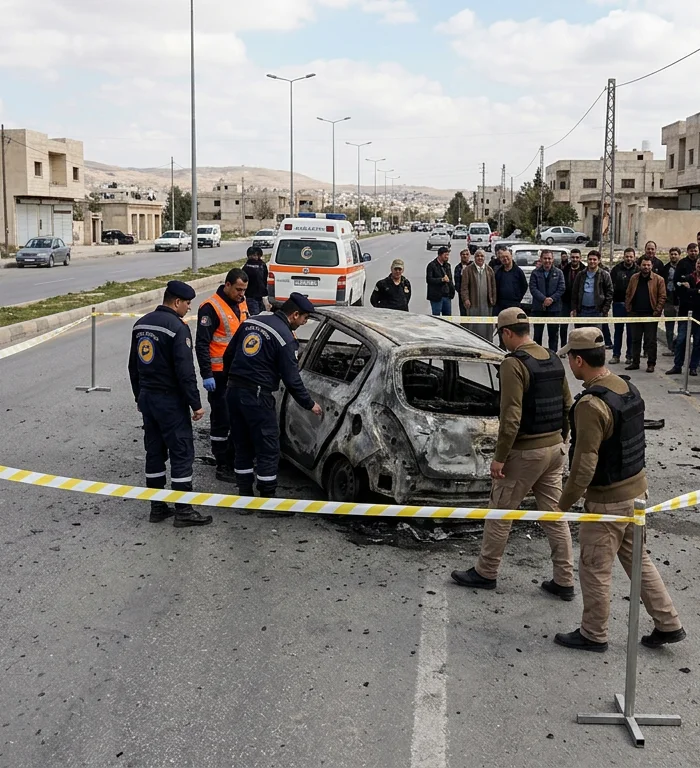
Security risks in Damascus
A bomb concealed in a vehicle detonated in the Damascus countryside on Friday, resulting in the deaths of two individuals and injuring one other, according to the Syrian Arab News Agency. The state-run outlet reported the attack as an intentional strike against a civilian target, though security services did not immediately identify a perpetrator.
Such incidents underscore the persistent security volatility that remains a feature of the Syrian landscape. While major frontlines have largely stabilized, the ability of insurgent groups or covert cells to execute localized attacks near the capital continues to challenge the state's mandate of territorial control.
The path to normalization
This explosion occurs as President Bashar al-Assad intensifies diplomatic efforts to solidify Syria’s return to regional forums. Since the Arab League reversed the country’s suspension in May 2023, Damascus has focused on normalizing ties with major Gulf powers, including Saudi Arabia and the United Arab Emirates.
Rebuilding the country's shattered infrastructure remains a central objective for the Syrian government. Officials in Damascus have argued that regional diplomatic rapprochement is a necessary precursor to attracting the external capital required to revitalize a national economy stunted by over a decade of conflict and international sanctions, including the U.S.-led Caesar Act.
Regional stakes and economic investment
The security environment in Syria now carries direct consequences for the pace of regional re-engagement. Gulf states remain wary of the potential for renewed instability to jeopardize long-term infrastructure investments, as the persistence of localized violence risks undermining the perceived viability of reconstruction projects.
For regional partners, the calculation involves balancing the desire for a stable, integrated Syria against the operational risks inherent in the country’s current security architecture. The reliance on centralized security apparatuses to manage these insurgent pockets remains the primary domestic mechanism through which the government attempts to reassure potential investors.
Future capital flows
Whether Gulf capital shifts from diplomatic warmth to concrete foreign direct investment into Syrian energy and infrastructure sectors remains the critical question. If high-level diplomatic outreach fails to result in measurable investment by the end of 2024, it will suggest that security risks continue to act as a primary barrier to meaningful economic rehabilitation regardless of political breakthroughs.
More stories
- Germans oppose Ukraine aid as poll shows support slipping
- Kim Jong-un receives 10 envoys after constitutional shift
- Ukraine claims Libya strike sinks Russian naval corvette
- COP31 climate talks collapse over fossil fuels and funds
- Russian military faces 1,087 recorded suicides in Ukraine war
- US faces China, Russia in Africa minerals contest
- French school protests cost exam pupils up to 150 class hours
- UN agencies seek aid for 30.3m facing DR Congo hunger
- Spanish workers stage first general strike in 14 years
- Singapore faces 400-post Indonesia disinformation push
Latest news
- Trump prepares tariffs on China and other major exporters
- New-car buyers pay record average $50,087 in October
- Banks face ECB reserve debate over liquidity and profits
- Investors see Anthropic debut gains fade below $83 a share
- Iraq orders federal control over Kurdish-area oilfields
- Nvidia shares retreat as AI rally cools before PCE data
- Macy’s parade faces balloon limits as storm winds approach