Sweden election leaves blocs short of control at 95% count
Sweden election results left rival blocs short of settled control, with 95% counted and coalition talks likely before any September 29 vote.
Claire Dubois ·
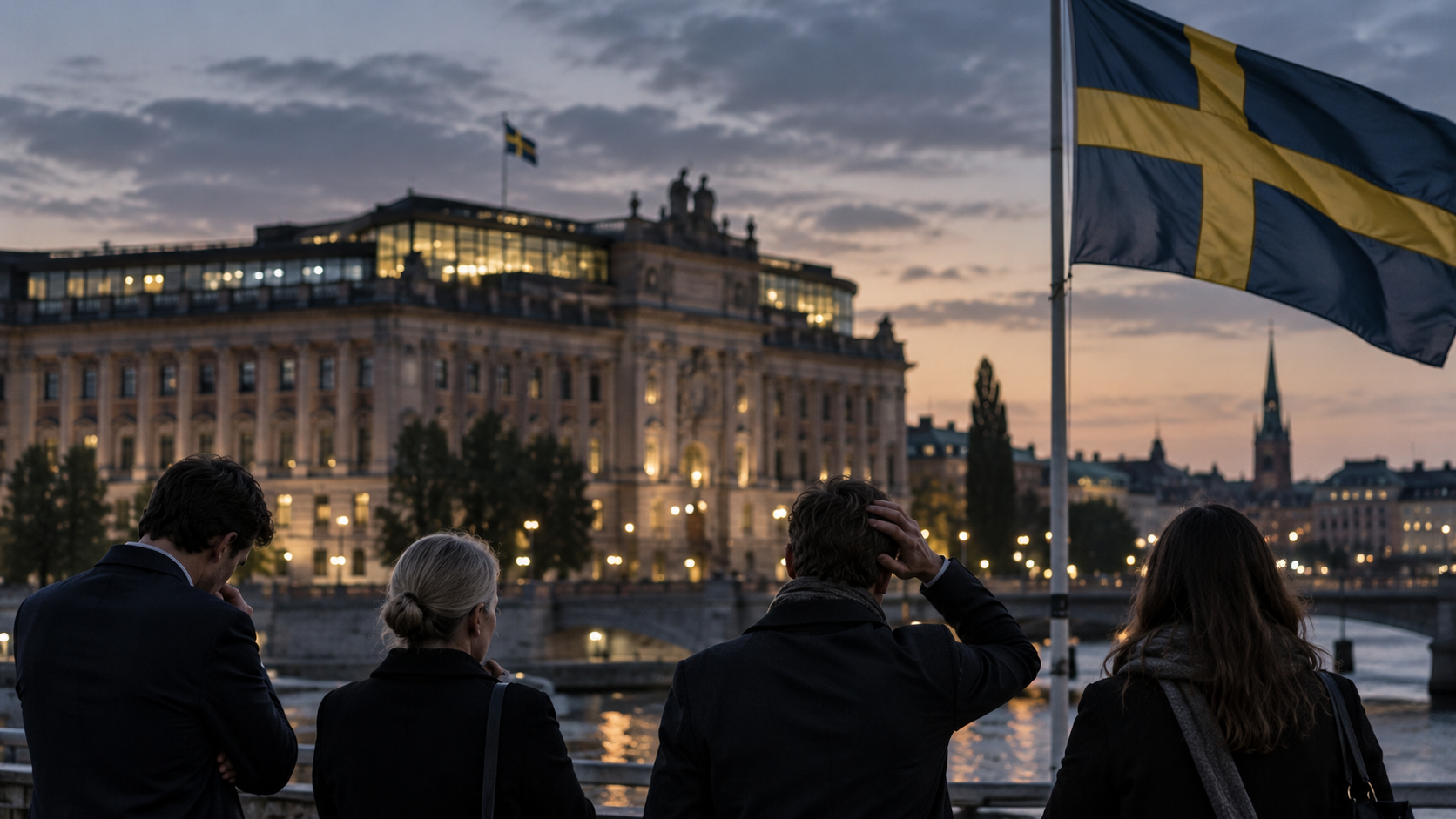
Sweden election leaves rival blocs chasing a majority after 95% of ballots are counted and the Sweden Democrats lose ground.
Three seats separate blocs
With 95% of votes counted Monday, the four opposition parties were ahead by three seats in the 349-seat Riksdag, according to the reported tally. That margin gives Social Democratic leader Magdalena Andersson a narrow opening, but not enough room to govern without partners.
Prime Minister Ulf Kristersson, whose right-wing alliance includes the anti-immigration Sweden Democrats, also said he wanted to test coalition options. Both leaders face talks in which smaller parties can demand policy concessions in exchange for supporting a government.
The Sweden Democrats suffered a rare electoral reverse, losing vote share for the first time since entering parliament 16 years ago. The decline matters because the party has been central to Kristersson’s governing arithmetic and to Sweden’s debate over migration and public security.
September 29 frames talks
Parliament can hold a vote on a new prime minister on September 29 at the earliest, leaving party leaders with roughly two weeks before the first formal test. The timetable may stretch if bloc leaders cannot secure enough support for a cabinet program.
Recent Swedish elections show how long such negotiations can run when the Riksdag is closely divided. After the 2022 national election, forming a government took 37 days, compared with 134 days after the 2018 vote.
Political analyst Mats Knutson of Sweden’s public broadcaster said the count could leave both sides in a "stalemate that paves the way for a long and troublesome process of forming a government, which could end in a snap election." He added that "One or several parties may have to abandon their 'red lines.'"
Sweden Democrats lose leverage
The left bloc’s advantage does not remove its internal constraints. Andersson’s Social Democrats would still need to align parties with different positions on taxation, welfare spending, climate policy and the terms for tolerating a minority cabinet.
Kristersson’s route is narrower after the Sweden Democrats’ setback, but the right bloc remains close enough to make the final count politically material. If late ballots trim the opposition edge, the prime minister could argue that his alliance still has a viable path to office.
For Swedish businesses, the immediate issue is not a single law but the length and shape of the bargaining. Banks, utilities, property firms and public contractors usually watch coalition talks for signals on fiscal policy, energy rules, housing measures and labor-market regulation.
Coalition paths narrow choices
If the left bloc’s three-seat edge holds through the final count, Andersson would enter talks with the strongest numerical claim to try to form a government. The macro effect would depend on the budget agreement that follows; Sweden’s influence in EU economic debates would be shaped by whether a cabinet can pass spending and migration measures without repeated parliamentary defeats.
If the count tightens or party red lines hold, Kristersson could seek to keep the right bloc together or Sweden could face another prolonged formation process. In that scenario, Sweden’s policy timetable would slow, companies exposed to regulation would face a longer wait for cabinet priorities, and the wider Nordic political sector would treat Sweden as another example of fragmented parliamentary arithmetic.