Spain and Argentina Reach the Same Final by Opposite Routes
Mehmet Şahinoğlu ·
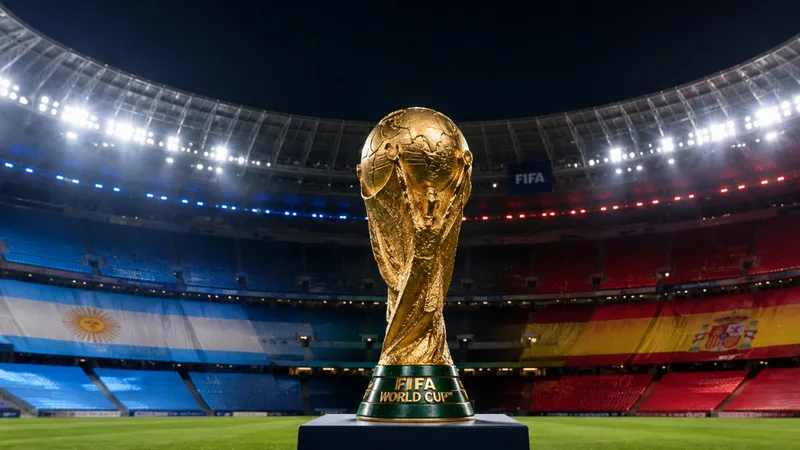
Spain and Argentina will contest the 2026 World Cup final on Sunday, July 19, at New York New Jersey Stadium in East Rutherford, with the tournament’s strongest defense facing its most productive attack. Spain has recorded six victories and one draw, scoring 13 times while allowing only one goal; Argentina has won all seven of its matches, scoring 19 and conceding seven. The difference makes Spain the more balanced side on paper, but Argentina has repeatedly shown that a match does not need to follow its preferred pattern for Lionel Scaloni’s team to win it. Opta’s latest model gives Spain a 56.05% chance of lifting the trophy, compared with 43.95% for Argentina—a meaningful edge, but hardly a verdict.
Spain Changes the Equation
The strongest argument for Spain is not merely that Luis de la Fuente’s team keeps the ball; it is that opponents have struggled to turn possession losses into clear chances. Spain followed a 2-1 quarterfinal victory over Belgium by shutting out France 2-0, adding another controlled performance to a 37-match unbeaten run that began after a March 2024 defeat by Colombia. Argentina’s route has been less orderly: the defending champions surrendered two goals to both Cape Verde and Egypt before recovering, then came from behind to eliminate England 2-1 in the semifinal. That contrast explains why Spain is favored, yet it also identifies Argentina’s advantage—the longer the score remains close, the more valuable its experience in unstable knockout matches becomes.
Rodri Tries to Box Messi
The final’s central tactical question is whether Spain can control Lionel Messi without weakening the structure that has protected its penalty area throughout the tournament. Rodri offers Spain a reliable first defender in midfield, but Messi rarely remains in one fixed zone: he can withdraw behind Argentina’s forwards, move toward the right or wait for a defender to step out before releasing a runner through the space that movement creates. Aymeric Laporte and Spain’s other central defenders therefore face a choice between following Messi and opening a channel behind them, or holding their positions and allowing him time to turn. FIFA identified Messi against Laporte and Rodri against Enzo Fernández among the individual contests likely to shape the match, recognition that the final may be determined by who controls the spaces around the stars rather than by direct one-on-one duels.
Yamal Stretches Argentina’s Left
Spain’s clearest attacking route should come through Lamine Yamal, whose positioning on the right can force Argentina’s left side into uncomfortable decisions. Nicolás Tagliafico may need close support whenever Yamal receives the ball facing forward, but sending a midfielder or winger toward the touchline would create more operating room for Dani Olmo, Pedri or another Spanish midfielder inside. Spain does not need Yamal to dominate every possession; it needs his threat to pull Argentina’s defensive block wider than Scaloni would prefer. Argentina can respond by attacking the area behind Spain’s advanced wide players, turning Yamal’s aggressive positioning into a transition opportunity, but that plan will require quicker and cleaner passing than most of Spain’s opponents have managed during the tournament.
Seven Wins Built on Recovery
Argentina’s perfect record conceals both its greatest vulnerability and its strongest competitive asset. Seven goals conceded indicate that Spain should generate opportunities, particularly if it can force Argentina to defend repeated switches of play and second balls around the penalty area; Argentina has already allowed more goals than Spain has scored in four of its seven matches. Yet Scaloni’s players have also developed a habit of surviving pressure without losing their attacking conviction, most recently scoring twice late against England after trailing in the semifinal. Spain is more likely to control territory and possession, but Argentina may be comfortable allowing that control when the alternative is an open exchange in which Yamal, Messi, Lautaro Martínez and Spain’s mobile midfielders can attack larger spaces.
Two Legacies Reach New Jersey
The result would carry consequences beyond a second trophy for Spain or a fourth for Argentina. Argentina is attempting to become the first men’s national team since Brazil in 1962 to retain the World Cup, which would strengthen Scaloni’s claim to have built an era rather than a single championship team around Messi. Spain, already the reigning European champion, can connect its 2010 breakthrough to a younger generation led by Yamal while confirming that its recent unbeaten sequence can withstand the pressure of a global final. The match also brings together the teams ranked first and second entering the tournament, giving the expanded 48-team competition a final between its two highest-rated nations rather than an outsider produced by the longer knockout bracket.
Spain Holds the Narrow Edge
Spain should win if it keeps Argentina’s transitions below a manageable level and avoids giving Messi repeated opportunities from central positions, making a 2-1 result after 90 minutes or extra time the most plausible forecast. Its defense has been more consistent, its midfield is better equipped to dictate long passages, and Argentina’s seven goals conceded suggest that pressure will eventually create an opening. The uncertainty lies in the conditions surrounding a one-match final: Argentina has already overturned difficult situations, Emiliano Martínez gives the defending champions an advantage if the contest reaches penalties, and Spain trained in northern New Jersey while wildfire smoke pushed local air quality into unhealthy ranges, though conditions were expected to improve by Sunday. Spain has the stronger underlying case, but Argentina possesses enough attacking quality and tournament experience to punish one poor clearance, one mistimed press or one moment of hesitation.