France vs. Morocco: The Rematch That Looks Familiar, Until You Watch Morocco Now
Mehmet Şahinoğlu ·
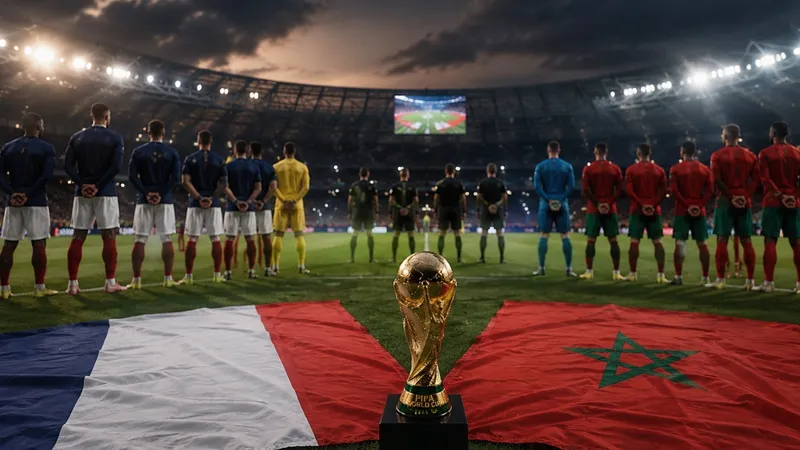
France and Morocco meet again with a World Cup semifinal place at stake, but this is not just a rerun of Qatar.
Four years ago, France ended Morocco’s historic World Cup run with a 2-0 semifinal win. This time, the stage is one round earlier, the setting is Boston, and the terms of the game are different. France remain the favorite, unbeaten through five matches at this tournament and chasing a third consecutive World Cup semifinal. Morocco arrive with less novelty than in 2022 but perhaps more permanence: another deep run, another knockout-stage statement, another reminder that their place among the last eight is no accident.
The winner will face Spain or Belgium in the semifinal, which gives this match a narrow tactical edge beyond the emotional storyline. France have the stronger squad and more ways to score. Morocco have the structure, confidence and transition threat to make this uncomfortable for long periods.
The form
France have won all five of their matches at the tournament. They topped Group I, beat Sweden 3-0 in the round of 32 and then needed a Kylian Mbappe penalty to get past Paraguay 1-0 in the round of 16. They have scored 13 goals so far, but the Paraguay match mattered because it showed a different side of Didier Deschamps’ team: less fluid, more patient, and still able to find a way through.
Morocco’s route has been less linear but equally impressive. They finished second in Group C, beat the Netherlands on penalties, then took apart co-host Canada 3-0 in the round of 16 after a much stronger second half. Azzedine Ounahi scored twice against Canada, and Soufiane Rahimi added the third in stoppage time.
The broader trend is important. Morocco are unbeaten in 10 matches since January, while France have won 11 of their past 12 competitive games. This is not a favorite against a romantic outsider. It is a favorite against a team that has learned how to live deep in tournaments.
Predicted lineups
France are expected to keep the same basic 4-2-3-1 structure. The main uncertainty is on the left side of the attack, where Desire Doue could start ahead of Bradley Barcola after winning the penalty against Paraguay. Manu Kone is also expected to continue in midfield if Aurelien Tchouameni is not ready after a thigh issue.
France predicted XI: Maignan; Kounde, Upamecano, Saliba, Digne; Rabiot, Kone; Dembele, Olise, Doue; Mbappe.
Morocco also project in a 4-2-3-1. Ismael Saibari is the major absence after suffering a hamstring injury against Canada, which should push Soufiane Rahimi into the central forward role. Chadi Riad is expected to return if fit, with Achraf Hakimi and Noussair Mazraoui as the full-backs. Morocco predicted XI: Bounou; Hakimi, Diop, Riad, Mazraoui; El Aynaoui, Bouaddi; Diaz, Ounahi, El Khannouss; Rahimi.
The matchup that matters: Mbappe vs Hakimi, but not only that
The obvious duel is Kylian Mbappe against Achraf Hakimi, friends and former club teammates who know each other’s timing and habits. But Morocco’s problem is bigger than one flank. France’s front line can stretch the pitch in several directions at once: Ousmane Dembele holding width or driving inside, Michael Olise finding pockets, Doue or Barcola attacking the far side, and Mbappe threatening both as a left-sided runner and central finisher.
Mbappe has seven goals at this World Cup, level with Lionel Messi and Erling Haaland in the Golden Boot race, and is now on 19 World Cup goals overall. Morocco cannot defend him only with Hakimi. They will need cover from the right-sided centre-back, pressure on the passer, and discipline from the midfield screen.
That creates Morocco’s trade-off. If Hakimi sits too deep, Morocco lose one of their best attacking outlets. If he pushes too high, France can attack the space behind him. That is probably where the game bends.
Morocco’s best path
Morocco’s best chance is not to chase the game early. They need to slow France’s rhythm, keep the central areas crowded and turn the match into a sequence of isolated duels rather than open-field possessions.
The midfield pairing of Neil El Aynaoui and Ayyoub Bouaddi matters because France want to move quickly from Rabiot and Kone into Olise and Mbappe. If Morocco can block those first passes, France will have to circulate wider and cross more often. That suits Morocco.
The other key is Brahim Diaz. He has four World Cup assists, an African record, and 10 goal involvements for Morocco this year. If Morocco are going to hurt France, it probably comes through Brahim receiving between the lines, Ounahi arriving late, or Hakimi breaking into space on the right.
Saibari’s absence hurts because he gave Morocco another mobile attacking piece. Rahimi can lead the line, but Morocco may lose some of the connective play that helps them get out under pressure. That could force them into a simpler game: defend deep, break quickly, and make set pieces count.
France’s best path
France need patience. The danger for them is not that Morocco will dominate the ball. The danger is frustration.
Against Paraguay, France had to win ugly. That experience should help here. Deschamps’ teams are comfortable in matches where control does not look pretty. They do not need 20 shots to win. They need the one moment when Mbappe gets isolated, Dembele beats his full-back, or Olise finds a pass between the centre-back and full-back.
The decision on Doue versus Barcola is interesting. Barcola gives direct running and width. Doue may offer more craft in tight spaces. Against Morocco’s compact block, Doue’s ability to win fouls and manipulate defenders may be more useful from the start.
Defensively, France look settled. Maignan, Kounde, Upamecano, Saliba and Digne have become Deschamps’ preferred back line, with Kounde and Digne giving different profiles on each side. The question is whether France can defend Morocco’s right side without pulling too many players toward Hakimi and Brahim.
What decides it
The first goal is enormous. If France score first, Morocco will have to open the game, and that is where France are most dangerous. If Morocco keep it level into the final half-hour, the emotional pressure flips. France become the team expected to solve the problem; Morocco become the team that can drag the match into the uncomfortable zone.
Set pieces may also matter. Morocco defend with discipline, but France have more size and more penalty-box targets. In a tight knockout match, one corner, one second ball, or one penalty-area collision may be enough.
Prediction
France are the better team, but this should not be framed as a comfortable matchup. Morocco have the defensive structure and tournament maturity to keep the game close. The loss of Saibari reduces their attacking flexibility, though, and France have too many individual solutions in the final third.
France 1, Morocco 0.
The most likely version is not a rout. It is France controlling enough territory, Morocco resisting for long stretches, and one elite attacking moment deciding the match.