FIFA faces scrutiny after Balogun ban reversal in Seattle
FIFA cleared Folarin Balogun to face Belgium after rejecting a Belgian challenge, leaving questions over its unexplained World Cup red-card reversal.
Mehmet Şahinoğlu ·
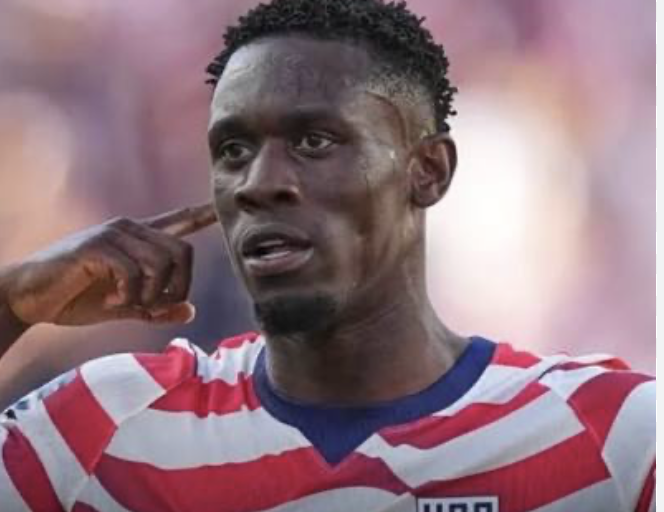
FIFA cleared Folarin Balogun to play against Belgium after rejecting a challenge to his eligibility for Monday’s last-16 match in Seattle. The ruling keeps the US striker available for a knockout game already carrying legal, sporting and political pressure.
The dispute began after Balogun was sent off on Wednesday for heavily stepping on the right ankle of Bosnia and Herzegovina defender Tarik Muharemovic. FIFA later overturned the one-match suspension on Sunday, but it has not publicly explained the grounds for reversing the red card.
Belgium’s challenge hits a wall
On Monday, FIFA’s appeals committee rejected the Royal Belgian Football Association’s request to revisit Balogun’s eligibility. The committee called the request “inadmissible,” saying the Belgian federation was not an active party in the proceedings between FIFA and US Soccer.
That procedural answer did not settle the central question for Belgium: why Balogun was cleared at all. The RBFA said FIFA’s handling of the case breached its rules and regulations, and argued that it still had not received the reasoning it had sought since the process began.
“To date, the RBFA has still not received any grounds for this decision, nor has it received the information it has been requesting since the start of this procedure,” the organization said in a statement. The federation’s complaint puts the case beyond a routine selection issue and into the credibility of FIFA’s disciplinary process.
A red card becomes a governance test
The reversal matters because red-card suspensions are normally treated as an automatic consequence unless a disciplinary body finds a reason to intervene. In this case, the player at the center of the dispute is not a fringe squad member, but a striker available for a World Cup elimination match.
Alastair Campbell, a partner at Level Law, said the absence of reasoning is the core problem. “If you’re going to run a rules-based organization rather than something authoritarian,” Campbell said, “you need to explain your decision making.”
The legal issue is not whether Belgium wanted Balogun out of the match; opponents often prefer that a dangerous player be unavailable. The sharper issue is whether a team directly affected by a disciplinary reversal can obtain enough information to understand, and potentially challenge, how the decision was reached.
FIFA’s position, as described by the appeals committee’s ruling, is procedural: Belgium is outside the active case because the matter sits between FIFA and US Soccer. Belgium’s position is substantive: the result changes the competitive conditions of Monday’s match, so the federation says it should be entitled to the grounds behind the decision.
Political pressure shadows the match
The case also carries a political edge because US Soccer and President Donald Trump both lobbied FIFA President Gianni Infantino after the red card. Speaking at the White House on Monday, Trump confirmed that he called Infantino after the referee’s decision and said he believed Balogun had not committed a foul.
FIFA has long presented itself as politically neutral, which makes the timing of the reversal sensitive. The organization has not said that political outreach affected the outcome, and the source material does not establish that it did.
The absence of an explanation leaves space for competing interpretations. US Soccer can treat the ruling as a correction of a disciplinary error, while Belgium can frame it as an unexplained intervention that affects the fairness of a knockout fixture.
Three paths after Seattle
If FIFA publishes detailed grounds for the reversal, the immediate pressure on the governing body could ease. A clear legal rationale would help US Soccer defend Balogun’s participation, give Belgium a firmer basis to accept or contest the decision, and offer other federations guidance on similar red-card appeals.
If FIFA continues without explaining the ruling, the case may become a reference point whenever disciplinary decisions affect major tournament matches. That would weaken confidence in the process, leave US Soccer’s win-or-lose result under argument, and push national federations to demand more transparency in urgent appeals.
If Belgium pursues further procedural options after the match, the sporting consequences may be limited by the speed of the tournament. The wider effect would be institutional: FIFA would face pressure to clarify who has standing when a disciplinary decision involving one team directly changes another team’s knockout opponent.
The next facts to watch are narrow but important: whether FIFA releases written grounds, whether Belgium escalates the matter, and whether Balogun’s involvement affects Monday’s result. Until those answers arrive, the Seattle match will carry a question that sits outside the scoreline.