Serena Williams rally falls short against Maya Joint at SW19
Serena Williams lost to Maya Joint in Wimbledon's first round, but her three-set return showed competitive signs after four years away.
Atlas Newsdesk ·
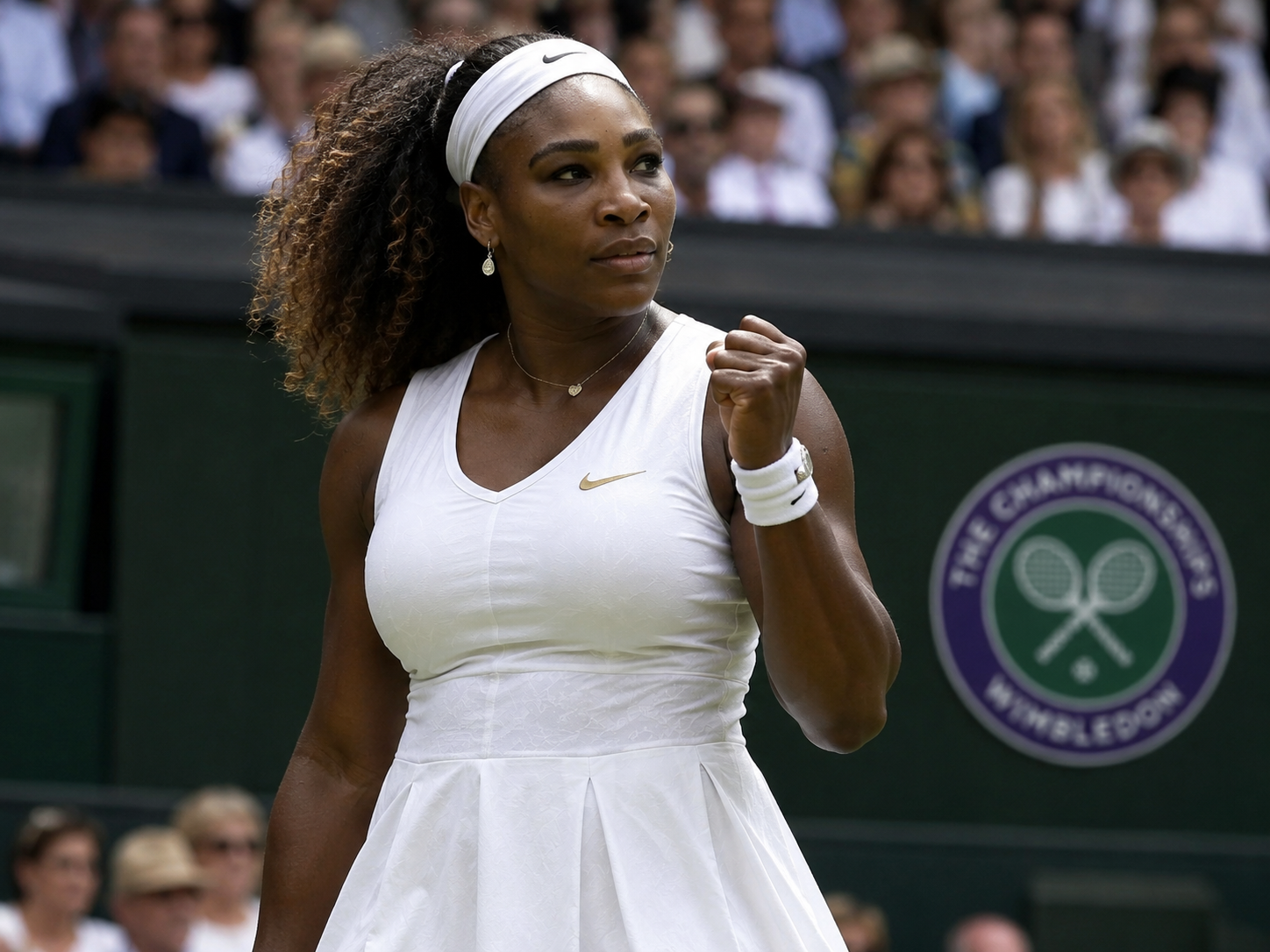
Serena Williams lost to Maya Joint in Wimbledon's first round, but her three-set return showed competitive signs after four years away.
Joint, a 20-year-old who represents Australia and was born and raised in Michigan, beat Williams 6-3, 6-7(6), 6-3 on Tuesday. The result ended Williams' singles return at the first hurdle, but the match offered more evidence than the scoreline alone.
Maya Joint meets the moment
Joint had to close out one of the sport's defining figures on Centre Court, not in a quiet corner of the grounds. Afterward, she framed the challenge around Williams' stature, saying, "She has such aura," and adding, "She's such a legend."
Williams made the match difficult in bursts. She struck serves that still carried top-end force, found the edges of the court with forehands, saved a match point and took the second-set tiebreak before Joint steadied herself in the decider.
The third set restored the practical reality of a comeback after a long absence. Williams could still change the feel of a match with one strike, but Joint had the younger legs and the steadier finish across the final stretch.
A wild card on Centre Court
Williams' decision to accept a wild card into Wimbledon singles turned a comeback into an immediate main-stage test. A player returning after four years away could have chosen a lower-profile event, but Centre Court made the experiment public from the first ball.
The setting also made the day feel bigger than a routine first-round match. Venus Williams, Serena's older sister, watched from the stands, while Alexis Ohanian and Olympia, Serena's eldest daughter, were also there as Williams returned to grass.
Williams has said her return is tied to her children, Olympia and younger daughter Adira, seeing her compete. She has also pointed to Venus, still active at 46, as part of the inspiration behind another run.
That framing matters because Williams is not presenting the comeback only as a chase for more trophies. Even so, her competitive habits were visible whenever she dragged herself back into the contest and reacted with the familiar edge that marked her prime years.
The draw faces a Serena question
For Wimbledon and women's tennis, Williams' presence changes the atmosphere even when she is not seeded or expected to dominate. Her name turns an early-round match into a wider event and gives younger opponents a stage that tests composure as much as shotmaking.
Joint now leaves with a win that carries profile beyond the ranking points attached to it. Beating Williams at Wimbledon, even this version of Williams, gives her a result tied to a global name and a difficult setting.
If Williams' serve and first-strike power hold up through more match play, her comeback could become selective but credible, built around events where short bursts of control can still decide sets. That would keep tournament draws more commercially and competitively charged, while giving the wider tour another measuring stick for younger players.
If recovery, movement or match volume become the limiting factors instead, Williams' appearances may remain rare and carefully chosen. In that scenario, the industry effect would be less about title races and more about audience attention, event programming and the symbolic value of seeing an all-time figure test herself again.
The open questions are concrete: how quickly Williams can recover, how many matches she wants to schedule and whether the motivation of playing for her children is enough to sustain the grind. Tuesday did not deliver a win, but it did show that her return is more than ceremony.