Djokovic opens Wimbledon bid with four-set win on Wu
Djokovic Wimbledon hopes began with a four-set first-round win over Wu Yibing on Centre Court as shifting roof conditions tested both players.
Liam Walsh ·
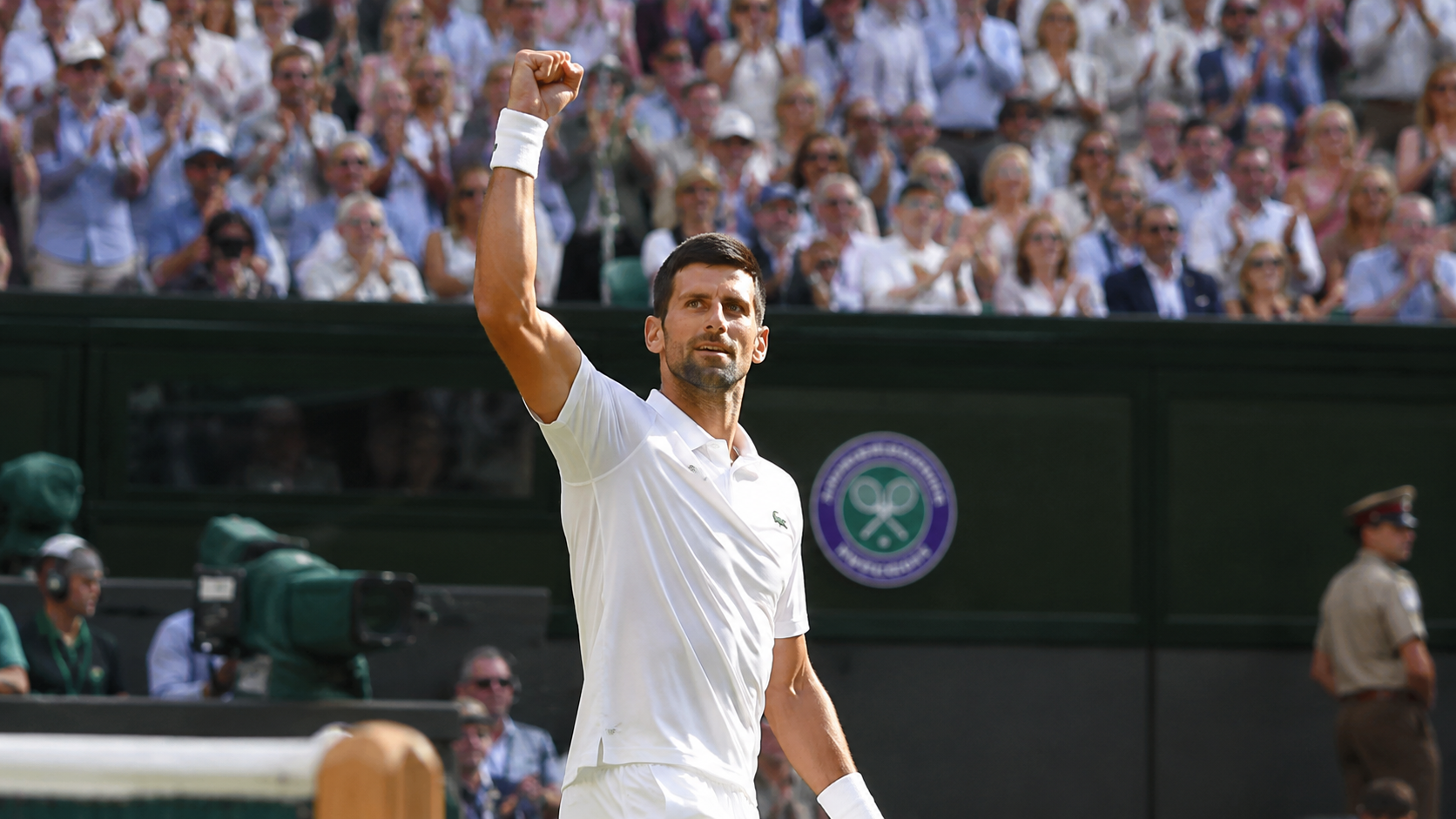
Djokovic Wimbledon ambitions moved forward on June 29 as Novak Djokovic came through a four-set test against China’s Wu Yibing in the opening round at the All England Club.
The 39-year-old prevailed 6-4, 5-7, 6-4, 6-4 on Centre Court, navigating a match that changed character once the roof and lights came into play.
First-round resistance forces Djokovic to adapt
Djokovic entered the tournament chasing two major milestones: a record-matching eighth Wimbledon men’s singles title and a 25th Grand Slam singles crown that would move him ahead of Margaret Court on the all-time list.
Those headline targets did not make his opener straightforward. Wu, described by Djokovic as deserving “a round of applause,” stretched the contest with aggressive spells and enough consistency to take the second set.
Djokovic secured the first set 6-4, then saw momentum shift as Wu levelled the match by winning the second set 7-5. From there, the Serb steadied himself to take the third 6-4 and closed the match with another 6-4 set.
While the scoreline suggests control, Djokovic indicated it felt more demanding than an early-round assignment. He said he was pleased to advance, but also acknowledged he did not feel “the freshest.”
Roof and lights reshape Centre Court conditions
A key storyline emerged around the changing environment on Centre Court. Djokovic said the match played like “two different” contests, separating the experience under an open roof from the later stages when the roof was closed.
With the roof shut and the match continuing under lights, Djokovic pointed to moisture and traction as complicating factors on grass. He said the surface became “more slippery,” requiring continual adjustments that are difficult to execute once points begin at full speed.
Wimbledon’s show courts can switch quickly between sunlit and indoor-like conditions when weather and scheduling prompt roof use. For players, that can alter bounce, movement, and timing—variables that often matter most on grass, where margins are tight.
Djokovic framed the challenge as one of adaptation rather than excuses. He said the conditions affected how freely he could commit to movement and balance, especially when trying to produce his best shots while also managing risk.
Milestones in view as Djokovic moves into round two
Djokovic has repeatedly highlighted Wimbledon’s personal significance, and after the win he again stressed the tournament’s importance in his career. The victory keeps him on course for another run at the title, with Roger Federer’s eight Wimbledon men’s singles trophies the benchmark he is attempting to match.
Beyond the Wimbledon record, the larger historical context is the Grand Slam tally. Djokovic is aiming for a 25th major singles title, a number that would set a new standard in the sport’s record books by surpassing Court’s total.
For now, the immediate takeaway is that Djokovic can still grind through uncomfortable stretches at 39, even when an opponent raises the level and conditions shift mid-match. The combination of resilience and tactical recalibration—especially on a surface that rewards precision—remains central to his prospects.
Next, attention turns to how quickly Djokovic can recover and whether similar roof-related changes become a recurring factor as Wimbledon’s schedule progresses. With each round, the demands typically rise, and early signs suggest he may need to manage both opponents and the grass-court environment carefully.