

SpaceX Starship Test Flight Demonstrates Partial Recovery Capability
SpaceX successfully recovered the Starship upper stage during a test flight, though the mission was partially compromised by the loss of the booster section.
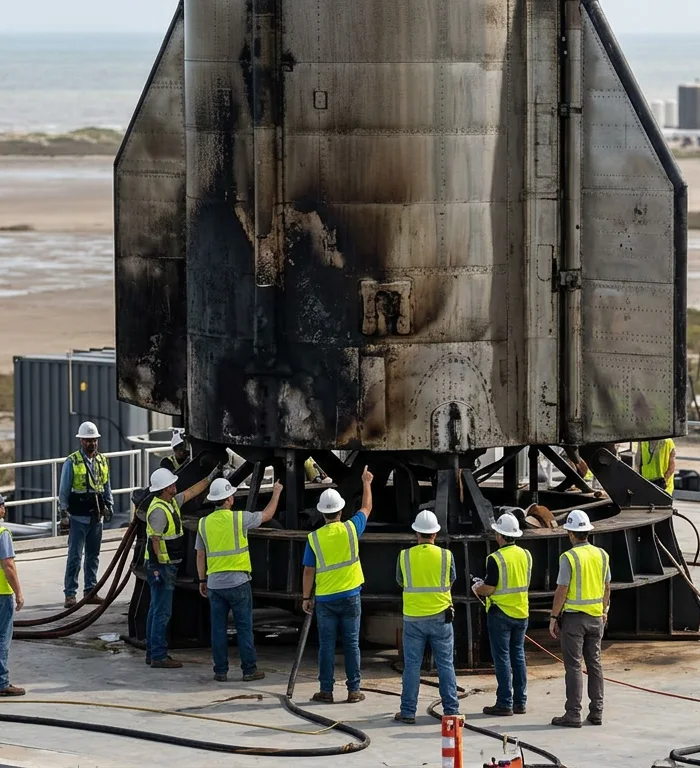
SpaceX successfully executed a controlled return of the Starship upper stage to its launch infrastructure in Texas during the vehicle's 15th test flight. This maneuver validates key technical requirements for rapid reusability and the eventual certification of the craft for human spaceflight operations. The ability to recover the upper stage at the launch site represents a significant advancement in the company’s logistical architecture for orbital missions.
However, the mission objectives were only partially achieved due to a failure in the lower booster section. The booster experienced a malfunction during the descent phase, triggering an automated abort sequence that resulted in the destruction of the hardware over the ocean. This outcome highlights ongoing technical challenges in achieving full-stack recovery, a critical component for reducing the cost-per-launch and increasing flight cadence.
For stakeholders and policymakers, this event underscores the dual nature of current aerospace development: rapid progress in precision landing capabilities contrasted with persistent reliability risks in heavy-lift propulsion systems. The loss of the booster necessitates further investigation into flight control software and structural integrity under high-stress recovery conditions. Future test cycles will likely focus on stabilizing the booster return process to match the success rate currently observed with the upper stage.
Institutional risk remains tied to the pace of these iterative tests, as the company relies on high-frequency flight data to refine its systems. Continued reliance on automated abort protocols indicates that safety mechanisms are functioning as designed, though the loss of assets impacts the overall project timeline. Observers should monitor upcoming regulatory filings and flight schedules to determine if the booster failure necessitates a significant redesign or if the issue is isolated to software-driven flight control.
More stories
- Europe faces attribution gap after 16 cyber, physical incidents
- PIF backs Grand Theft Auto as Saudi players embrace game
- Signal limits screenshots to curb AI access to messages
- Cognition runs Devin Mac workspaces on EC2 in 6 AWS regions
- Salesforce engineers cut 600-failure triage to 90 minutes
- Türkiye Desk: GTA 6 puts console access and network demand in focus
- OpenAI buys travel startup Odessia
- FURSOY posts 500 MHz Linux-capable RISC-V core
- Waymo robotaxi rides target Munich in 2027 EU push
- Z.ai model release tests open access in cyber AI
Latest news
- Trump prepares tariffs on China and other major exporters
- New-car buyers pay record average $50,087 in October
- Banks face ECB reserve debate over liquidity and profits
- Investors see Anthropic debut gains fade below $83 a share
- Iraq orders federal control over Kurdish-area oilfields
- Germans oppose Ukraine aid as poll shows support slipping
- Kim Jong-un receives 10 envoys after constitutional shift
- Ukraine claims Libya strike sinks Russian naval corvette