

Waymo robotaxi rides target Munich in 2027 EU push
Alphabet’s Waymo plans Munich robotaxi rides in 2027, making Germany its first EU market after tests in London and Tokyo.
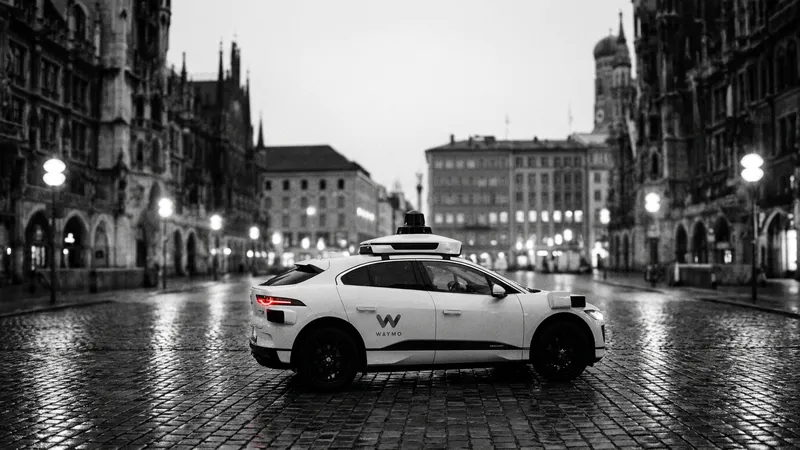
Waymo robotaxi rides are slated for Munich in 2027, giving Alphabet its first EU test of paid autonomous-hailing demand.
The company said Tuesday it will begin phased testing in Munich over the next few weeks, ahead of a planned public launch at the end of next year. Germany would become Waymo’s third international market, after London and Tokyo, and its first inside the European Union.
Munich starts with mapped roads
Waymo said the early Munich work will focus on high-definition street mapping, local operations training and software adjustments for the city’s driving patterns. The sequence matters: robotaxi systems need dense local data before any public ride service can be sized, priced or opened broadly.
Tekedra Mawakana, Waymo’s co-CEO, described Munich as “a world-class hub for mobility and engineering” and called the move “an important milestone in our global expansion.” The company did not give a fleet size, service area or fare structure for the planned launch.
Munich gives Waymo a European city with a deep automotive supply chain and a road culture shaped by premium carmakers, dense commuter flows and mixed urban traffic. For an autonomous-vehicle operator, that combination raises the technical bar beyond route coverage alone.
Eleven US cities anchor scale
Waymo’s expansion pitch rests on a US base that is larger than its overseas footprint. The company says it operates in 11 US cities and is working on 19 additional US markets, a pipeline that gives it more deployment data before the Munich service opens.
Last month, Waymo identified San Diego, Las Vegas, Tampa and Denver as additional US expansion targets. Those cities add different road conditions, tourism patterns and weather profiles, which can feed into how the company trains and validates its driverless system.
The company said it had logged nearly 221 million fully autonomous miles as of March. That figure is the clearest scale marker in the announcement, but it does not answer the commercial question: how quickly autonomous miles convert into high-utilization paid rides.
The overseas record is still thin by comparison. Waymo is testing in London and Tokyo, according to the company, but Munich is the first market where the EU regulatory setting becomes central to the rollout.
EU rules meet robotaxi economics
For Alphabet, the German plan extends Waymo from a US-heavy deployment model into a market where data governance, city permits and vehicle safety approvals can shape the speed of launch. The company framed the Munich phase as testing, not a full commercial opening.
The distinction is important for the robotaxi sector. Testing validates maps, operations and safety processes; a public service has to handle customer demand, insurance exposure, vehicle maintenance and regulatory reporting at the same time.
If Munich testing proceeds on schedule and local approvals hold, Waymo gets a credible EU reference market as it courts other cities. That would give Alphabet a stronger case that its autonomous-driving stack can travel beyond US road systems, while rivals face a higher benchmark for international rollout claims.
If the timeline slips, the effect is narrower but still material. Alphabet would keep its US growth engine, yet the industry would have fresh evidence that European expansion depends less on model performance alone and more on municipal integration, safety validation and operating cost discipline.
The open questions are practical rather than rhetorical: where in Munich the service will run, how many vehicles will be deployed, and what regulators require before public rides begin. Those details will determine whether the 2027 launch is a limited city pilot or the first step toward a broader EU robotaxi network.
More stories
- AI coding agents add 30% more code, not software output
- Google tests Gemini 4 update as coding competition grows
- OpenAI defends safety firings over trust breach
- Mastercard puts stablecoins at center of cross-border push
- Asos Customer Data Compromised via Employee Account Breach
- 4-bit AdamW quantization could invert AI hardware spend toward memory
- London Freezes Autonomous Taxi Rollout Over Unset Rules
- Instagram Chief Testifies in Federal Child Safety Lawsuit
- AI-Engineered Viruses Successfully Create 16 Viable Lab-Grown Phages
- Musk pledges $16.8B for Texas AI chip plant
Latest news
- French Borrowing Costs Hit 5% as Debt Crisis Deepens
- Houthis claim Riyadh airport strike as injuries reported
- Germany Reaffirms Russia Sanctions Amid Potential US Policy Shift
- China beats Thailand 2-0 to reach junior badminton final
- Grabar probes shareholder claims at four Nasdaq companies
- Russia and China Block US Push for Nationwide Sudan Arms Embargo
- Report of US pressure on Israel over Iran strikes tests Washington posture
- Byrna revenue drops 46% as sales reset deepens