Report of US pressure on Israel over Iran strikes tests Washington posture
A report that Washington urged Israel to act alone against Iran puts fresh attention on how the White House balances deterrence, alliance management and…
Lauren Collins ·
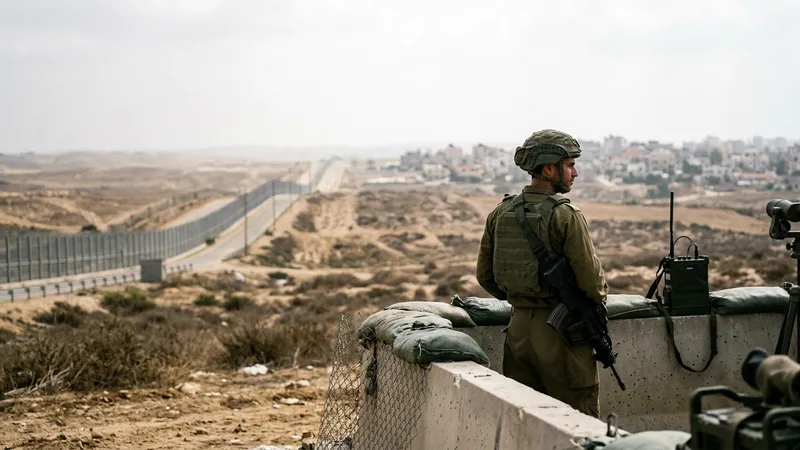
Report of US pressure on Israel over Iran strikes tests Washington posture
Washington faced new scrutiny after a report said US officials pressed Israel to carry out any strikes on Iran without direct American participation, a posture that would reduce exposure for US forces while keeping pressure on Tehran. The report, which cited Prime Minister Benjamin Netanyahu's uncertain position and described his schedule as "very security-focused," lands in the middle of a familiar US dilemma: how to back Israel militarily without being pulled into a broader regional war.
The White House has not publicly confirmed the reported pressure campaign. That distinction matters in Washington, where the line between defensive support, intelligence sharing and operational coordination can carry legal, military and political consequences.
The United States and Israel have built one of Washington's closest security partnerships, with deep intelligence ties, regular joint exercises and layered air-defense cooperation. Since the October 7 attacks, that relationship has operated under tighter pressure: Israel has sought wide latitude for regional operations, while US officials have tried to prevent the Gaza war and related confrontations with Iran-backed groups from widening into a direct US-Iran clash.
For the White House, the reported preference for an Israeli-only strike would fit a broader effort to preserve deterrence while limiting American fingerprints on offensive action. US officials can provide defensive systems, warnings and diplomatic cover more easily than they can defend a direct US role in attacks inside Iran, especially if such action draws retaliation against American personnel in Iraq, Syria, the Gulf or the Red Sea.
Prime Minister Benjamin Netanyahu
The Pentagon's role is central because US forces are already embedded across the region. Central Command oversees American troops, naval assets and air defenses positioned to protect US personnel and help intercept incoming missiles or drones. Even if Washington does not join an offensive mission, any Iranian response could quickly make US bases, ships or partner forces part of the battlefield.
Israel's operational options are also constrained by geography and capability. Long-range strikes on Iranian nuclear, missile or military infrastructure can require aerial refueling, complex routing, electronic warfare and follow-on defense against retaliation. The United States has assets that can make those operations more feasible, but visible US involvement would raise the political cost and increase the risk that Tehran treats Washington as a direct combatant.
Congress would become part of the argument if evidence emerged that US support crossed from defensive coordination into operational assistance for strikes. Lawmakers on the Armed Services, Foreign Relations and Intelligence committees can press the administration on force authorization, intelligence use and notification requirements. The sharper question would be whether the White House treated an Israeli operation as an allied decision or as a policy instrument shaped in Washington.
The domestic political dimension is the most sensitive part of the reported account. A direct US strike on Iran could affect energy markets, put American troops at higher risk and intensify debate over presidential war powers. Those risks become harder to manage in an election season, when any jump in gasoline prices or casualty reports can move quickly from national-security briefings to campaign messaging.
For Netanyahu, the reported pressure creates a different calculation. Acting alone could show Israeli autonomy and satisfy domestic demands for deterrence against Iran. But if an operation failed to degrade its targets or triggered a larger missile exchange, Israel would still need US diplomatic backing, air-defense replenishment and possibly emergency military resupply.
Tehran would likely study the degree of visible US involvement before deciding how to respond. If Iran assesses that Washington kept its role limited to defense and warning, it could calibrate retaliation toward Israeli targets or proxies. If it concludes the United States enabled the strike, US facilities and forces could become more exposed.
The wider defense and energy sectors would feel the consequences through air-defense demand, shipping risk and oil-market hedging. Missile interceptors, radar coverage, tanker protection and base defense would become immediate priorities for US planners and contractors. Energy traders would focus on whether any escalation threatens Gulf production, tanker routes or Iranian export flows.
The falsifiable marker is whether the Pentagon releases new details on Central Command defensive deployments and US-Israel air-defense posture by 2025-05-10. If Israel conducts independent sorties while Washington limits itself to intercept support and public distance from offensive planning, the report's core logic holds: US policy is trying to contain Iran through an ally while avoiding direct escalation. If US forces join offensive air packages against Iranian territory, or if Washington persuades Israel to freeze operations tied to US political timing, that reading weakens; the macro effect would shift from contained regional risk to a more direct oil and security shock, Israel's burden would move from unilateral execution to coalition warfare, and the defense sector would price in a longer, US-led regional posture.