Nobel Peace Prize choice draws Trump's criticism of Norway
President Trump criticized Norway over the Nobel Peace Prize on October 9, after the committee selected Navi Pillay as its winner.
Ayla Demirhan ·
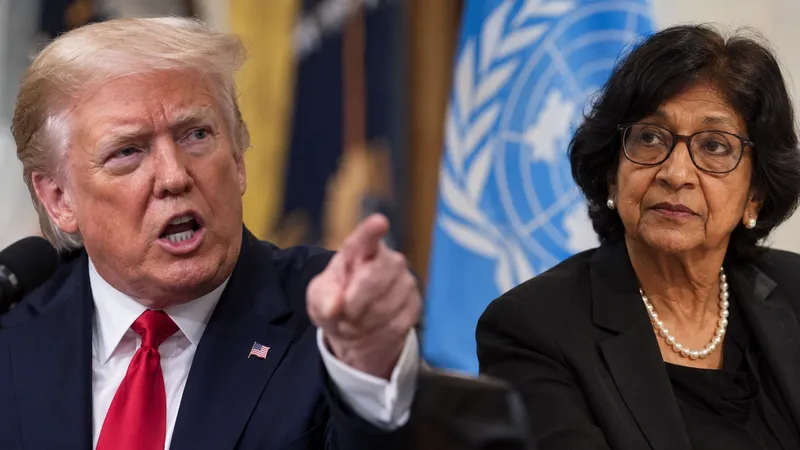
President Trump criticized Norway over the Nobel Peace Prize on October 9, after the committee selected Navi Pillay as its winner.
Speaking at a campaign event in Syracuse, New York, Trump directed his criticism at both the selection committee and its host country. His remarks turned disappointment over an individual award into a denunciation of Norway, although he identified no specific government action against the country.
Trump directs his criticism at Norway
The committee announced Pillay's selection earlier that day. Trump subsequently attacked the decision and questioned the standing of the recipient, calling her a "mystery person" during his appearance in Syracuse.
President Trump said: "This is an indelible stain on the country of Norway and those people that made such a disgraceful and embarrassing decision." The statement placed responsibility on the country as well as the people who chose the winner.
Norway hosts the committee, but Trump's remarks did not identify any action by the Norwegian government in the selection. That distinction matters to the scope of his criticism: he addressed a national audience abroad while objecting to a committee's award.
Pillay's selection brings Gaza into focus
Pillay oversaw a UN report that determined Israel had committed genocide in Gaza. That assessment belongs to the report; Trump's quoted remarks instead concentrated on his own exclusion and his stated lack of familiarity with the recipient.
Trump's disappointment with the Nobel decision is recurring rather than new. He has voiced dissatisfaction about not receiving the honor in each year of his presidency, making the Syracuse remarks another installment in his public campaign for recognition.
To support his case, Trump cited conflicts in which he claimed a peacemaking role. He also asserted that his involvement had prevented fighting involving several Asian counterparts, without supplying evidence for those claims.
Unsubstantiated claims accompany the prize complaint
His examples covered North Korea and South Korea, North Korea and Japan, and Taiwan and China. These were assertions that wars had been averted, distinct from his claims about resolving existing conflicts; the remarks did not establish how his actions had produced either outcome.
Trump also attacked the committee's political outlook and the award's credibility. He ended that criticism with a warning directed at the host country: "And we will not forget, Norway."
The wording left the intended consequence unspecified. His quoted remarks contained no proposed sanction, diplomatic measure or timetable, so they establish his displeasure but not a change in US policy toward Norway.
If the White House follows the criticism with a concrete measure, the dispute would extend beyond the award into bilateral relations. If it does not, the immediate issue remains Trump's challenge to the committee's judgment, with any wider diplomatic or economic consequences still undefined.