SpaceX strikes spectrum deal for US mobile network push
SpaceX agrees to acquire Grain Management’s cellular spectrum, adding ground-based capacity to its effort to expand Starlink into mobile service.
Cuneyd Erdogan ·
SpaceX agrees to acquire Grain Management’s cellular spectrum, adding ground-based capacity to its effort to expand Starlink into mobile service.
The agreement covers US licenses in the 800-megahertz band, designed for terrestrial networks rather than satellite connections. SpaceX said the frequencies would extend coverage into buildings and other locations its satellites cannot reach.
The purchase requires Federal Communications Commission approval. SpaceX said it intends to pair the licenses with its expanding satellite fleet and “an advanced terrestrial deployment,” making ground infrastructure part of its mobile strategy.
Ground coverage becomes Starlink’s next test
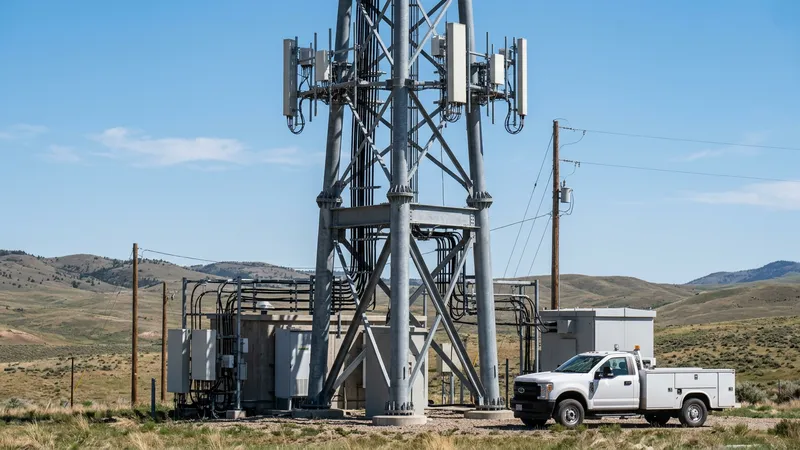
The distinction matters for Elon Musk’s company: permission to use frequencies is not the same as having a network ready to carry customers’ calls and data. Roger Entner, founder of telecommunications research firm Recon Analytics, said Starlink would still need equipment on the ground, including towers or rooftop installations, to deploy these airwaves.
Recon Analytics counts AT&T, Verizon and T-Mobile US among its clients. Entner’s assessment points to a separate construction task alongside SpaceX’s satellite expansion, rather than a service that can operate entirely from orbit.
SpaceX executives discussed using small cells instead of conventional towers two months before the agreement. That leaves the company’s choice of terrestrial architecture as an unresolved part of the project, with no detailed deployment schedule or construction budget provided.
EchoStar purchases set up the expansion
The Grain transaction follows two agreements involving EchoStar and different types of spectrum. Last year, SpaceX agreed to a cash-and-stock purchase worth approximately $17 billion for frequencies intended for satellite communications; EchoStar subsequently agreed to sell terrestrial licenses for another $2.6 billion.
The earlier satellite deal gave SpaceX dedicated airwaves for connecting phones from orbit, reducing its reliance on spectrum held by T-Mobile. The terrestrial purchase pointed toward a broader network, but those licenses alone did not provide enough spectrum for a complete cellular service.
Starlink has already supplied limited mobile connectivity in isolated locations under an arrangement with T-Mobile lasting more than a year. SpaceX has also been introducing satellites with greater data-handling capacity, extending its ambitions beyond Starlink’s broadband business.
The FCC separately authorized SpaceX earlier this week to deploy as many as 15,000 satellites for mobile connectivity. That figure is a regulatory ceiling, not a count of satellites already delivering service, and the authorization is distinct from approval of the Grain spectrum purchase.
Carrier competition depends on network execution
AT&T, Verizon and T-Mobile joined forces earlier this year to broaden their own coverage using satellite connections. Their initiative puts established carriers and SpaceX on overlapping paths: each is combining terrestrial service with connectivity from space.
If regulators approve the transaction and SpaceX builds the necessary ground network, Starlink could compete across more locations, including indoors. Such a rollout would create additional demand for communications equipment and installation work while giving incumbent carriers another network operator to contend with.
If approval or construction takes longer, the spectrum purchase alone would not deliver that broader coverage. The next concrete tests are the FCC’s decision and SpaceX’s disclosure of how, where and when it intends to deploy terrestrial equipment.