Germany says Russia drone plot targeted Leipzig airport
Germany accused Russia of a failed three-drone attack on Leipzig airport and said it would retaliate with diplomatic and EU sanctions measures.
Claire Dubois ·
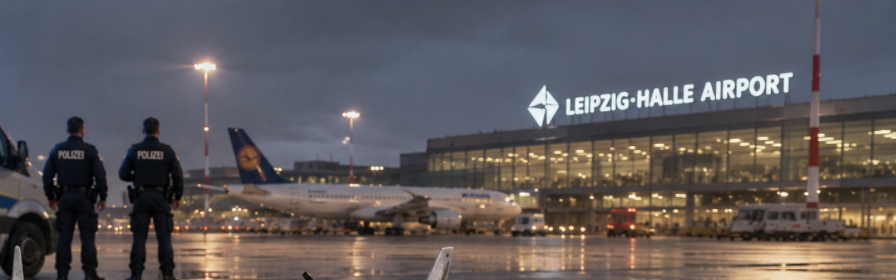
Germany accused Russia of using three explosive drones in a failed Leipzig airport attack, tying a Russia drone plot to NATO security risks.
Interior Minister Alexander Dobrindt announced the finding Tuesday, saying investigators tied last month’s Leipzig airport incident to Moscow. "We do not consider ourselves at war but we are the daily target of hybrid warfare," Dobrindt said.
Three drones near cargo planes
A German security official said investigators recovered three custom-made drones: two in a field and one inside the airport perimeter near Ukrainian-owned cargo planes. All three were functional and carried explosives, the official said, but none detonated after the alleged operation failed.
The devices had been professionally constructed with some off-the-shelf components, according to the same official. The official said low-level agents probably transported the drones to Leipzig, while pilots operating from farther away likely controlled them; investigators had connected certain individuals to the devices in a way that supported Germany’s attribution.
NATO Secretary-General Mark Rutte said the evidence showed Russia had carried out a hybrid attack on the airport. "Russia’s attempts to intimidate us, to undermine our unity and our willingness to support Ukraine are futile and will fail," Rutte wrote on X.
Berlin keeps escalation room
European Commission President Ursula von der Leyen said she had spoken with German Chancellor Friedrich Merz about "this attack by Russia." She said sanctions and other measures would be prepared in response.
Germany said its first measures would close the last Russian consulate in the country. Berlin also said it would revoke the lease for a large Russian cultural center in the government district, summon the Russian ambassador and tighten rules for Russians entering Germany.
The government will press the European Union for tougher sanctions on Russian shadow fleet vessels and a wider sanctions list for Russians linked to hybrid attacks. A senior official said Merz chose the package after consultations with European partners and the U.S., while preserving options if Moscow undertakes further actions.
Ukraine support meets sabotage risk
The accusation lands during a wider European debate over incursions, sabotage and the protection of transport infrastructure across NATO territory. European security and military officials have described the activity as probing attacks on alliance defenses; if the drones had exploded inside Germany, those officials said, the incident could have crossed into act-of-war territory.
A senior German official portrayed the alleged airport plot as part of a broader Russian effort against Ukraine’s partners. In that official’s account, President Vladimir Putin had misread Western willingness to keep backing Kyiv and was responding through harsher strikes on Ukrainian civilian targets and actions aimed at European supporters.
If the case remains contained to diplomacy and sanctions, the global effect would run mainly through tighter controls on Russian shipping, travel and diplomatic movement rather than direct military confrontation. For Leipzig airport, that path would point to perimeter hardening and tighter cargo-area surveillance; for European aviation and logistics, it would make drone detection and access screening a higher operating cost.
If further attacks are alleged or confirmed, Germany has signaled that the response ladder still has higher rungs. That scenario would add a security premium to European transport nodes, expose Leipzig and other cargo hubs to tougher operating rules, and push the defense and airport technology sectors toward faster procurement of counter-drone systems.