

South African pollsters face turnout test across 8 metros
The Daily Maverick column says local-election polling is costly metro by metro and vulnerable to turnout errors before voting this week.
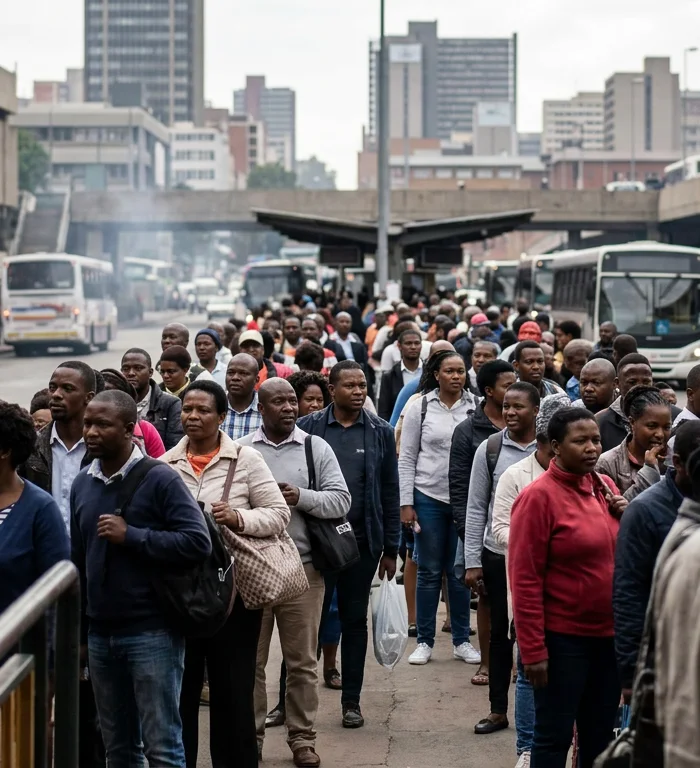
Stephen Grootes wrote in a Daily Maverick column published Nov. 2 that South Africa’s local-election polling faces an affordability and turnout problem across eight metros.
The column appeared two days before local elections, when forecasts can influence voters, business planning and investor expectations; Grootes contrasted metro polling with national tracking polls, which survey the same people repeatedly.
“Nothing stimulates prognostication like a good election,” Grootes wrote, arguing that forecasts are especially difficult when polling must be done separately across municipalities rather than through one national sample.
Turnout was the central uncertainty in his account. Voters may tell pollsters their preferences but may not know whether they will vote, Grootes wrote, making local-election projections more fragile than simple party-preference snapshots.
He cited the MK party’s emergence before the 2024 election as an example of how quickly polling assumptions can be overtaken, asking whether pollsters sitting in January 2024 would have included a party that was only about two weeks old in an April survey.
Grootes also said some DA polling had entered the public domain and interpreted that as an effort to persuade potential DA voters the party could compete for power in places including Johannesburg. He wrote that both the ANC and DA appeared to be warning voters against smaller parties because of what polling suggested.
The business stake is Johannesburg’s governance, according to the column. Grootes said business leaders and groups had spoken about rescuing the city, and that forecasts of political change were feeding expectations.
The risk, he wrote, is that markets and institutions price in the wrong outcome. Grootes cited Brazil as a comparison, saying investors expected Flavio Bolsonaro to win last week and that the market fell 10% after Lula da Silva won instead.
The column also pointed to U.S. elections scheduled for Nov. 3 and uncertainty over the Strait of Hormuz later in the week as examples of forecasts carrying financial consequences beyond South Africa.
More stories
- Monrovia mayor-designate seeks $14.5m city budget
- Iran's attacks hit 25 tankers near Strait of Hormuz
- Russia strikes Ukraine as Odesa faces electricity strain
- Bahrain reports two injuries after Iranian aerial attacks
- Baltic responders fight Sparta II fire after drone strike
- Estonia to close 5 Russia road crossings for six months
- Ukraine and Russia face fake nuclear alerts after app hacks
- Iran faces renewed strikes after IRGC's 100% readiness claim
- Machado returns to Venezuela, testing Rodríguez’s opening
- Portugal police remove 171 housing protest structures
Latest news
- Nvidia board gets Trump input on Jensen Huang return as CEO
- Rwanda faces budget strain from 85% electricity access push
- ICE arrests at Seattle airport draw protests and scrutiny
- AI doubts leave Asian stocks facing a new investment test
- EU rejects COP31 deal as fossil fuel divisions block pact
- Deal Sheet: Fortis shutdown costs over 400 jobs
- Germany to pay about $11 a month into child pension accounts
- Laura Brand curbs prison messages after YouTube dispute