Siberia plague institute death prompts quarantine steps
Russian authorities quarantined contacts after a Siberia plague institute worker died, while saying no new cases or evidence of a lab accident had emerged.
Lauren Collins ·
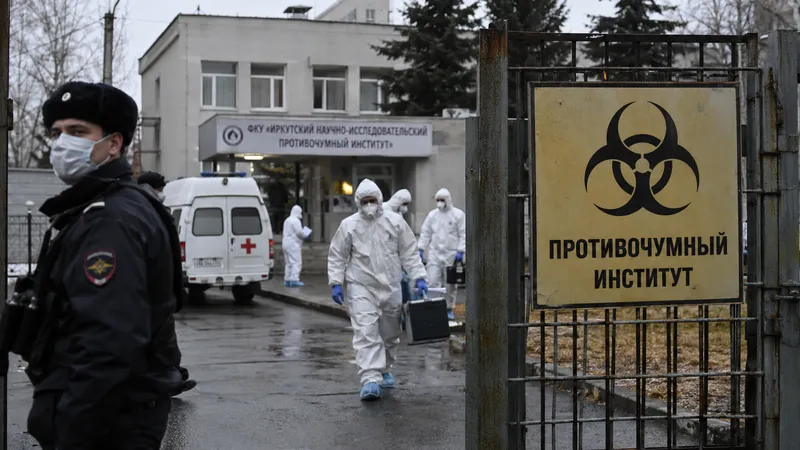
Siberia plague concerns rose after a 28-year-old institute worker died in Irkutsk, prompting quarantines and a visit by Russia's health chief.
Local media identified the worker as Darya Shipilova, an employee of the Irkutsk Anti-Plague Research Institute of Siberia and the Far East. Authorities said she died from pneumonia whose origin had not been established, leaving the central medical question unresolved.
Popova flies to Irkutsk
Anna Popova, the head of Rospotrebnadzor, traveled to the Irkutsk region for an emergency meeting over the weekend. Her visit put the federal health watchdog directly into a case that had already drawn attention on social media.
Rospotrebnadzor told state media that the institute had found no evidence of an accident involving pathogen handling. That statement followed online rumors that the worker had dropped a test tube containing live bacteria, a claim authorities did not confirm.
Officials also said there was no evidence that Shipilova's death was connected to her work at the institute. The distinction matters for public health management: a workplace exposure would point to biosafety controls, while an unrelated pneumonia case would keep the response focused on contacts and clinical testing.
Contacts placed under supervision
An unspecified number of people who had contact with Shipilova were quarantined, and authorities said all known contacts had been identified, examined and placed under medical supervision. Parts of the hospital in Shelekhov, the town where she died, were cordoned off after her death.
The response extended beyond the hospital. An aluminum plant told workers to wear masks, a precaution that showed how quickly a poorly explained medical death can move from a clinical event into workplace policy.
Igor Kobzev, governor of the Irkutsk region, said Shipilova died of "pneumonia of unknown aetiology." Kobzev said no new cases among Anti-Plague Institute staff seeking medical care had been identified over the past few days, and he described the situation as under control.
Plague risks in Siberia
Plague is endemic in Siberia because Yersinia pestis, the bacterium that causes the disease, is present among small wild mammals and the fleas that live on them. Human plague cases in Russia are rare, according to the account provided by authorities and local reporting, while cases in other regions, including parts of Africa, occur every year.
The disease appears in three main forms, depending on the part of the body affected. Pneumonic plague infects the lungs and can spread when a patient coughs infectious droplets into the air.
Health authorities treat that form differently from a routine respiratory infection because speed changes the outcome. If identified quickly, plague can be treated with antibiotics; if left untreated, it can be fatal in one to six days.
The next decision point is the medical finding on Shipilova's pneumonia and the review of contacts already under supervision. If investigators keep the cause outside the laboratory, the practical effect would be a localized health response; if a pathogen-handling failure or transmission is found, the pressure would shift to the institute's biosafety rules, hospital screening and Russia's wider public health controls for high-risk research facilities.
The global economic channel is limited unless authorities announce broader travel, trade or workplace restrictions, none of which has been reported. For now, the case sits at the intersection of infectious-disease surveillance and public trust: officials have offered reassurance, but the unanswered cause of death is the fact that will determine how far the response has to go.