

Maritime Navigation Risks Rise as GPS Jamming Impacts Global Shipping
Shipping operators now mandate manual navigation training as GPS jamming in the Strait of Hormuz threatens maritime safety and global trade.
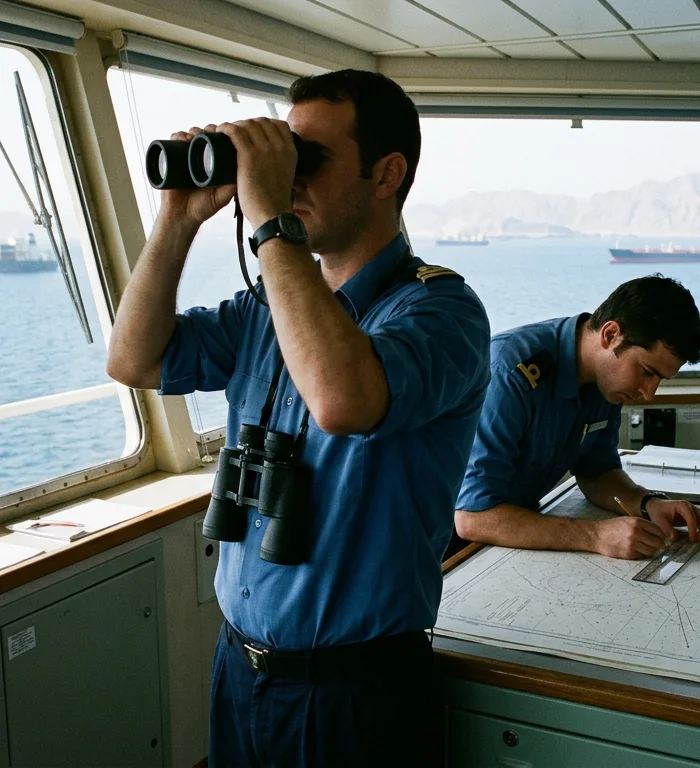
International shipping operators are mandating that vessel captains retrain in traditional, non-satellite navigation methods due to a significant increase in electronic warfare activities in the Strait of Hormuz. Reports indicate that approximately 98% of global GPS jamming events now occur in the Arabian Gulf, with hundreds of vessels affected daily. This surge in interference, characterized by both signal jamming and deceptive spoofing, poses a direct risk of collision or grounding for commercial tankers and container ships.
The Maritime and Coastguard Agency has issued formal guidance urging shipping companies and port authorities to develop operational contingencies for environments where satellite-based position, navigation, and timing (PNT) services are unavailable. Crews are being instructed to refresh proficiency in manual chart plotting, map reading, and traditional signaling methods, including Morse code. This shift reflects a broader institutional concern regarding the over-reliance on satellite infrastructure, which remains vulnerable to both state-sponsored electronic interference and cyber-attacks.
Arabian Gulf
The economic implications of a systemic loss of PNT services are substantial, with estimates suggesting a potential cost of approximately $1.84 billion per day to the UK economy alone. Beyond commercial shipping, the defense sector faces significant operational challenges. Military experts have noted that while traditional navigation skills are being re-emphasized, modern brigade-level operations rely on space-based systems for over 3,000 distinct functions, including logistics, missile targeting, and communications.
While military forces maintain a mandate to operate in degraded environments, the transition away from satellite dependency is described as inefficient compared to current capabilities. The ongoing electronic warfare campaign in the Gulf serves as a primary indicator of the risks posed to global supply chains and national security infrastructure. Policymakers are now evaluating the resilience of critical systems as the frequency of interference events continues to escalate.
More stories
- Germans oppose Ukraine aid as poll shows support slipping
- Kim Jong-un receives 10 envoys after constitutional shift
- Ukraine claims Libya strike sinks Russian naval corvette
- COP31 climate talks collapse over fossil fuels and funds
- Russian military faces 1,087 recorded suicides in Ukraine war
- US faces China, Russia in Africa minerals contest
- Russian strikes leave many Kyiv homes with 4 hours of power
- Cebu groups seek probe into protest dispersal with more than 20 hurt
- England hospital consultants pause 48-hour strike
- Gibran resignation starts Indonesia's 60-day VP replacement clock
Latest news
- Trump prepares tariffs on China and other major exporters
- New-car buyers pay record average $50,087 in October
- Banks face ECB reserve debate over liquidity and profits
- Investors see Anthropic debut gains fade below $83 a share
- Iraq orders federal control over Kurdish-area oilfields
- Nvidia shares retreat as AI rally cools before PCE data
- Macy’s parade faces balloon limits as storm winds approach