

Saudi nod for Orchard’s gene therapy advances US biotech ties
Riyadh’s first-in-region authorization for Libmeldy anchors the kingdom’s Vision 2030 clinical push to Western regulatory standards as Washington reviews…
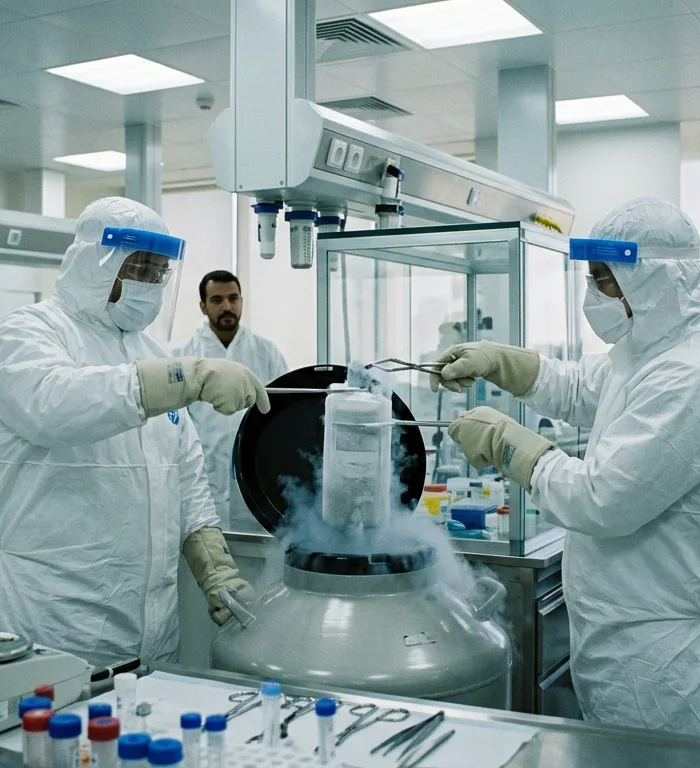
Saudi Arabia approved Orchard Therapeutics' gene therapy Libmeldy for early-onset metachromatic leukodystrophy, marking the treatment's first regulatory clearance outside the United States and Europe.
The decision gives the kingdom early clinical adoption of atidarsagene autotemcel while anchoring its emerging healthcare sector to Western standards. For policymakers in Washington, Riyadh's reliance on US and European regulatory precedents offers a template for integrating Gulf capital into Western life sciences without exposing sensitive biological data to geopolitical rivals.
Libmeldy treats metachromatic leukodystrophy, a fatal inherited metabolic disorder that destroys the protective myelin sheath surrounding nerves. Orchard, acquired by Japan's Kyowa Kirin, secured European clearance in 2020 and US Food and Drug Administration approval in March 2024, where the one-time therapy carries a wholesale list price of $4.25 million.
High upfront costs have created reimbursement friction across European single-payer systems and US private insurers. Saudi Arabia's state-funded healthcare system provides the company an alternative commercial outlet capable of absorbing advanced therapeutic pricing while building local clinical trial infrastructure.
The regulatory step advances Riyadh's National Biotechnology Strategy, launched in 2024 under Vision 2030 to establish the kingdom as a regional center for genomics and advanced manufacturing. Crown Prince Mohammed bin Salman has prioritized biotechnology alongside artificial intelligence to diversify the oil-reliant economy.
Saudi Arabia
In Washington, national security officials and congressional committees have closely monitored Gulf technology expansion, seeking safeguards to prevent proprietary platforms and citizen genomic data from reaching Chinese institutions such as BGI Group. By integrating therapies developed under strict Western regulatory supervision, Saudi health authorities demonstrate a commercial preference for US-allied biomedical ecosystems.
Bilateral discussions between the White House and Gulf officials increasingly treat biotechnology as a critical dual-use domain subject to technology transfer covenants. Continued alignment on regulatory approvals and trial protocols is expected to feature in ongoing strategic cooperation talks between Washington and Riyadh.
More stories
- Germans oppose Ukraine aid as poll shows support slipping
- Kim Jong-un receives 10 envoys after constitutional shift
- Ukraine claims Libya strike sinks Russian naval corvette
- COP31 climate talks collapse over fossil fuels and funds
- Russian military faces 1,087 recorded suicides in Ukraine war
- US faces China, Russia in Africa minerals contest
- Portugal police remove 171 housing protest structures
- Serbia records higher turnout as students challenge Vucic
Latest news
- Trump prepares tariffs on China and other major exporters
- New-car buyers pay record average $50,087 in October
- Banks face ECB reserve debate over liquidity and profits
- Investors see Anthropic debut gains fade below $83 a share
- Iraq orders federal control over Kurdish-area oilfields
- Nvidia shares retreat as AI rally cools before PCE data
- Macy’s parade faces balloon limits as storm winds approach