

Saudi missile attack claim raises oil-security risk
Houthi officials said Riyadh airport was targeted, while Saudi officials said air defenses intercepted a missile near the capital.
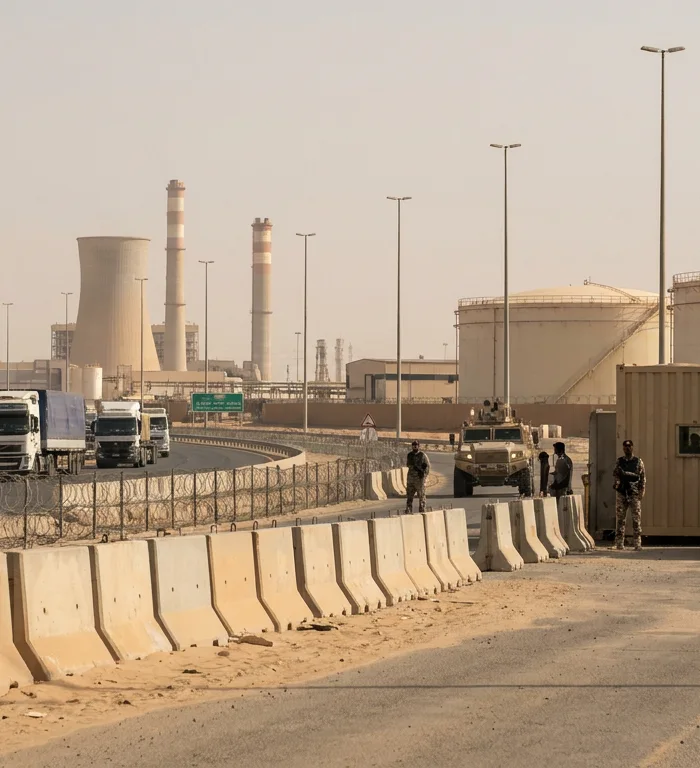
Houthi officials said on Oct. 14 they fired a ballistic missile at Riyadh’s King Khalid International Airport, while Saudi officials said air defenses intercepted a missile heading toward the capital.
Reaction pending. The competing accounts leave the immediate damage picture unclear, but the claim adds to energy-security risk around Saudi Arabia, the world’s largest crude exporter.
Riyadh airport claim widens risk
Houthi military spokesperson Yahya Saree said the group directly targeted the airport and said “the hit was accurate.” Saudi-led coalition officials gave a different account, saying their forces intercepted a ballistic missile fired toward Riyadh.
The claims have not been independently reconciled. King Khalid International Airport has faced repeated attacks during the latest escalation, with previous incidents causing casualties, fires and disruption to international aviation, officials said.
Houthi officials also claimed three ballistic-missile strikes against Saudi forces in the Ras al-Ara and Al-Madaribah areas of southwestern Yemen. Saudi Arabia has continued airstrikes against Houthi positions and suspected launch infrastructure as both sides expand operations inside Yemen and into Saudi territory.
For energy markets, the risk channel is not the airport alone. If missile launches continue toward Saudi infrastructure, traders may price a higher security premium into crude, shipping insurance and regional logistics. If Saudi interceptions continue to hold, the company-level impact for Saudi energy operators may stay limited to security costs and contingency planning.
The next check is whether Saudi or Houthi officials issue further operational updates in the 24 hours through Oct. 15.
More stories
- Stocks face rotation risk at 5.9% Treasury yield, according to BofA
- Natacha Polony joins France's 2027 presidential race
- IMF urges US deficit cuts as debt costs strain economies
- Lagarde urges France to tackle debt through fiscal consolidation
- Fed rate outlook splits as Williams sees limited tightening
- US ETF issuers add nearly 1,100 funds in leveraged push
- Deutsche Telekom shares rise as Elliott stake is reported
- U.S. strikes widen Iran war as Tehran reports 18 killed
Latest news
- Fairfax faces CSB choice in $5.6bn IDBI stake deal
- Wolfspeed faces dilution risk in $1.5bn Pentagon loan
- Iran targets Starlink with jail terms of up to 5 years
- LLM crisis reports capture 5.4%-11.0% of official figures
- Publicis beats Q3 forecasts with 5% organic revenue growth
- Türkiye Desk: Tencent’s Flow Games move tests Türkiye’s mobile thesis
- Rockstar plans GTA 6 PC release by March 2027, GamesBeat says