Saudi maritime coalition forms as Gulf attacks widen at sea
Saudi Arabia launched a 14-country Saudi maritime coalition to protect Gulf shipping as Red Sea attacks and Iran-linked clashes widen.
Lauren Collins ·
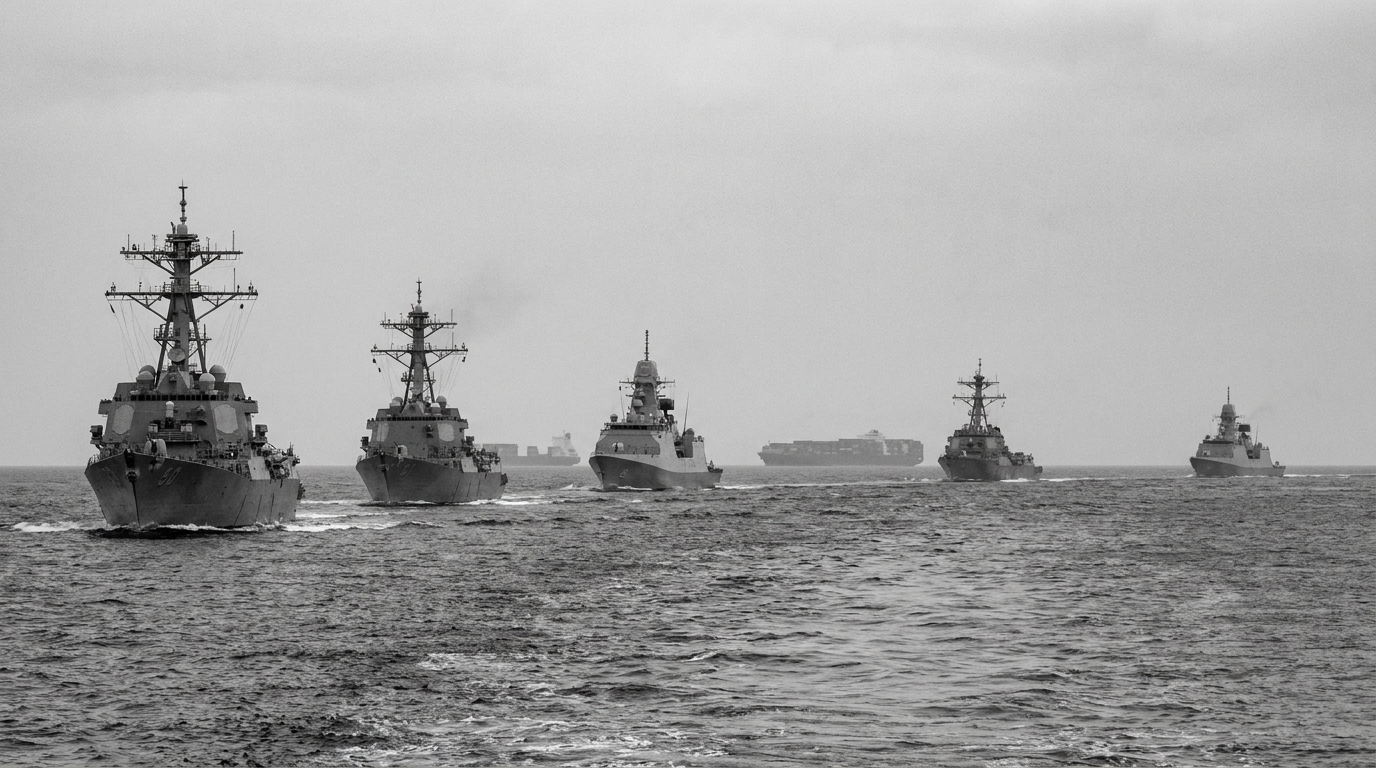
Saudi maritime coalition plans put Riyadh at the center of a 14-country effort to protect Gulf shipping as regional attacks spread.
Saudi Arabia announced the new grouping after months of trying to avoid deeper military entanglement in the U.S.-Iran conflict. The decision moves Riyadh from cautious distance to active maritime security coordination at a time when attacks linked to Iran-aligned forces are reaching more fronts.
The shift matters because Saudi Arabia is now managing pressure from Iran, Houthi forces in Yemen and Iran-aligned militants in Iraq. The account said Saudi forces struck those Iraq-based militants alongside the U.S. this week, adding a northern front to the kingdom's existing concerns around Yemen and the Gulf.
Riyadh moves after months
For months, Riyadh had resisted being pulled into a wider confrontation. The coalition announcement suggests that calculation changed as threats to shipping, ports and Saudi territory became harder to separate from the regional conflict.
The 14-country format gives Saudi Arabia a broader diplomatic shield for maritime operations, but the initial account named only Egypt among the participants. That leaves open questions about the full roster, command structure, rules of engagement and where patrols or coordination centers will operate.
The security geography is unusually compressed. Yemen sits along the Red Sea approaches, Iraq gives Iran-aligned groups a route near Saudi Arabia's northern flank, and Iran faces the kingdom across the Gulf.
Egypt joins after port fire
Egypt's inclusion gives the coalition a direct Red Sea dimension, not just a Gulf one. Cairo was pulled closer to the confrontation this week after drones hit a port and ignited two ships, according to the account.
That incident shows how the conflict can move from proxy warfare into commercial infrastructure. A port strike that damages vessels affects not only governments, but also shipping firms, insurers, port operators and cargo owners trying to judge whether routes remain usable.
The account also said Houthi forces attacked Saudi Arabia from inside Iraq, a detail that points to tighter coordination among Iran-aligned groups. If attacks can be launched across theaters, Saudi defenses must cover more than one border and more than one maritime corridor.
Shipping risk widens beyond Yemen
For the maritime sector, the first test is whether the coalition reduces uncertainty or adds another layer of military activity around already tense waters. Commercial operators will look for practical signals: escorts, intelligence sharing, port security measures and clear warnings about high-risk areas.
The industry implication is broader than a single route. When vessels, ports or anchorages are targeted, insurers can reassess risk, carriers can alter schedules and cargo owners can face delays even before any formal closure occurs.
For Saudi Arabia, the coalition offers a way to frame its response as collective defense rather than unilateral escalation. That distinction is politically useful, but it will depend on whether member states are willing to contribute capabilities, not only public support.
Three paths for Gulf security
If the coalition deters further attacks, the macro effect would be a lower risk premium around Gulf and Red Sea cargo flows. Saudi Arabia would strengthen its role as a regional security organizer, while shipping and insurance firms would gain a clearer operating framework.
If attacks continue despite the coalition, the mechanism cuts the other way: more incidents would raise doubts about deterrence, pressure Saudi defenses and keep maritime operators focused on rerouting, security costs and possible port disruption. The wider industry would then treat the coalition as a partial buffer, not a solution.
If Iran-aligned groups coordinate more closely across Yemen, Iraq and the Gulf, the conflict becomes harder to contain because each front can affect the others. The open questions are concrete: which countries join beyond Egypt, how the coalition shares intelligence, and whether its mandate is limited to shipping protection or extends to strikes against attackers.