Saudi Arabia energy sites halt work after Houthi attacks
Saudi Arabia energy facilities halted operations after Houthi attacks wounded 73 people, adding supply-security pressure as oil prices rose.
Atlas Newsdesk ·
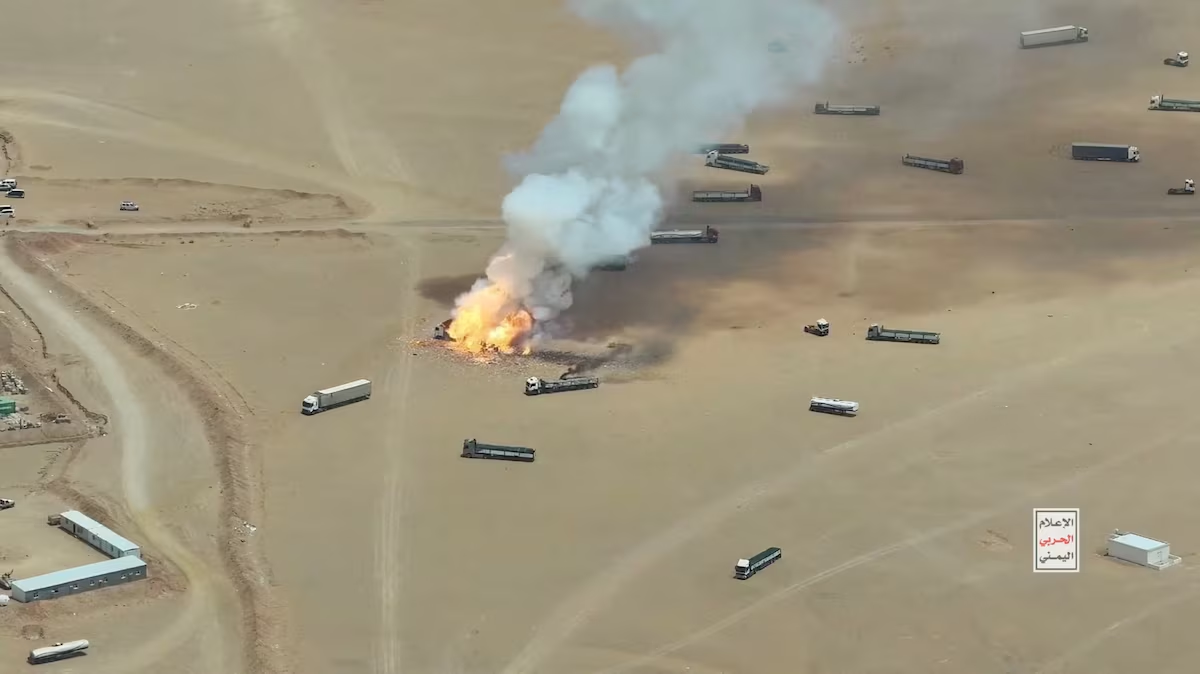
Saudi Arabia energy facilities halted operations after Houthi attacks wounded 73 people, adding supply risk as oil prices rose.
The Saudi energy ministry said fires broke out at affected sites on Tuesday, with emergency teams working to contain the flames and evaluate damage. The ministry said authorities were handling the aftermath and would take measures to protect workers, facilities and operations under approved plans.
Seventy-three wounded in south
The Saudi-led coalition said the Houthis struck Abha, Khamis Mushait, Jazan and Najran, four southern cities near the Yemen border. The coalition said the wounded included women and children, and described the assault as a "dangerous" escalation.
Yahya Saree, the Houthi military spokesperson, said the group carried out a broad operation against Saudi targets. He said the strikes used drones and ballistic missiles against Aramco facilities in Abha, Najran and Jizan, as well as an air base in Khamis Mushait.
The coalition said it would respond with operational measures against the group. Colonel Turki al-Malki, the coalition spokesperson, said on X that the coalition would confront what it called the militia's hostile approach.
Oil prices test supply nerves
Oil futures moved higher after the Saudi energy ministry statement. Brent crude was quoted $1 higher at $98 a barrel, while U.S. crude was quoted more than $2 higher at $93.65 a barrel.
The price move matters because Saudi Arabia is the largest oil exporter globally and Aramco sits at the center of its production system. The ministry confirmed stoppages at some energy facilities, but it did not provide affected capacity, expected downtime or a full damage estimate.
Aramco had not issued a comment in the available material. Without a company assessment, the immediate operational question is whether the stoppages are precautionary, tied to fire damage, or linked to safety checks before restarts.
Yemen front widens pressure
The Houthis control much of northern Yemen and the country's most populated areas. The group has launched attacks toward Saudi Arabia since July, when it declared a naval blockade against Riyadh and began targeting Saudi vessels in the Red Sea.
Saree said on Monday that Riyadh had taken escalatory steps through airstrikes on Yemen and warned that the latest strikes would be answered. The coalition did not announce recent strikes, while the Saudi-backed Yemeni government has mounted an offensive on several fronts against the Houthis in recent days.
If the facility stoppages prove brief and emergency crews keep damage contained, the global macro effect would likely run mainly through an oil-risk premium rather than lost supply. Under that path, Aramco would face inspections and restart work, while refiners, traders and shippers would focus on air-defense and Red Sea routing risks.
If damage instead disrupts flows for longer, higher crude prices would feed into fuel costs and import bills, especially for oil-importing economies. Aramco would face closer scrutiny of facility security and recovery timing, while the wider energy sector would look for alternative cargoes and reassess exposure to Saudi infrastructure.
The main open questions are how quickly halted sites can resume work, whether Aramco provides a damage assessment, and whether the coalition response triggers another round of attacks. Those answers will determine whether the incident remains a contained security shock or becomes a larger supply concern for oil markets.