

Iran sanctions drive new U.S. campaign to isolate Tehran
The U.S. sanctioned more than 60 Iran-linked targets as Treasury warned foreign firms that business with Tehran may draw penalties.
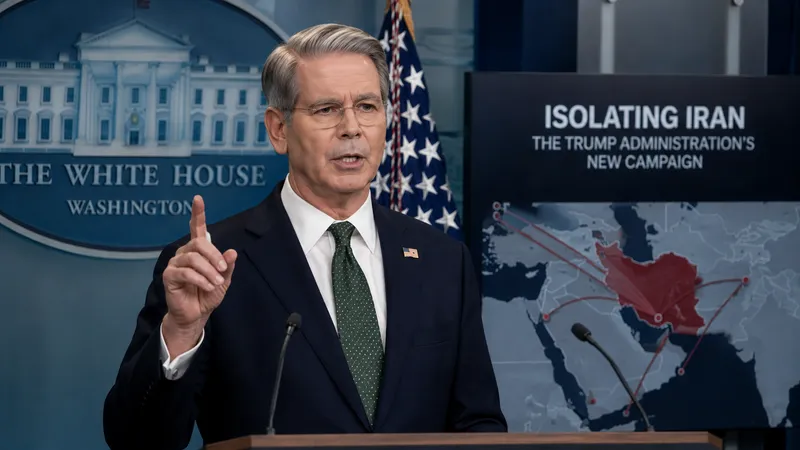
The U.S. announced Iran sanctions on more than 60 targets Monday, widening pressure on Tehran’s oil, banking, shipping and technology links.
Treasury Secretary Scott Bessent described the effort as “Operation Economic Outcast,” a campaign aimed at isolating Tehran from foreign finance and trade. He warned that “An economic engagement of any kind with this murderous regime will expose those responsible to the full reach of American power.”
Bessent said the targets include entities, individuals and vessels that Washington says help Iran obtain nuclear and missile technology, generate oil revenue and conduct cyber operations. The Treasury Department later said secondary sanctions could reach five sectors: digital assets, technology, gold, aviation and shipping.
Five sectors face Treasury risk
Treasury also suspended several general licenses for remittance payments and issued guidance for firms that comply with Iranian demands in the Strait of Hormuz. Bessent did not identify public deadlines for individual countries, saying Washington had private timelines but “not infinite patience.”
The China issue was the central test left unresolved in the announcement. Bessent did not mention China, a major buyer of Iranian oil, in his opening remarks, but said when asked about Chinese banks that “no one is above the reach of the U.S. sanctions.”
Bank Melli enters pressure campaign
The campaign adds financial pressure to the Trump administration’s naval blockade against Iranian ports and commerce. President Trump said on social media Monday that Iran is “completely collapsing,” after Iran’s currency recently dropped to a record low against the dollar.
Bessent said Washington would press other governments to close foreign branches of Bank Melli, Iran’s largest state-owned bank. He also said Treasury would announce sanctions against a financial institution this week and take new steps to restrict aviation, shipping, gold and digital-currency links with Iran.
Tehran rejects isolation threat
Iranian officials dismissed the U.S. campaign as ineffective. Mohammad Bagher Ghalibaf, Iran’s top negotiator and parliament speaker, wrote on X that “Americans know that no one buys their bombast,” adding that Iran’s trading partners had told Tehran they did not take the statements into account.
The sanctions push comes as Washington and Tehran have not reached an agreement to fully reopen the Strait of Hormuz or curb Iran’s nuclear ambitions. The U.S. has sanctioned Iran for years, including during President Trump’s first-term “maximum pressure” campaign, while Bessent said last week the new policy aimed to create conditions for “regime collapse.”
If foreign governments close Bank Melli branches and firms pull back from the five named sectors, the global effect would run through tighter oil-payment channels and higher compliance costs in shipping and aviation. Bank Melli would lose foreign touchpoints, while banks, insurers and commodity traders would face stronger incentives to screen Iran-linked transactions.
If major buyers and banks resist U.S. pressure, the macro effect would be narrower and Iran could preserve some revenue channels despite added legal risk. The open question is whether Washington is prepared to penalize foreign firms in countries where broader economic ties compete with sanctions enforcement.
More stories
- Putin relays Iran view to President Trump
- Red Cross says Gaza hostage access involved Haniyeh talks
- Trump urges Zelensky replacement over refinery strikes
- Saudi Arabia suspends Riyadh airport operations after attack
- Kyiv playground blast puts Ukraine air-defense stocks back on Washington’s agenda
- Rubio’s Athens speech hardens Washington’s public line on Iran
- Netanyahu says Iran tried to kill one son as vote nears
- US Bolsters Iran Sanctions Warning to Global Entities
- UK Power Plant Downed by Suspected Iran
- UK Transfers Missile Technology to Accelerate Ukraine’s Domestic Weapons Production