Russia-Ukraine strikes kill nine in Moscow, Sumy raids
Russia-Ukraine strikes killed nine civilians as attacks reached warehouses, an oil refinery, homes and port targets on both sides.
Omar Farouk ·
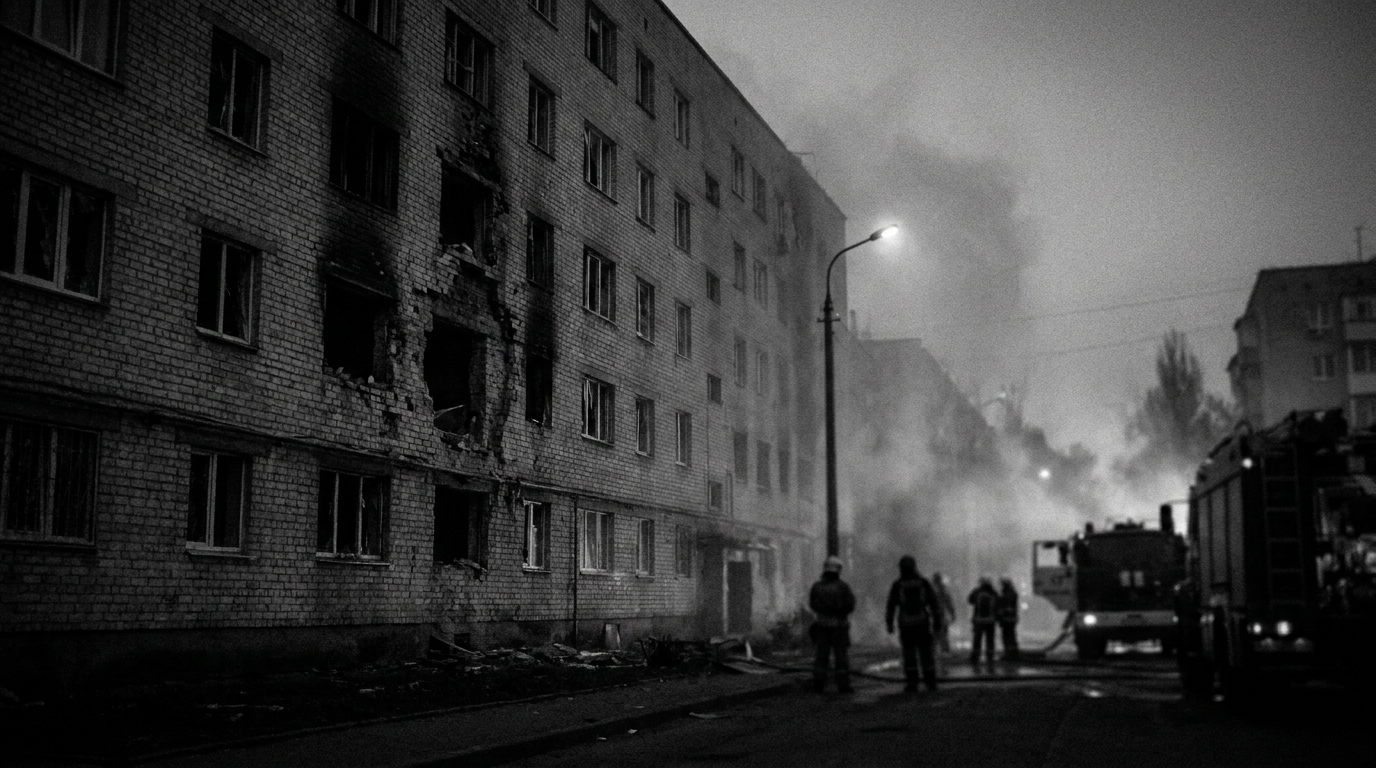
Russia-Ukraine strikes killed nine civilians as drones and other attacks hit warehouses, a refinery, homes and port targets on both sides.
The reported deaths came from both governments and local officials, and the supplied material does not allow independent verification. Still, the pattern is clear: each side is pushing more of the war into logistics, fuel supply and civilian-adjacent infrastructure far from the main front.
Moscow warehouse attack kills five
Moscow region governor Andrei Vorobyov said a Ukrainian drone struck a warehouse in the region, killing five people and wounding 10. The account placed civilian losses inside Russia at the center of the latest exchange, rather than only near occupied or border areas.
Kyiv said its forces hit three Russian warehouse targets overnight. It identified Wildberries-linked logistics facilities, one in Tver and another outside St Petersburg, as among the sites struck.
Ukraine also said it attacked the Syzran oil refinery in Samara. That claim matters because refinery capacity is a direct link between the battlefield and Russian households, touching fuel availability, transport costs and public tolerance for a longer war.
Sumy and Mykolaiv report deaths
In Ukraine, officials reported four civilian deaths across Sumy and Mykolaiv. Two children were among three people killed in Sumy, while an 89-year-old woman died in Mykolaiv.
Moscow's state-run media reported that Russian forces struck seven cargo vessels at the port in Mykolaiv. The supplied material does not establish the vessels' owners, cargoes or condition after the reported attack.
Those gaps are important because ports, ships and warehouses can serve very different roles in wartime. A strike on military-linked cargo has a different legal, economic and diplomatic profile from damage to commercial shipping or civilian supply chains.
Logistics becomes the battlefield
The exchange shows how the war is stretching from trenches and power facilities into the arteries that move goods, fuel and industrial inputs. Warehouses, refineries and ports are not symbolic targets; they are systems that determine how quickly armies and economies can absorb damage.
For Wildberries, the immediate question is operational disruption at the reported logistics sites. If the damage is limited, the company may reroute inventory through other facilities; if storage, sorting or transport links were impaired, delays could spread across merchants and consumers using its network.
The refinery claim carries a wider industrial signal. If Kyiv can keep reaching refining assets, Russia faces pressure to spend more on air defense around energy infrastructure, potentially diverting resources from other military and industrial priorities.
For Ukraine, the civilian toll in Sumy and Mykolaiv reinforces the cost of Russia's ability to strike cities, ports and residential areas. The reported attack on cargo vessels also points to continued risk around Black Sea-linked trade routes and port insurance, even when global grain or freight data are not available in the supplied material.
Three conditional paths
If the refinery strike caused only short-lived disruption, the global macro effect would likely be contained through inventory management and rerouting inside Russia. Wildberries would remain the company most directly named in the logistics portion of the exchange, while the broader e-commerce and delivery sector would treat the attack as an acute security event rather than a structural shock.
If attacks on refineries become repeated and effective, the mechanism changes. Global energy markets would watch Russian fuel flows more closely, Wildberries and other logistics-heavy companies would face higher security and transport uncertainty, and Russia's refining industry would have to harden sites that were not built for wartime drone defense.
If Moscow escalates attacks on Ukrainian ports and shipping, the pressure would move through insurance, vessel availability and export confidence. That would add a trade channel to the macro risk, deepen operational pressure on Ukrainian port cities and push the wider shipping sector to reassess exposure to Mykolaiv and nearby routes.
The honest unknowns are the scale of physical damage, the military relevance of each target and whether either side can sustain this range of strikes. Until those details are confirmed, the safest reading is narrower but serious: the war's logistics map is expanding, and civilians are dying on both sides of it.