Brazil visa denial puts Trump officials in election fight
Brazil denied visas to two Trump administration officials, widening a dispute over election integrity before October's presidential contest.
Lauren Collins ·
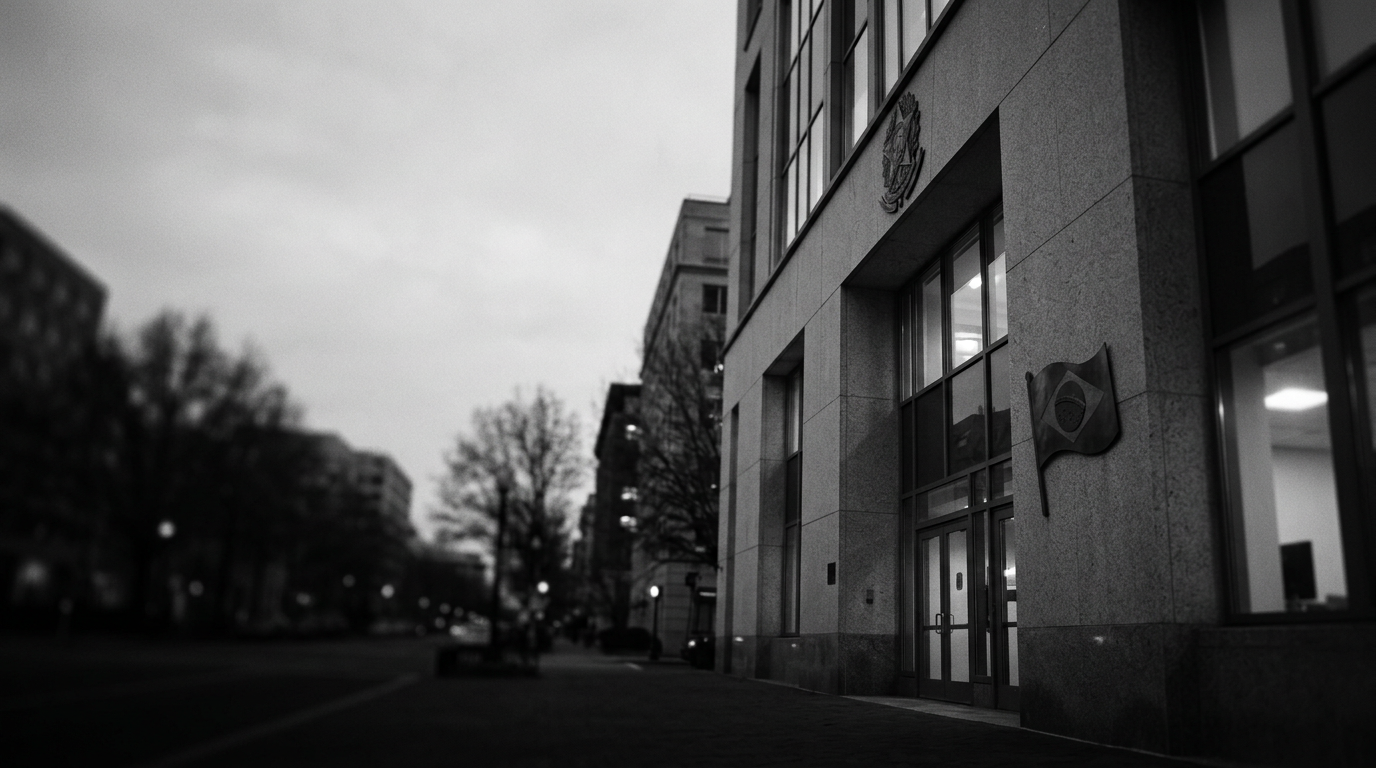
Brazil visa denial has opened a diplomatic clash over election integrity before the October presidential vote. Two U.S. officials were affected.
Brazil's Foreign Ministry said Saturday it refused visas for Riley M. Barnes, assistant secretary from the State Department's Bureau of Democracy, Human Rights, and Labor, and Samuel Samson, a deputy assistant secretary of state. The two Trump administration officials had planned to visit Brazil early next week.
Barnes and Samson refused
The U.S. State Department confirmed the planned trip and said the agenda covered election integrity, religious freedom and freedom of expression. In a statement, the department rejected the Brazilian interpretation of the visit: "Any insinuation of a 'ploy' to undermine a democratic nation's election is a baseless lie."
The department described the travel as a routine visit. Brazil's decision turned that planned diplomatic engagement into a test of how far President Luiz Inácio Lula da Silva's government will go to protect confidence in the country's voting system.
Vote machines draw scrutiny
Brazilian officials said concern rose in Brasília after Flávio Bolsonaro told diplomats that Brazil's electronic-voting machines were produced by the Venezuelan company Smartmatic. Officials viewed the remark as an attempt to cast doubt on the system's integrity before ballots are cast in October.
People close to da Silva said the government believes the proposed U.S. delegation fits into a broader effort by Jair Bolsonaro's sons, including Eduardo Bolsonaro, who lives in the U.S., to challenge the legitimacy of the election if Flávio Bolsonaro loses. That account is the Brazilian government's view, not an independently established finding.
The dispute arrives with Brazil's right trying to rebuild around the Bolsonaro name. Flávio Bolsonaro, Jair Bolsonaro's eldest son, was formally nominated Saturday as the right-wing candidate at a party convention attended by Argentine President Javier Milei, an ideological ally.
Bolsonaro family returns to ballot
Jair Bolsonaro is serving a 27-year prison sentence at home for plotting a coup ahead of the last presidential election. His conviction is central to the current dispute because it keeps the family's claims about election rules tied to Brazil's recent institutional crisis.
For da Silva's government, the risk is that outside attention to election procedures could harden public distrust in a system already under political attack. For the Trump administration, the visa denial raises a separate question about whether democracy and rights diplomacy can proceed when the host government sees the agenda as election interference.
The immediate impact falls on the two officials and on the State Department's Brazil channel. Meetings planned for early next week are now blocked unless Brazil reverses course, reschedules under different terms or the sides move the discussion to another format.
Diplomatic channels narrow
The sector most exposed is not a conventional industry but the election-technology and political-consulting ecosystem around the October contest. Claims about voting machines can pressure election administrators, campaign lawyers, digital platforms and parties to respond before any official result exists.
The global channel is political risk. If a major Latin American democracy enters campaign season with Washington and Brasília arguing over election integrity, investors and diplomats may focus less on policy platforms and more on institutional stability, legal challenges and post-election acceptance.
Three conditional paths now matter. If Brazil holds the visa line, the Lula government may signal firm control over election sovereignty, while the State Department loses direct access and the wider democracy-promotion sector faces tighter scrutiny in Brazil.
If both governments shift the meetings to a lower-profile format, the macro effect would be contained diplomatic friction, the company-specific equivalent would be less direct pressure on voting-technology claims, and Brazil's election agencies could keep the focus on rules rather than foreign involvement.
If allegations about machines spread anyway, the global effect would be higher Brazil risk premiums, the Bolsonaro campaign would face sharper legal and political scrutiny, and the wider election-services sector would be pulled deeper into a partisan fight.