Roll Call photo feature documents Women’s March in Washington, D.C.
Roll Call's photo feature documents the Women's March in Washington, D.C., showcasing civic mobilization and its visible impact on city streets and public…
Sophie McAlister ·
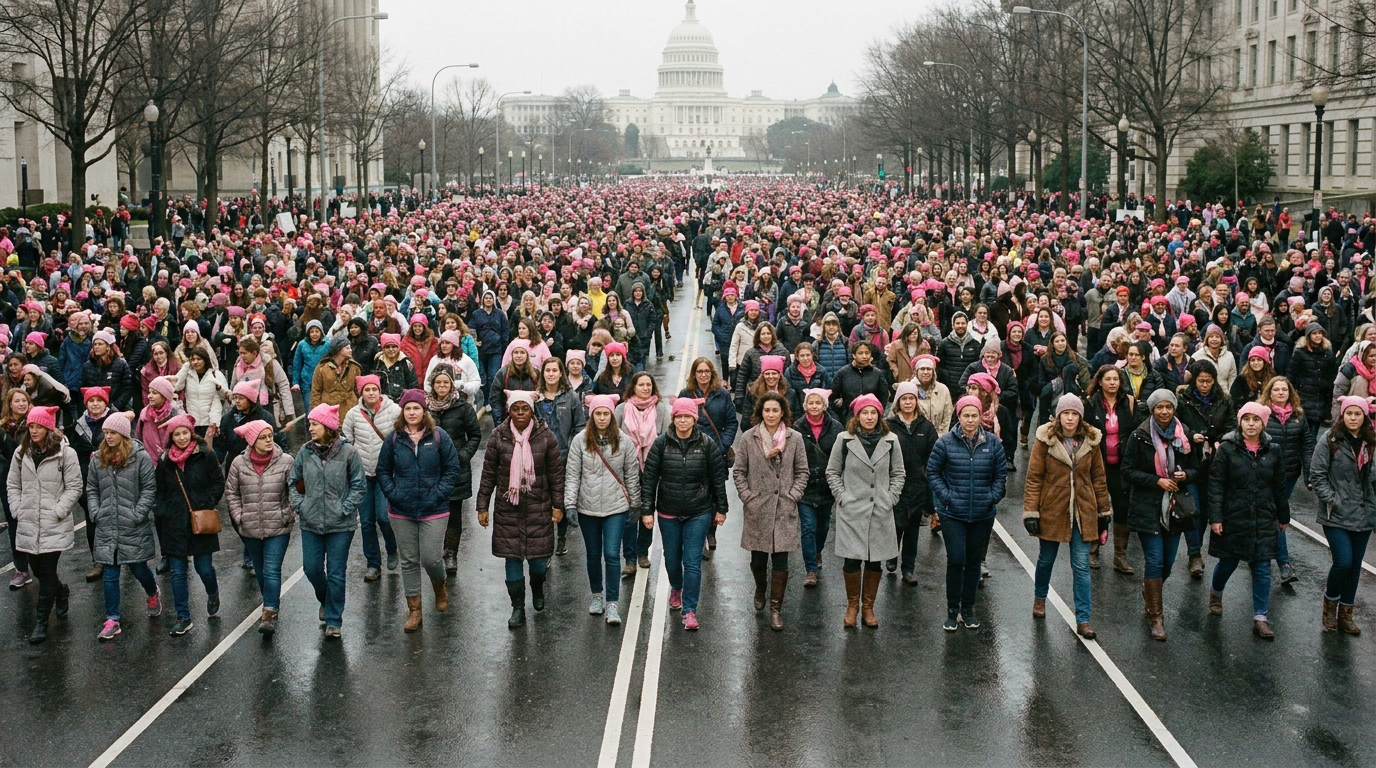
Roll Call published a photo feature documenting the Women’s March in Washington, D.C., presenting a series of images showing participants, signage, and scenes from the demonstration. The package centers on visual reporting rather than a written narrative, using photographs to convey the scale and character of the event in the nation’s capital.
The photographs depict people gathered in downtown public spaces in Washington, D.C., carrying banners and signs and moving along city streets. The images focus on a mix of close-up portraits and wider frames that situate marchers within urban landmarks and thoroughfares. Roll Call’s photo selection emphasizes the visual and civic dimensions of the march.
Local authorities and city agencies typically manage large demonstrations through permitting and public-safety planning; the photo feature captures the demonstration as a public event that alters the normal use of downtown streets and parks. Photographs like these often accompany coverage that traces how demonstrations interact with municipal operations, transit, and pedestrian flows.
Civic photography as record
Photography offers a primary record of public demonstrations, documenting who showed up, what messages were visible, and how participants used space. Roll Call’s images add to a visual archive that community members, researchers, and local officials can reference when assessing public response and civic engagement in Washington, D.C.
Visual reporting also shapes how city residents and visitors remember an event. Images that focus on individuals and small groups can highlight personal motivations, while wider shots show the event’s relationship to public infrastructure. The photo feature provides both perspectives, offering a layered view of the march.
City impact and civic life
Demonstrations in the nation’s capital frequently touch downtown neighborhoods, transit corridors, and public gathering places. Photographs that show crowd movements and staging areas underscore the ways civic activity overlaps with everyday city life, from sidewalks to bus routes. For residents and businesses, such events are part of Washington’s routine of public expression.
Roll Call’s photo package is a visual snapshot rather than an exhaustive account. It complements other reporting that may examine organizers’ goals, permit details, or official statements. Together with other coverage, photo journalism helps build a fuller picture of the march’s scope and effects on the city.
Watch for follow-up reporting that may include first-person accounts, official comments about permits and public safety, and additional images that trace how the event unfolded over the day. Photographs like those published by Roll Call will continue to be a primary source for understanding public demonstrations in Washington, D.C.