

Opposition Leader Return to Venezuela Signals Potential Shift in Political Transition
María Corina Machado’s return to Venezuela increases pressure for an electoral timetable amid ongoing political and economic uncertainty.
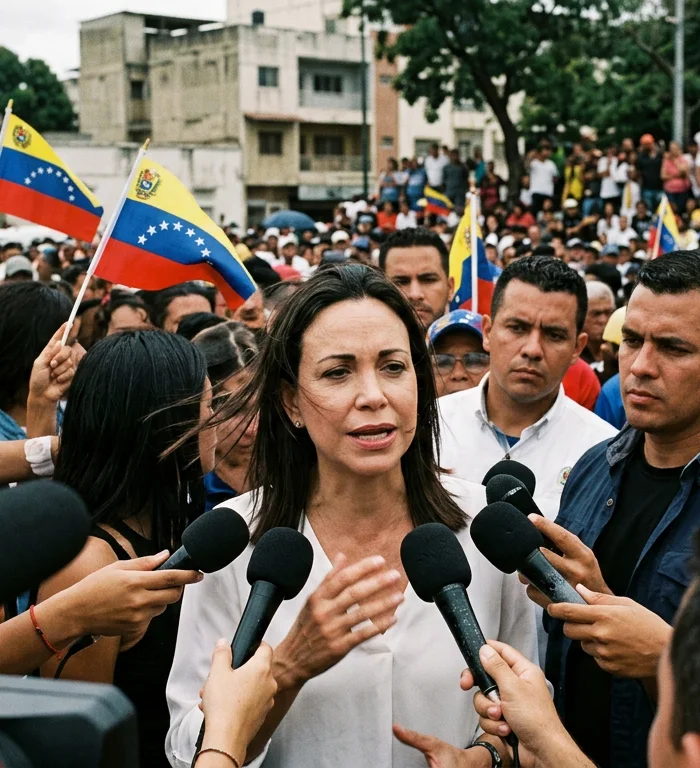
The return of opposition leader María Corina Machado to Venezuela on October 25 marks a significant development in the nation’s ongoing political transition. Following nearly 11 months of absence and multiple denied entry attempts, her arrival in Barquisimeto has intensified pressure on the current administration to establish a definitive electoral timetable. This development occurs within the context of U.S.-backed reconciliation talks, which officials describe as the primary mechanism for achieving democratic stability.
While the return is viewed as a potential catalyst for institutional reform, significant structural barriers remain. Machado continues to face a political disqualification imposed in 2023, and her party remains excluded from the formal negotiations currently conducted between regime representatives and other opposition factions. Analysts note that the normalization of the status quo currently outpaces the democratic transition, with the regime maintaining its administrative control despite the presence of opposition leadership.
From an economic perspective, the sustainability of Venezuela’s recovery is increasingly linked to the pace of political institutionalization. The lack of a clear electoral horizon and the persistence of legal uncertainty remain primary deterrents for long-term foreign investment. While the return of a prominent opposition figure may increase investor confidence by signaling a move toward predictable governance, it also introduces risks of social volatility if public expectations for rapid economic improvement are not met.
Market participants and policymakers should monitor the regime’s response to potential social mobilization. The intersection of persistent economic grievances—such as failing public infrastructure and low wages—with renewed political activity creates a complex environment. Future stability will depend on whether the current political dialogue can produce concrete agreements regarding the Supreme Court and Electoral Council, or if the regime will resort to further judicial or administrative restrictions to manage the opposition's influence.
More stories
- Germans oppose Ukraine aid as poll shows support slipping
- Kim Jong-un receives 10 envoys after constitutional shift
- Ukraine claims Libya strike sinks Russian naval corvette
- COP31 climate talks collapse over fossil fuels and funds
- Russian military faces 1,087 recorded suicides in Ukraine war
- US faces China, Russia in Africa minerals contest
- Russian strikes leave many Kyiv homes with 4 hours of power
- Cebu groups seek probe into protest dispersal with more than 20 hurt
- US tip-off in Moscow case points to security cooperation
- Türkiye seeks 30% OIC trade share after $108bn nine-month flow
Latest news
- Trump prepares tariffs on China and other major exporters
- New-car buyers pay record average $50,087 in October
- Banks face ECB reserve debate over liquidity and profits
- Investors see Anthropic debut gains fade below $83 a share
- Iraq orders federal control over Kurdish-area oilfields
- Nvidia shares retreat as AI rally cools before PCE data
- Macy’s parade faces balloon limits as storm winds approach