

South Korea Faces Institutional Crisis Over AI-Assisted Examination Fraud
AI integration in South Korea’s high-stakes exams has sparked a national crisis, a ministerial resignation, and a loss of faith in meritocracy.
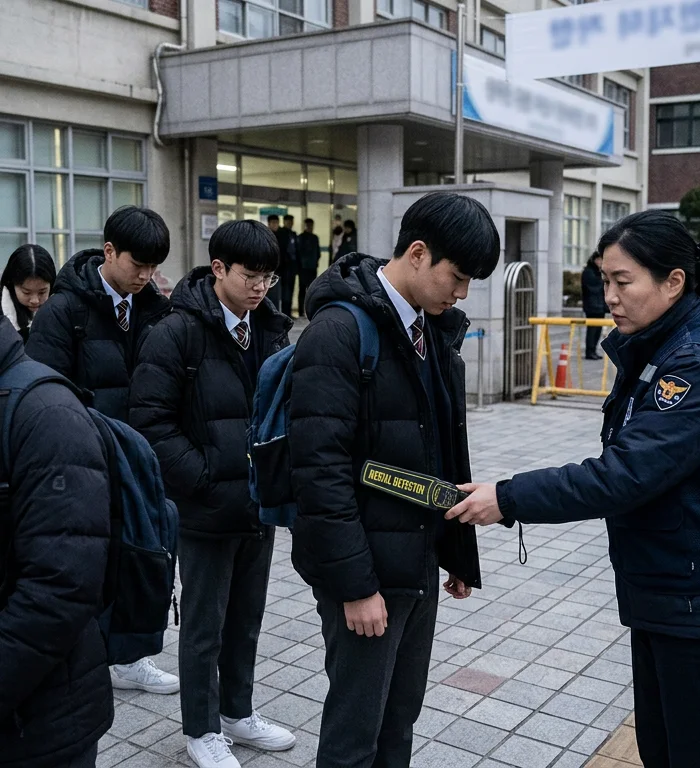
South Korea’s high-stakes examination system is facing a systemic crisis as the integration of artificial intelligence (AI) tools threatens the perceived integrity of national testing. The suneung, an eight-hour university entrance exam, and various professional certification tests are increasingly vulnerable to sophisticated cheating methods, including the use of AI-enabled smartglasses. This technological shift has undermined public confidence in exams, which are traditionally viewed as the primary mechanism for social mobility and meritocratic selection in the country.
In response to the escalating threat, the government has implemented extreme security measures, including the use of emergency alert systems typically reserved for national security threats to identify illicit electronic devices. During the most recent testing cycle, 111 candidates were apprehended for possessing prohibited technology. The government has also introduced financial incentives, offering rewards of approximately $74,000 for verified reports of cheating, reflecting the high political priority placed on maintaining the credibility of these assessments.
South Korea
The disruption has resulted in significant political fallout, including the resignation of the Minister of Education following administrative failures and public outcry regarding the management of the testing environment. Sociological analysis suggests that the intense pressure to succeed in these exams—which are often perceived as the only objective path to economic stability—creates a high-risk environment where candidates are incentivized to bypass traditional barriers by any means necessary.
Despite ongoing efforts to reform the testing structure, including a planned redesign for 2028, the reliance on multiple-choice formats remains a point of contention. Critics argue that the current system, while intended to be an equalizer, is failing to adapt to the capabilities of modern AI. The government now faces the challenge of balancing the need for rigorous, fair assessment with the reality that traditional, memorization-based testing is increasingly susceptible to technological subversion. Future policy stability will likely depend on the successful implementation of more secure, AI-resistant evaluation methods.
More stories
- Europe faces attribution gap after 16 cyber, physical incidents
- PIF backs Grand Theft Auto as Saudi players embrace game
- Signal limits screenshots to curb AI access to messages
- Cognition runs Devin Mac workspaces on EC2 in 6 AWS regions
- Salesforce engineers cut 600-failure triage to 90 minutes
- Türkiye Desk: GTA 6 puts console access and network demand in focus
- Activision will reportedly let Warzone players turn off the paid cosmetics that fund its empire
- Sony files a patent to turn the DualSense into a card reader, but friction has its uses
Latest news
- Trump prepares tariffs on China and other major exporters
- New-car buyers pay record average $50,087 in October
- Banks face ECB reserve debate over liquidity and profits
- Investors see Anthropic debut gains fade below $83 a share
- Iraq orders federal control over Kurdish-area oilfields
- Germans oppose Ukraine aid as poll shows support slipping
- Kim Jong-un receives 10 envoys after constitutional shift
- Ukraine claims Libya strike sinks Russian naval corvette