Sony files a patent to turn the DualSense into a card reader, but friction has its uses
Sony Interactive Entertainment has filed a patent for an NFC-enabled PlayStation controller that reads physical bank cards.
Jason Kwon ·
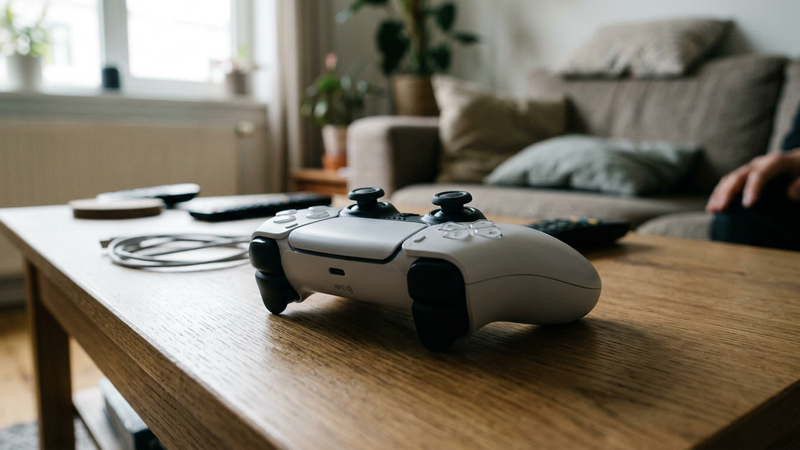
Sony Interactive Entertainment has filed a patent to build an NFC reader directly into its PlayStation controllers, aiming to let players buy digital goods simply by tapping a physical bank card against the gamepad, according to a report from Polygon .
The filing outlines a system where a user could bypass on-screen keyboards and saved digital wallets entirely. When a prompt to purchase a game, expansion, or microtransaction appears on the television, the player would simply take a contactless debit or credit card and tap it against a designated zone on the DualSense controller.
It is a remarkably straightforward hardware solution to a software problem, and it perfectly encapsulates where platform holders are looking to squeeze out their next few points of margin. But a patent filing is a claim of invention, not a product announcement. To understand why Sony is paying lawyers to protect the idea of a tap-to-pay gamepad, you have to look at the fundamental economics of the digital storefront.
The enemy of live-service revenue is the D-pad keyboard
If you have ever wondered why a free-to-play shooter wants premium prices for a character skin, this is the storefront psychology behind it. Live-service economics rely heavily on impulse. When a player decides they want a premium battle pass or a limited-time cosmetic, the platform's only job is to get out of the way before the buyer changes their mind.
In e-commerce, every additional step between a customer's intent to buy and the final confirmation screen causes a measurable drop in conversion rates. On mobile devices, Apple and Google solved this friction with biometric authentication. A double-click of a side button and a face scan can authorize a massive purchase in two seconds.
Console platforms do not have that luxury. If a player does not already have a credit card saved to their PlayStation Network wallet—or if they intentionally keep their payment methods unlinked for security—making a purchase requires navigating a digital keyboard with a thumbstick. Entering a standard credit card number, an expiration date, and a security code using a controller is one of the most agonizing user experiences in modern technology.
Currently, the console workaround for missing payment details often involves scanning a QR code to complete the transaction on a mobile browser. While that is faster than using the D-pad, it still pulls the player's attention away from the television and introduces a second device into the flow. This gives the player solid minutes to realize they do not actually need to spend real money on virtual sneakers. Sony wants to close that window. By effectively turning the DualSense into a point-of-sale terminal, the company is trying to bring the frictionless reality of a coffee-shop checkout to the living room couch.
Why the platform holder cares about the final millimeter
Sony does not just make money when players buy first-party games. The core of the PlayStation business model is the platform tax. The company takes a standard percentage cut of third-party digital sales and in-game microtransactions that occur on its store.
The economics of digital distribution heavily incentivize reducing cart abandonment. When a publisher spends millions on marketing to drive players into a live-service ecosystem, every transaction that fails due to user frustration is lost revenue. By acting as the payment processor, Sony sits at the very bottom of the funnel. If publishers sell more battle passes because the checkout process is easier, Sony's platform revenue increases without the company having to fund or develop a single new game. The controller is the only physical link between the digital storefront and the player's wallet, making it the most logical place to engineer a new payment bridge.
This also subtly addresses a secondary problem for platform holders: password fatigue and household account sharing. Families often share a single console, but a parent might be hesitant to leave a credit card permanently saved to the primary account. A physical tap-to-pay solution allows the purchaser to keep their financial details off the console's hard drive while still making on-demand purchases instantly. It is a neat theoretical bridge between security and convenience, at least on paper.
The chargeback headache and the family console
The obvious read is that a tap-to-pay controller is a brilliant streamlining of the digital economy. But the strongest counter-argument comes from the customer support realities of the games industry. Friction is undeniably annoying for eager buyers, but friction also prevents accidents.
If a child only needs to grab a parent's contactless card from a kitchen counter and tap it against a controller to buy a new game, the rate of unauthorized purchases will inevitably spike. When a parent discovers unauthorized PlayStation charges on their bank statement, they usually call their bank to issue a chargeback.
Platform holders absolutely despise chargebacks. The standard automated response from Sony, Microsoft, and Nintendo when a chargeback hits their system is to immediately suspend the offending user's entire account, locking them out of their digital libraries until the debt is settled. A controller that makes it radically easier to spend money also makes it radically easier to spend someone else's money by mistake. Any hardware rollout of this feature would require robust software guardrails, such as secondary PIN prompts for child accounts, which would immediately reintroduce the exact friction the NFC chip was designed to eliminate.
Patents are defensive claims, not product roadmaps
It is vital to separate the intellectual property filing from the manufacturing reality. Gaming hardware companies patent unusual controller concepts constantly, from gamepads that measure heart rates to thumbsticks with embedded screens. The vast majority of these ideas never survive the prototyping phase.
Hardware revisions operate on multi-year timelines. If this NFC reader does materialize, it is unlikely to be silently slipped into the standard DualSense controllers currently sitting on retail shelves. Adding an NFC chip and antenna increases the bill of materials for a device that is already expensive to produce. It is far more likely to appear as a feature in a future premium peripheral, or perhaps as a baseline specification for the eventual PlayStation 6.
For now, this filing serves as a signal of intent. Sony has recognized that the physical interface is the final bottleneck in the digital purchasing funnel. Whether the company ultimately gambles that the increase in impulse-buy revenue will outweigh the inevitable wave of parental refund requests is a question the patent office cannot answer.