

Delhi Implements Winter Pollution Mitigation Measures Amid Rising Air Quality Risks
Delhi has launched a seasonal anti-pollution plan, but experts warn that success depends on regional cooperation and moving beyond reactive, short-term…
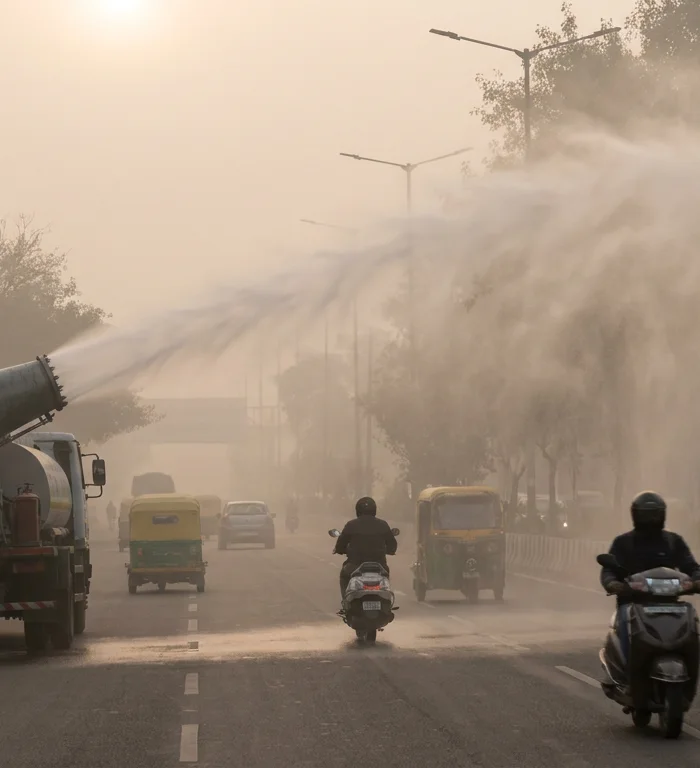
Delhi has initiated its Winter Action Plan, effective from November 1 through February 28, to mitigate the annual spike in hazardous air quality. The strategy includes restrictions on older, non-compliant vehicles, a temporary ban on dust-generating construction activities, and mandates for staggered office hours and remote work to reduce traffic congestion. These local efforts are supplemented by the federal Graded Response Action Plan, which has triggered secondary-stage restrictions, including prohibitions on diesel generators and the burning of coal or firewood.
Despite the early implementation of these measures, the capital continues to experience significant atmospheric degradation. Meteorological conditions, including lower temperatures and reduced wind speeds, are currently trapping pollutants near the surface, exacerbating the impact of regional crop residue burning and industrial emissions. Public health concerns are rising as residents report increased respiratory and ocular irritation, driving demand for personal air filtration systems.
Analysts indicate that while the current planning framework is more proactive than in previous years, the efficacy of these interventions remains contingent upon rigorous enforcement. Experts suggest that the current approach focuses heavily on reactive, short-term restrictions rather than systemic, multi-sectoral emission targets. Long-term improvements are hindered by the persistence of secondary pollutants, urban waste burning, and dust from unmanaged industrial sites.
Furthermore, the transboundary nature of the pollution complicates mitigation efforts. Because pollutants are transported from neighboring states, local policies within the capital are insufficient to address the regional scope of the crisis. Achieving sustainable air quality improvements will likely require coordinated policy frameworks across northern India to address emissions from power generation, transport, and industrial sectors on a broader geographic scale.
More stories
- Nigeria's family-planning budget falls 97%
- Peter Attia reviews cold therapy claims on longevity
- Dietitians advise small swaps for plant-based eating
- TikTok dementia videos mislead in 66.4% of sample, researchers say
- Aberdeen Royal Infirmary faces police inquiry call over 19 deaths
- Bariatric surgery group loses 28.2% after GLP-1 use
- NHS England misses cancer wait targets with 373,000 diagnoses
- NRDC accuses Trump administration of 500 cancer-protection rollbacks
- Jared Feather says knee fracture reshaped training for 18 months
- Silver diamine fluoride stops decay in over half of baby teeth
Latest news
- Trump prepares tariffs on China and other major exporters
- New-car buyers pay record average $50,087 in October
- Banks face ECB reserve debate over liquidity and profits
- Investors see Anthropic debut gains fade below $83 a share
- Iraq orders federal control over Kurdish-area oilfields
- Germans oppose Ukraine aid as poll shows support slipping
- Kim Jong-un receives 10 envoys after constitutional shift
- Ukraine claims Libya strike sinks Russian naval corvette