

Philippine Chinese schools face scrutiny over PCERC’s 150-school reach
The Rappler opinion escalates a dispute over Chinese-language education after Beijing said more than 180 Chinese teachers left the Philippines in October.
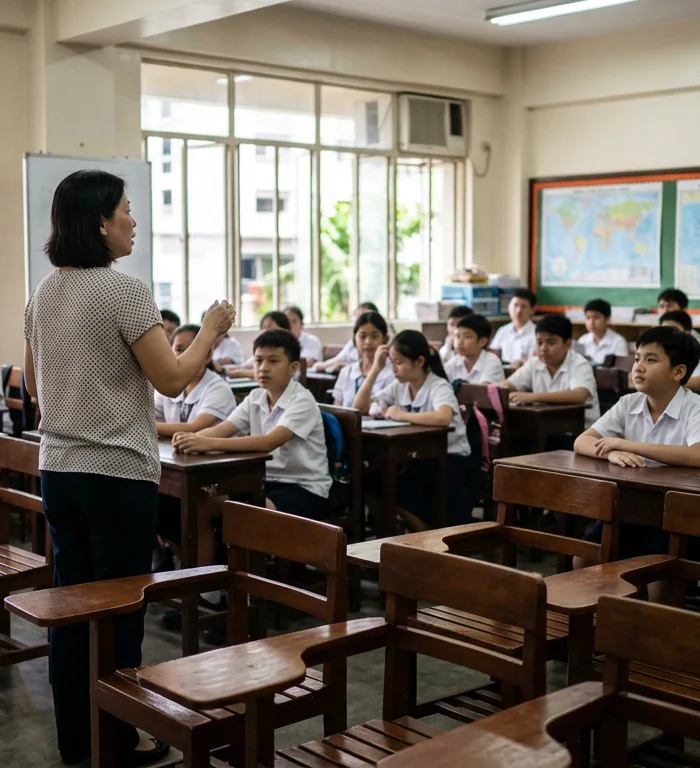
SeaLight Foundation Executive Director Ray Powell said in a Rappler opinion article published Nov. 12 that most of the Philippines’ roughly 150 Chinese schools use textbooks from the Philippine Chinese Education Research Center.
Powell said Huang Duanming, the PCERC chairman, urged schools on Nov. 6 to back four Beijing political objectives, a scale he contrasted with the embassy’s October account that more than 180 Chinese teachers left over safety concerns.
Powell wrote that Huang told Chinese schools to “uphold the one-China principle,” contribute to “Belt and Road construction,” support Xi Jinping’s “community with a shared future for mankind” and “fulfill its responsibility to the cause of the great rejuvenation of the Chinese nation.”
He said those phrases matched Chinese Communist Party political goals and showed United Front work, which he described as the party’s effort to win support outside its ranks and neutralize opposition through local institutions and overseas Chinese networks.
The Chinese embassy has rejected allegations of political infiltration in Chinese-language education. Powell wrote that Ambassador Jing Quan had called discussion of United Front work or infiltration “complete nonsense,” and said the embassy described Chinese-language education in the Philippines as “normal, open, and transparent.”
The dispute follows the withdrawal of Chinese teachers from the Philippines in October. Powell said the embassy cited “safety” and blamed critics, including Powell and Philippine Defense Secretary Gilberto Teodoro, for having “forced more than 180 Chinese teachers out.”
Powell also cited a 2025 essay contest involving the PCERC and a United Front group focused on Taiwan “reunification.” He said it was coordinated with the Department of Education’s Metro Manila office and offered student prizes of up to ₱30,000.
Powell argued that Chinese-Filipino families should not be treated as the problem, saying many families use Chinese-language schools to preserve language and heritage. His article said those families have become targets of what he described as a political interference campaign.
More stories
- Germans oppose Ukraine aid as poll shows support slipping
- Kim Jong-un receives 10 envoys after constitutional shift
- Ukraine claims Libya strike sinks Russian naval corvette
- COP31 climate talks collapse over fossil fuels and funds
- Russian military faces 1,087 recorded suicides in Ukraine war
- US faces China, Russia in Africa minerals contest
- Barcelona clashes follow housing march as Spain strikes
- Germans’ democracy satisfaction falls to one-third
- Trump administration widens Alaska election investigation
- COUP in Poland? Tusk accused of power grab as riot cops swoop on Constitutional Court
Latest news
- Trump prepares tariffs on China and other major exporters
- New-car buyers pay record average $50,087 in October
- Banks face ECB reserve debate over liquidity and profits
- Investors see Anthropic debut gains fade below $83 a share
- Iraq orders federal control over Kurdish-area oilfields
- Nvidia shares retreat as AI rally cools before PCE data
- Macy’s parade faces balloon limits as storm winds approach