

Pentagon rebukes Canada over defence spending and readiness
Defense Secretary Pete Hegseth challenged Ottawa’s military capability and delayed NATO targets as Canadian officials review a planned purchase of American…
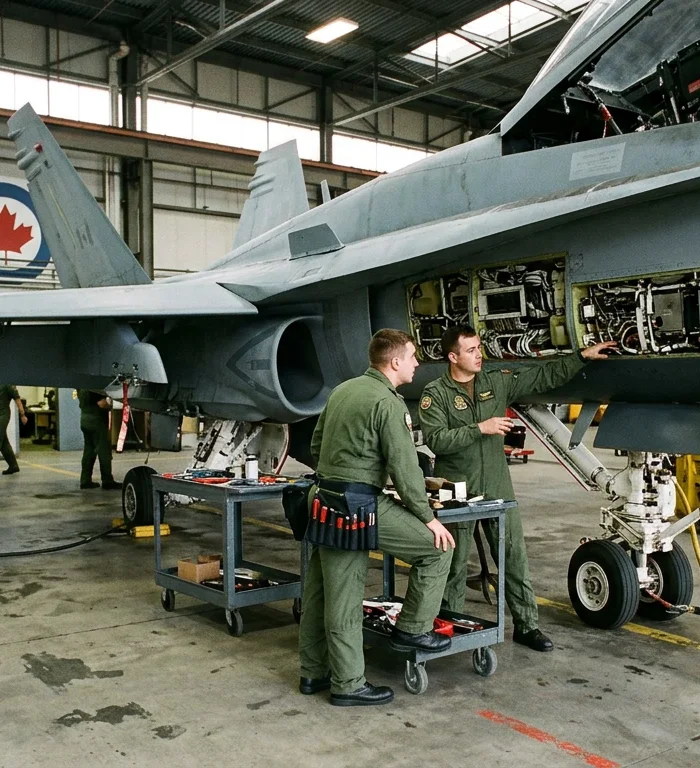
The Pentagon issued a fact sheet on Monday accusing Canada of failing as a credible continental defense partner, citing military readiness rates below 54% alongside delayed budget targets.
The dispute deepens security friction between the neighbors after Canada pledged to reach NATO's 5% of GDP target by 2035, though its Parliamentary Budget Officer warned last week that the path to reach that threshold remains unclear.
In the two-page document, the Department of Defense criticized Canada's investment timeline under Prime Minister Mark Carney, stating that "Canada must get serious and focused." The Pentagon claimed that in 2025-26, only 41.9% of Canada's air force fleet and 53.9% of its naval fleet were serviceable, while army readiness stood at 48%.
Defense Secretary Pete Hegseth is "laser focused" on modernizing Canada's armed forces after decades of what the department described as U.S. taxpayers footing the bill for shared defense. The document also faulted Ottawa's review of its planned purchase of American-made F-35 fighter jets, which Carney ordered in March 2025 during trade disputes with President Donald Trump, warning the delay threatens North American Aerospace Defense Command operations.
Canadian officials rejected the criticism while reaffirming operational cooperation. A spokesperson for Canada's Minister of National Defence David McGuinty said the two nations have stood together in NATO since 1949 and have defended North America through NORAD for nearly seven decades.
"Canada will continue to do its part to defend North America, as we keep having constructive discussions with our American partners on how best to strengthen our shared defense and security," McGuinty's spokesperson said.
Defense analysts warned that airing bilateral grievances publicly carries operational risks. Andrea Charron, director of the Centre for Defense and Security Studies at the University of Manitoba, said that "this kind of public shaming of a very close and important ally sends a chilling effect throughout all the allyships and partnerships that again serves no one but the adversaries."
U.S. lawmakers moved to temper concerns over institutional fallout. Republican Senator Mike Rounds of South Dakota said at the Halifax International Security Forum on Nov. 21 that reported administrative restrictions on Canadian defense interactions involved social engagements and think-tank clearances rather than operational changes.
Source: fact sheet, U.S. Department of Defense, Nov. 23, 2026.
More stories
- Germans oppose Ukraine aid as poll shows support slipping
- Kim Jong-un receives 10 envoys after constitutional shift
- Ukraine claims Libya strike sinks Russian naval corvette
- COP31 climate talks collapse over fossil fuels and funds
- Russian military faces 1,087 recorded suicides in Ukraine war
- US faces China, Russia in Africa minerals contest
- Japan weighs defense plan worth up to $508bn, sources say
- Midvaal transformer failure leaves 116 homes without power
Latest news
- Trump prepares tariffs on China and other major exporters
- New-car buyers pay record average $50,087 in October
- Banks face ECB reserve debate over liquidity and profits
- Investors see Anthropic debut gains fade below $83 a share
- Iraq orders federal control over Kurdish-area oilfields
- Nvidia shares retreat as AI rally cools before PCE data
- Macy’s parade faces balloon limits as storm winds approach