Patriot missile production triples in $59B Lockheed deal
Patriot missile production will triple under a $59 billion Pentagon deal with Lockheed Martin after the Iran war.
Jason Kwon ·
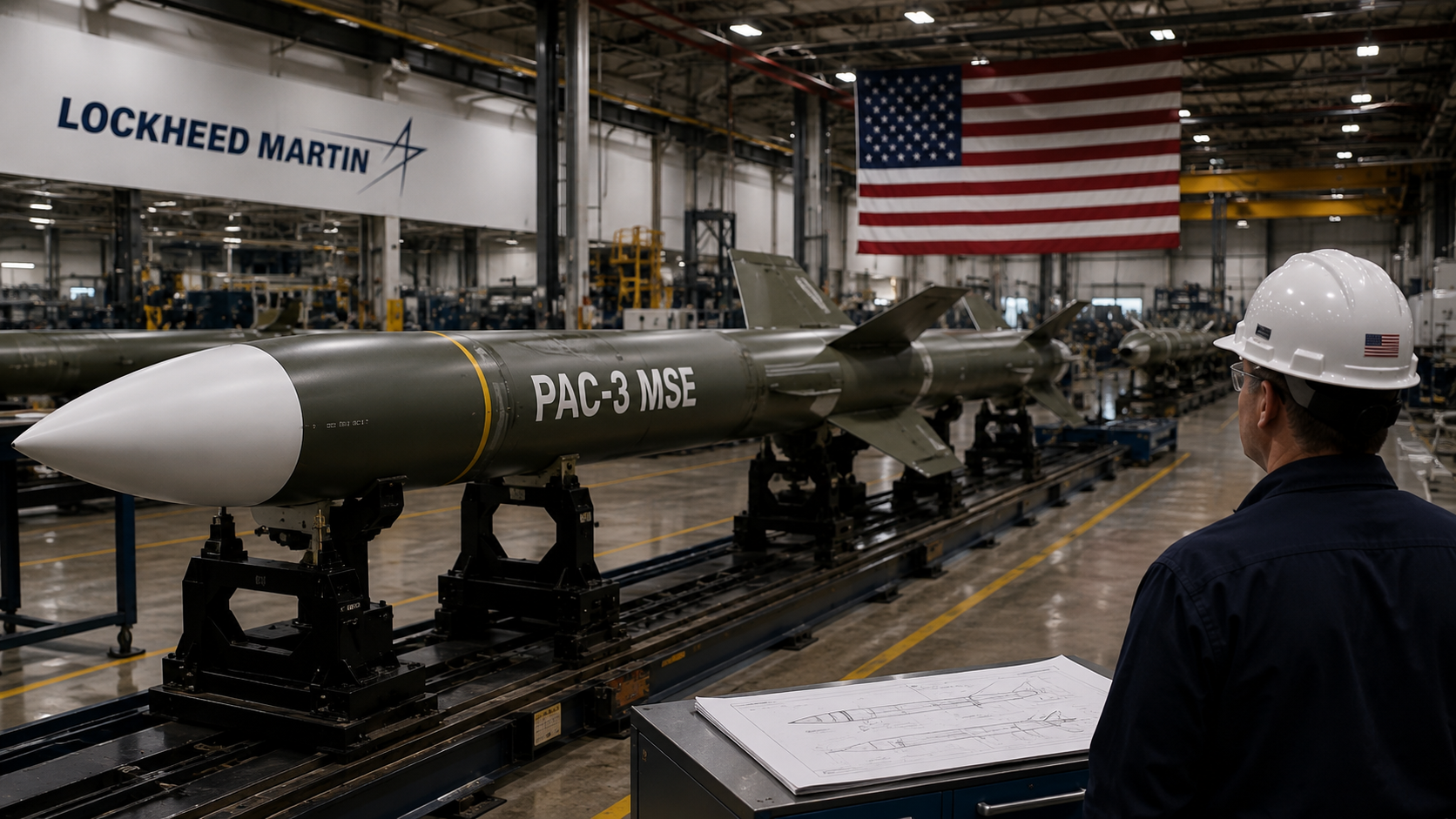
Patriot missile production will triple under a $59 billion Pentagon deal with Lockheed Martin, rebuilding stocks after the Iran war.
The award gives Lockheed a long runway to expand output of the Patriot Advanced Capability-3 Missile Segment Enhancement, the most advanced interceptor in the Patriot family. The Pentagon is moving from emergency replacement logic to a seven-year production plan, a shift that matters because high-end air defense missiles are expensive, slow to replace and central to U.S. deterrence planning.
The April award expands
The Pentagon had already awarded Lockheed $4.7 billion in April for PAC-3 MSE production. The new $53.86 billion modification rolls that order into a broader seven-year contract, bringing the total value to roughly $59 billion.
The production target is the key number. Lockheed is expected to move from about 600 Patriot interceptors per year to roughly 2,000 annually by 2030, more than tripling output in a category where capacity, not design, has become the binding constraint.
Each PAC-3 MSE interceptor is priced at about $4 million, according to the contract details. That cost explains why inventory math now sits near the center of U.S. defense planning: every salvo absorbed in a conflict converts quickly into multibillion-dollar replacement demand.
Camden hiring becomes the bottleneck
Lockheed said it plans to add 650 workers for the Patriot effort. That would take its Patriot-focused workforce at the Camden, Arkansas, production site to 1,850 employees.
The hiring plan is not a side note. Missile production depends on skilled labor, qualified suppliers, test capacity and predictable funding, so headcount growth is one of the few visible measures of whether the industrial ramp can match the Pentagon’s timetable.
The PAC-3 MSE has become especially important because it is designed to intercept advanced threats, including ballistic missiles. The Iran war sharpened demand after Iran answered U.S. and Israeli attacks with thousands of missile and drone strikes across the Middle East.
THAAD adds a second ramp
The Patriot contract is Lockheed’s second major multi-year missile award this year. The Pentagon earlier selected the company for a Terminal High Altitude Area Defense interceptor contract that could reach $35 billion and is aimed at quadrupling THAAD output across seven years.
Together, the Patriot and THAAD awards show how President Trump is using large, multi-year contracts to mobilize the defense industrial base. The White House priority is direct: replace thousands of missiles and interceptors consumed during the Iran war while raising future production ceilings.
For Lockheed, the contract deepens reliance on a small set of missile franchises that carry strategic importance and unusually high revenue visibility. It also raises execution risk, because falling short on labor, components or testing would make the headline contract value less meaningful than the yearly delivery rate.
The wider defense sector gets a clear signal from the deal. Suppliers tied to propulsion, seekers, guidance electronics and canisters can plan around larger volumes, but the same demand surge may expose chokepoints in parts of the missile supply chain that were built for lower peacetime throughput.
The macro effect is narrower than a typical fiscal stimulus story but important for geopolitics. If Lockheed reaches the 2,000-per-year target by 2030, the U.S. will have more room to support allies, replenish domestic inventories and sustain missile defense commitments without drawing down stocks as quickly.
If the ramp misses schedule, the pressure moves in the opposite direction. The U.S. would face tighter choices between homeland readiness, regional deployments and partner support, while Lockheed would face tougher scrutiny over whether multi-year funding is translating into physical missiles.
The next measurable markers are hiring progress in Camden, annual PAC-3 MSE delivery rates and whether the THAAD expansion runs on a similar schedule. For the industry, the test is no longer whether demand exists; it is whether the production system can convert funding into interceptors at wartime scale.