Red Sea shipping faces new threat after Houthi port warning
Red Sea shipping risk rose after a Houthi call on Saudi ports, prompting tanker reroutes and a higher EU naval threat level.
Atlas Newsdesk ·
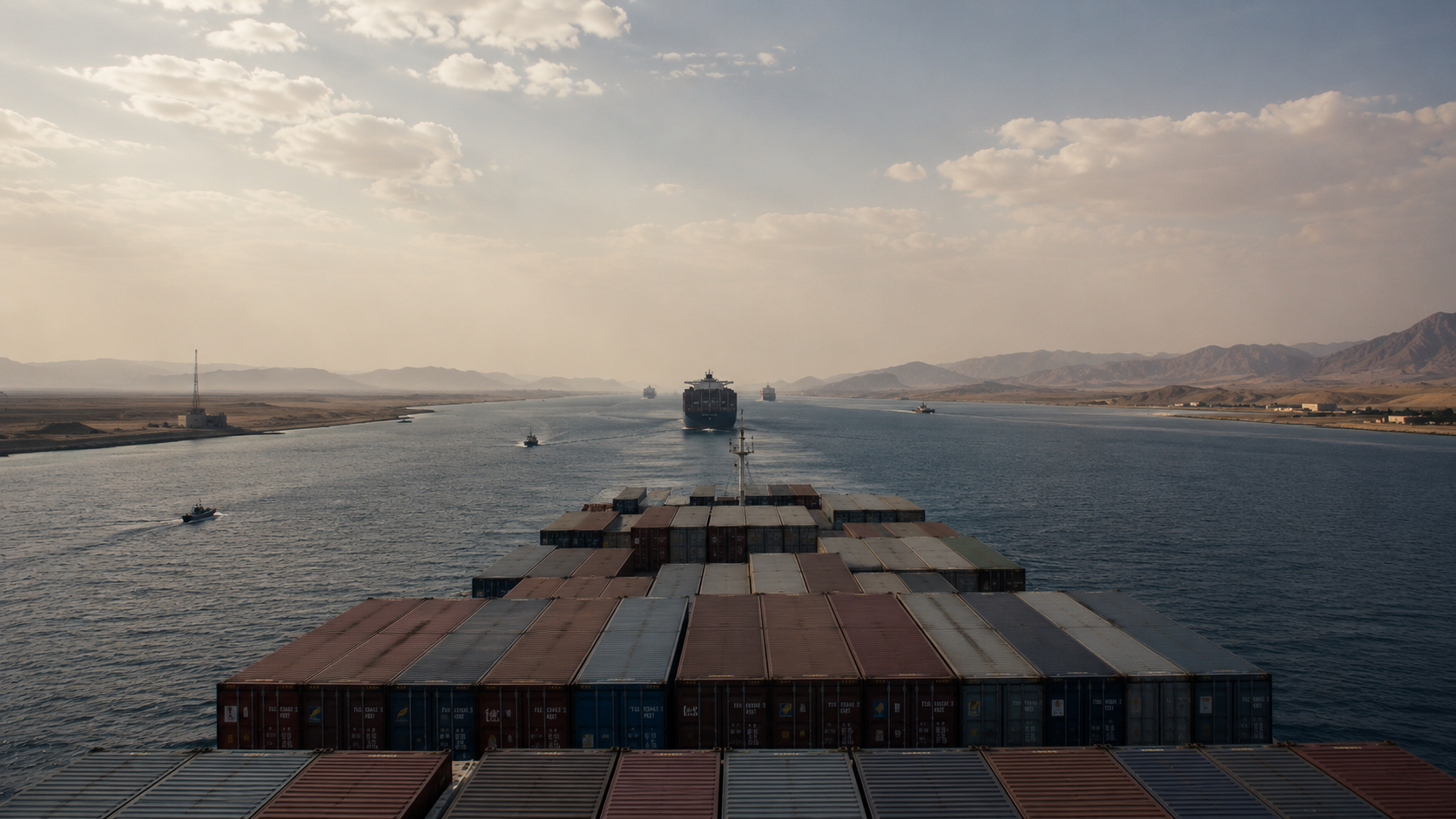
Red Sea shipping risk climbed after a Houthi warning tied to Saudi ports, prompting reroutes and a higher EU naval alert.
Tracking data showed two Asia-bound vessels in the Red Sea turning north toward the Suez Canal instead of continuing toward the Bab el-Mandeb strait. Other ships appeared to pause, a sign that operators were reassessing voyages through one of the region’s most exposed maritime corridors.
Saudi-linked voyages change course
The trigger was a call by Iran-backed Houthi rebels against servicing Saudi ports, expanding the perceived risk beyond vessels tied to Israel or the U.S. The Joint Maritime Information Center, a global naval security monitoring body, said the group was ready to attack shipping from positions near Bab el-Mandeb at the southern entrance to the Red Sea.
The EU naval operation EUNAVFOR ASPIDES raised its threat assessment for vessels transiting the area to medium from low, according to an advisory cited in the source material. The directive said it "recommends that merchant vessels linked to Israeli, U.S. or Saudi interests avoid transiting the Red Sea and Gulf of Aden until the threat level decreases."
Gas King turns north
One of the ships changing course was Gas King, a liquefied petroleum gas tanker that had taken on cargo at Yanbu, a Saudi port on the Red Sea. The very large gas carrier had initially sailed south, then reversed direction toward the Suez Canal and appeared to be bound for Japan, tracking data showed.
A second vessel, the Greek-owned Suezmax Amazon, had also left Yanbu before altering its destination to the Suez Canal. Shipping fixtures showed the tanker was carrying more than 1 million barrels of crude and was expected to deliver the cargo to India.
The two cases matter because they involve energy cargoes that normally depend on predictable routing, financing, insurance and delivery schedules. Even a temporary diversion can raise voyage costs, extend transit times and complicate refinery planning for buyers in Asia.
Bab el-Mandeb risk spreads
The Red Sea links the Suez Canal to the Arabian Sea through Bab el-Mandeb, giving it strategic weight far beyond regional trade. For Saudi exports loaded at Yanbu, the route can serve as an outlet for flows shifted away from the Persian Gulf when security risks rise there.
The latest disruption comes as the U.S. and Iran have traded strikes for more than a week, according to the source material. That wider confrontation has sharpened attention on energy transport routes, especially those connecting Middle Eastern producers with Asian consumers.
Shipowners, charterers, insurers, Saudi exporters and Asian refiners are the immediate parties exposed. If more vessels wait outside risk zones or take longer routes, freight costs and insurance premiums could rise before any physical shortage appears.
The EU alert does not close the Red Sea, but it changes the operating calculation for vessels with Israeli, U.S. or Saudi links. A medium-risk designation gives ship managers a formal basis to delay, reroute or demand additional protection, especially when cargo value is high.
Three routes for the risk
If the Houthi warning remains a threat without confirmed attacks on the affected ships, the macro effect may be limited to higher risk premiums in freight and energy markets. Gas King, Amazon and similar voyages would face delays rather than damage, while the wider tanker sector would price in caution.
If attacks follow and target Saudi-linked traffic, the effect would be broader. Global energy markets could face higher delivered costs, the two highlighted voyages would become markers for a wider rerouting pattern, and tanker operators could shift more capacity away from Bab el-Mandeb.
If the EU threat level falls and ships resume normal passage, the immediate pressure on Yanbu-linked exports would ease. The open questions are whether the Houthi call becomes operational, how long the EU keeps the medium alert in place, and whether insurers treat Saudi-linked traffic as a separate risk category.