Generic drugs face Trump tariff threat and supply strain
Trump threatened 100% tariffs on generic drugs, putting Indian suppliers and high-volume U.S. prescriptions under pressure.
Atlas Newsdesk ·
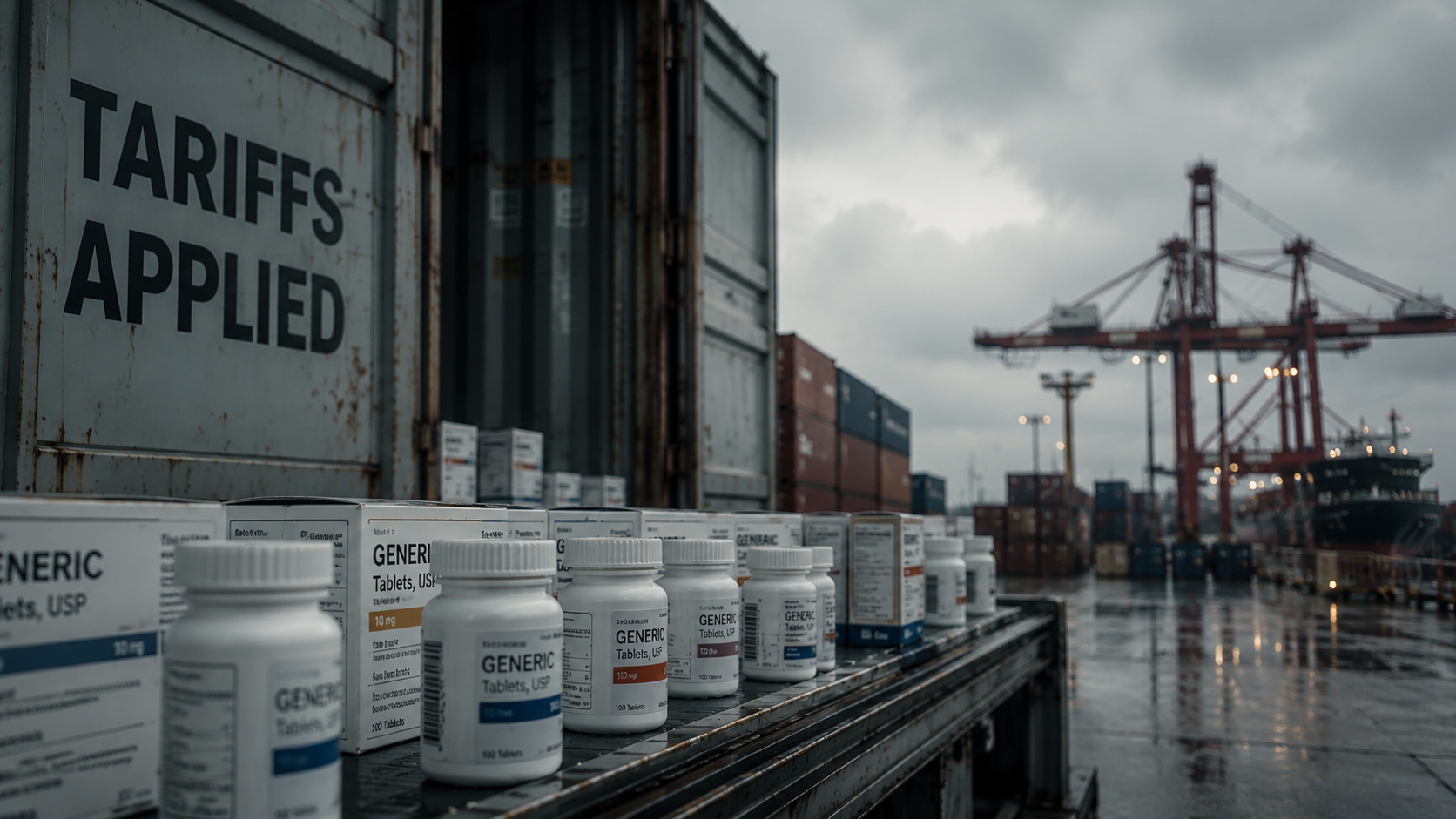
Generic drugs are in Trump's tariff line of fire. The threat would hit Indian suppliers, U.S. prescriptions and low-margin manufacturers if duties take effect.
President Donald Trump threatened tariffs of 100% on generic drugs, a category that supplies much of the routine medicine used in the United States. The same threat gave drugmakers two years to move production to the U.S. before duties would be imposed.
A two-year tariff clock
The timing matters because generic medicines are built around scale, thin pricing and cross-border supply chains. A 100% duty would not land like a modest customs charge; it would double the import cost before distributors, pharmacies and insurers negotiate who absorbs it.
Generic competition usually begins after the patent protection on a new medicine expires. Once rivals can copy the active ingredient, prices tend to fall and volumes often rise, making generics central to everyday treatment rather than a small corner of the drug market.
Indian suppliers dominate volumes
The exposure is clearest in two large prescription categories. Two Indian generics companies make two-thirds of U.S. birth-control pill prescriptions, while 99% of the country's approximately 21 million annual statin prescriptions for cholesterol are generic.
India is also the largest national source in the figures provided, accounting for about half of all generic drugs. That makes the tariff threat less a narrow trade warning than a direct challenge to a medicine supply chain that relies heavily on Indian production.
The companies most exposed are not identified by name in the source material, which limits company-specific analysis. Still, the business model described is clear: generic manufacturers operate on low margins and would have limited room to absorb higher import costs without pressure on prices, volumes or contracts.
New Delhi has a trade cushion
The threat may be softened by the diplomatic channel already in place. A February trade pact said New Delhi would "receive negotiated outcomes" on pharmaceuticals, language that could reduce the reach of any final tariff decision.
That clause leaves a major uncertainty: whether generic drugs would face the full rate, a reduced rate or a negotiated exemption. The source material does not cite a final tariff order, implementation text or product list, so the policy remains a threat rather than an enforceable schedule in the information available.
If the White House applies the full 100% duty after two years, the global macro effect would come through higher medicine import costs and pressure on health spending. For Indian generic manufacturers, the mechanism would be margin compression unless they raise prices, shift production or give up contracts; for the wider sector, distributors would have a stronger incentive to diversify suppliers.
If pharmaceutical negotiations dilute the tariffs, the immediate inflationary effect on U.S. medicine costs would be smaller. Indian suppliers would preserve more of their U.S. market access, while the industry would still price in a higher political risk premium for offshore generic production.
A third path is partial localization, with companies moving selected products to U.S. facilities while leaving lower-value lines abroad. That would raise capital spending and could improve resilience for some medicines, but it would not quickly replace the scale that currently comes from India.
The next signals are practical rather than rhetorical: a formal tariff notice, any exemption language for pharmaceuticals and corporate decisions on U.S. manufacturing. Until those appear, the threat mainly tests whether a low-cost drug system can be reshaped without raising the cost of medicines millions of Americans use every year.