

Oxford University Repatriates Ancestral Remains to Naga Community
Oxford University has repatriated 39 sets of ancestral remains to the Naga people, marking a significant development in the ongoing global movement to return…
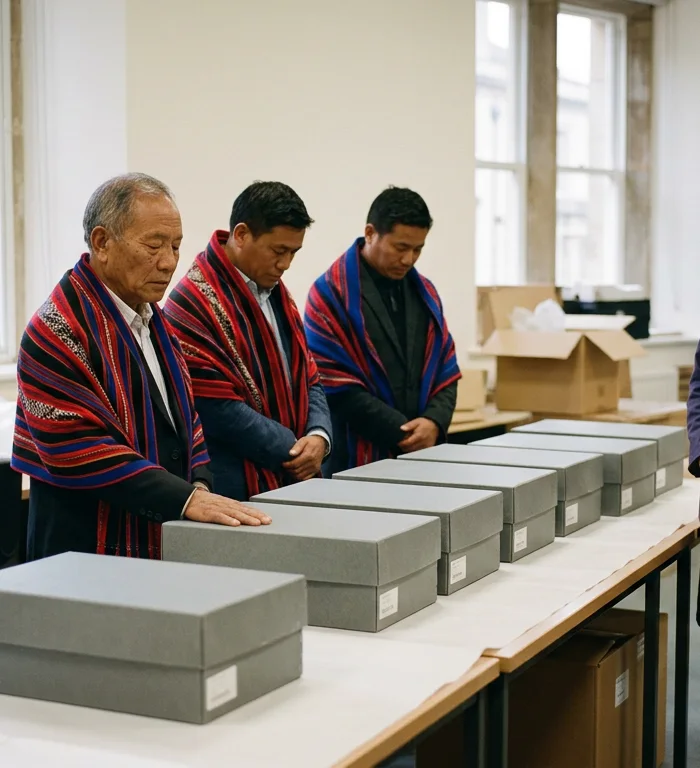
The Pitt Rivers Museum at Oxford University has formally repatriated 39 sets of ancestral remains to the Naga people of India. The remains, which consist primarily of human skulls, were acquired during the British colonial administration of India and Myanmar between 1910 and 1940. The transfer concludes a multi-year process initiated by the Naga community to recover items taken during the colonial era.
These remains were originally collected by colonial administrators and anthropologists John Henry Hutton and James Philip Mills. The museum maintains one of the world's largest collections of Naga artifacts, which includes 219 items categorized as human remains. While the current repatriation addresses the 39 ancestral sets, the broader collection still contains 178 objects that incorporate human hair or biological material.
This repatriation reflects a growing international trend regarding the governance of colonial-era museum holdings. Institutions globally are increasingly facing pressure to address the provenance of human remains and cultural artifacts acquired under colonial rule. The return of these items serves as a precedent for the remaining 178 biological artifacts currently held within the museum's inventory.
For policymakers and institutional stakeholders, this event highlights the evolving standards for cultural heritage management and the potential for future claims regarding colonial-era acquisitions. The ongoing presence of human-derived objects in museum collections remains a point of potential diplomatic and ethical friction. Future institutional risk assessments should account for the likelihood of further repatriation requests as indigenous groups continue to prioritize the recovery of ancestral remains.
More stories
- Laura Brand curbs prison messages after YouTube dispute
- David Parr House to honor Victorian art-workman with blue plaque
- Al-Fatlawi recasts Iraq on screen with about $2.5m debut
- Strictly expands stage for 8 couples in Blackpool return
- Anoop Lokkur seeks backers for $1.3m Bengaluru dark comedy
- Jeff Buckley track tops 500,000 TikTok uses this year
- Lina Jouni turns Lebanese war debris into sculptures
- Russell Brand complainant reports threats after 4-count conviction
Latest news
- Trump prepares tariffs on China and other major exporters
- New-car buyers pay record average $50,087 in October
- Banks face ECB reserve debate over liquidity and profits
- Investors see Anthropic debut gains fade below $83 a share
- Iraq orders federal control over Kurdish-area oilfields
- Germans oppose Ukraine aid as poll shows support slipping
- Kim Jong-un receives 10 envoys after constitutional shift
- Ukraine claims Libya strike sinks Russian naval corvette