

Oxford museum displays seized Naga artifacts for first time
Oxford’s Pitt Rivers Museum is exhibiting 27 items seized from Naga freedom fighter Gaidinliu by British colonial forces in the 1930s.
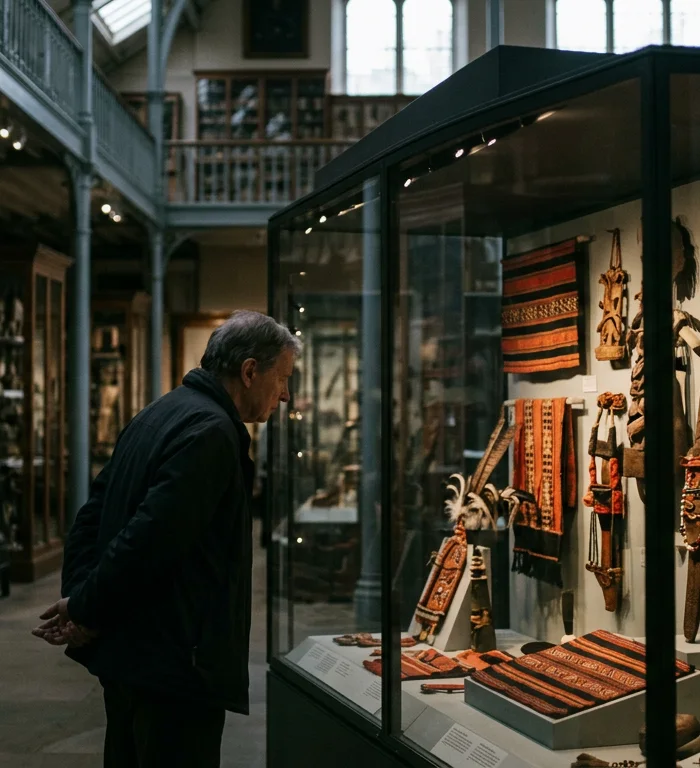
The Pitt Rivers Museum at the University of Oxford has unveiled 27 items belonging to Naga freedom fighter Gaidinliu, marking the first time the artifacts have been exhibited publicly. The collection includes prophetic notebooks, ritual objects, and clothing seized by British colonial forces in India during the 1930s.
Gaidinliu, who led an uprising against colonial rule starting in 1932 at age 17, remains a central figure in the movement for Indian independence. The exhibition, titled The Afterlives of Captured Objects, examines the colonial extraction of Indigenous items, many of which were originally catalogued using discriminatory language.
Clare Harris, a professor of visual anthropology and curator of the show, said colonial anthropologist JP Mills derided Gaidinliu’s notebooks as meaningless scribbling. Historical records suggest these writings were central to the Heraka religious and political movement she led, and their seizure was likely part of a broader British effort to suppress Naga resistance.
Among the items on display are ritual objects, including a stick adorned with a monkey skull and wooden clubs used for casting omens. Two textiles in the collection were forcibly removed from sacred clay figures in a Heraka temple in the village of Kambiron in 1931, an event documented by a photograph of a British soldier destroying the site.
The exhibition follows a four-year digitization project led by researchers from the Universities of Oxford and Edinburgh. The initiative has allowed Naga craftspeople in Assam, Nagaland, and Manipur to revitalize traditional weaving techniques using digital copies of the collection. Arkotong Longkumer, a professor of anthropology at the University of Edinburgh, said efforts are underway to translate the notebooks to help reconstruct an Indigenous language system for the Naga people.
Alila Chang, a grandniece of Gaidinliu, said the family takes pride in the exhibition. She emphasized that the objects are deeply connected to the history and sacrifices of the Naga people, noting that the exhibition allows her legacy to be shared with the world.
Source: Pitt Rivers Museum exhibition, Nov. 26, 2026
More stories
- Laura Brand curbs prison messages after YouTube dispute
- David Parr House to honor Victorian art-workman with blue plaque
- Al-Fatlawi recasts Iraq on screen with about $2.5m debut
- Strictly expands stage for 8 couples in Blackpool return
- Anoop Lokkur seeks backers for $1.3m Bengaluru dark comedy
- Jeff Buckley track tops 500,000 TikTok uses this year
- Nobel prize in economics awarded for stability research
- Nobel Peace Prize choice draws Trump's criticism of Norway
Latest news
- Duterte faces ICC trial over 85 alleged murders, 2 attempts
- Norse Atlantic suspends flights in urgent rescue funding bid
- Bardella denies antisemitism claims over teenage messages
- Retailers rethink Black Friday as discount fatigue grows
- Japan data centers face lawsuits over residential sites
- S&P puts Nvidia credit rating on watch over board concerns
- Musk pledges two SpaceX shares per child in new US giveaway
- Washington targets China in new tariff push on trade ties