

Nobel prize in economics awarded for stability research
The Royal Swedish Academy of Sciences has honored Robert Hall and Michael Woodford for their foundational work on macroeconomic stability and policy design.
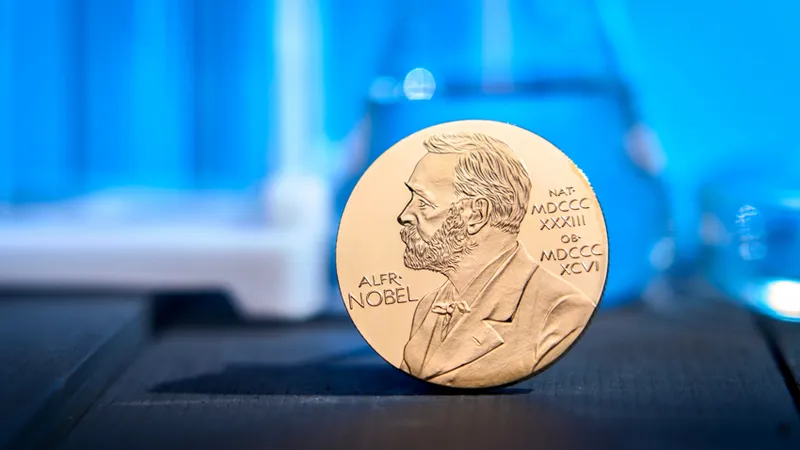
Advancing macroeconomic theory
The Royal Swedish Academy of Sciences recently announced that the 2026 Nobel Prize in Economic Sciences has been awarded to Robert Hall and Michael Woodford. Both scholars, currently based in the United States, were recognized for their extensive research into the microeconomic foundations of macroeconomic stability.
According to official statements, the duo’s work provides a critical theoretical framework that helps governments and central banks navigate economic fluctuations. Their models are designed to bridge the gap between individual economic behavior and broader market trends, offering a roadmap for effective policy intervention.
Policy design and economic shocks
The committee highlighted how these models assist in the creation of fiscal and monetary strategies. By understanding the underlying mechanics of the economy, policymakers can better mitigate the impact of sudden disruptions, such as energy crises or shifts in consumer spending patterns.
John Hassler, chair of the prize committee, noted that these contributions have become essential tools for institutions worldwide. He explained that the research provides a stable foundation for managing volatility, allowing authorities to act with greater precision when faced with unexpected financial shocks.
A key aspect of the awarded research is the emphasis on the timing of interventions. The models suggest that the effectiveness of a policy is heavily dependent on when it is implemented, providing a theoretical basis for minimizing the lag between an economic event and the subsequent government response.
Historical context and evolution
While often associated with the original Nobel categories, the economics prize was established by the Swedish central bank in 1969, long after Alfred Nobel’s initial 1895 bequest. It remains a distinct institution from the five original prizes created by Nobel’s will.
This year’s focus on stability contrasts with previous awards, such as last year’s recognition of research into technological innovation and economic growth. While analysts often speculate on potential winners based on citation metrics, the committee’s final decision highlights the ongoing relevance of stability theory in modern governance.
The practical application of these models remains subject to the speed and accuracy of implementation by state actors. While the theory offers a robust guide for decision-making, the actual outcome of such policies depends on the ability of institutions to translate these complex frameworks into timely, real-world actions.
More stories
- Nana Patekar Autopsy Confirms Natural Causes, Rules Out Foul Play
- Beenie Man, Winky D Surprise Kadoma Festival Crowd
- Brad Pitt, Ines de Ramon Appear Together at Film Festival
- Apple, Paramount+ Launch Mob Dramas on Power's Cost
- Nollywood Star Urges Investment in Ghanaian Actor LilWin
- Marvels' Box Office Flop Still Pivotal for MCU's Future
- Jason Sanjay's 'Sigma' Film Receives U/A Certificate for October 2 Release
- Parkway Drive Documentary 'Home' Sets Australian Theatrical Release
Latest news
- FG Communities buys 49-site North Carolina housing asset
- Apple starts India festive sale with Rs 17,900 AirPods 5
- Ukraine accuses Russia of violating energy ceasefire
- DFDV grows SOL holdings 12% since August 12 through purchases
- Iran hits Kurdish opposition camp in northern Iraq
- Riyadh airport strike kills one as Houthis claim attack
- EU adds 1,600 Russia sanctions over war, Kallas says
- Bang & Olufsen buys 51,283 shares in buyback