

Oxfam maps toxic contamination across 99% of Gaza Strip
Satellite analysis conducted with a research observatory found munitions, sewage and building dust have degraded 78% of the enclave’s land area.
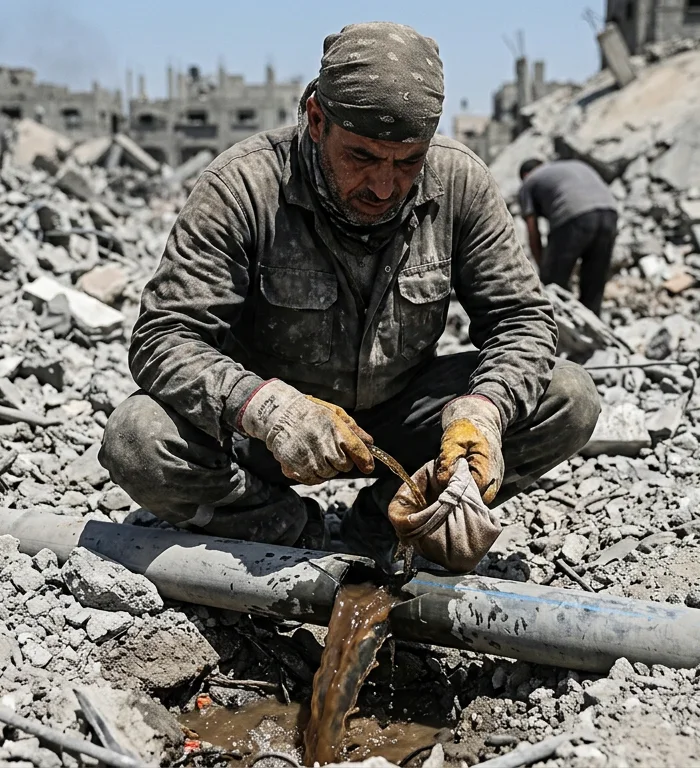
Oxfam said in a report published Monday that potential toxic contamination now covers more than 99% of the Gaza Strip following extensive ground warfare and aerial bombardment.
The findings complicate international reconstruction discussions as untreated sewage and munition residues spread across 283 square kilometers, while fecal bacteria in local wells rose to nearly 10 times 2021 levels.
Working with the Conflict and Environment Observatory, the humanitarian group mapped pollution risks using satellite imagery, remote sensing and conflict databases. The study concluded that Israeli ground operations affected roughly 78% of Gaza's 365 square kilometers of land, leaving buried munitions to corrode and leach chemicals into groundwater.
"Residues of explosives, heavy metals, asbestos fibers, silica dust from broken concrete, persistent organic pollutants, and pathogens are among the many contaminants threatening Gazans’ health," the study said.
The research documented severe degradation across civilian networks, noting that about 85% of water infrastructure is damaged or destroyed. With all wastewater treatment plants disabled, raw effluent discharges into streambeds and the Mediterranean Sea, while clay-heavy soils around Beit Hanoun and Wadi Gaza retain toxins that threaten future agriculture.
Israel restricts dual-use items that possess both civilian and military utility, saying Hamas has previously repurposed construction materials and equipment to fortify tunnels and assemble rockets. Israeli officials have said formal rehabilitation of the territory requires Hamas to disarm.
Oxfam recommended a five-stage remediation framework and called on Israel to ease import curbs on testing gear and water-treatment supplies. The group also called on the United Nations Environment Program to run an independent field assessment across the enclave.
Source: Report, Oxfam and Conflict and Environment Observatory, Nov. 24, 2026
More stories
- Germans oppose Ukraine aid as poll shows support slipping
- Kim Jong-un receives 10 envoys after constitutional shift
- Ukraine claims Libya strike sinks Russian naval corvette
- COP31 climate talks collapse over fossil fuels and funds
- Russian military faces 1,087 recorded suicides in Ukraine war
- US faces China, Russia in Africa minerals contest
- Israel coalition talks loom as rivals fall short of power
- Serbia, Georgia and Turkey face EU accession limits over alignment
Latest news
- Trump prepares tariffs on China and other major exporters
- New-car buyers pay record average $50,087 in October
- Banks face ECB reserve debate over liquidity and profits
- Investors see Anthropic debut gains fade below $83 a share
- Iraq orders federal control over Kurdish-area oilfields
- Nvidia shares retreat as AI rally cools before PCE data
- Macy’s parade faces balloon limits as storm winds approach