NYC sewer arrests put UN security focus on Park Avenue
Police charged two Queens men after a Park Avenue manhole sighting near Benjamin Netanyahu's hotel during UN General Assembly security.
Lauren Collins ·
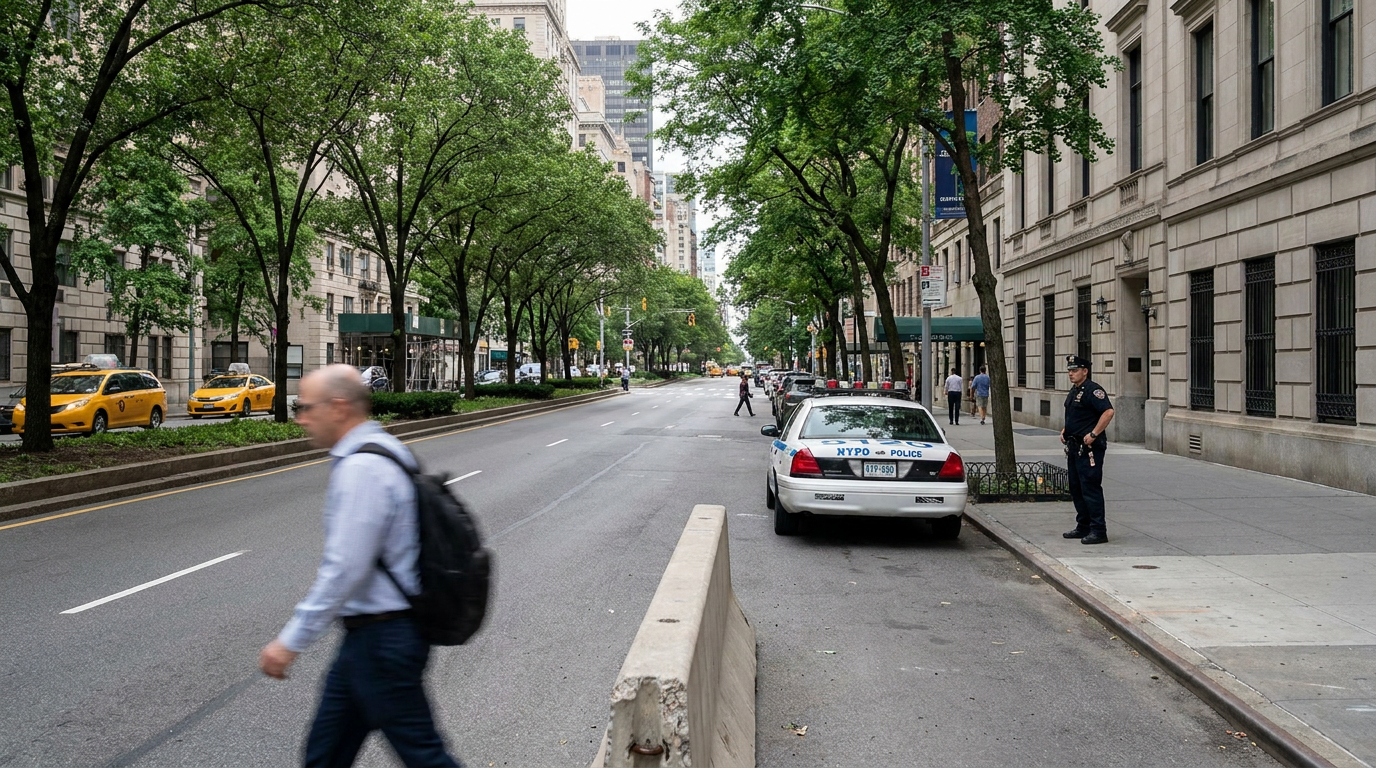
NYC sewer arrests followed a Park Avenue manhole sighting near Benjamin Netanyahu's hotel, with two Queens men facing charges.
The New York Police Department said on September 25 that it arrested two 25-year-old men from Queens in connection with the incident and charged them with trespassing and conspiracy. Police said they found no terrorism link, a key point during the United Nations General Assembly, when New York was hosting foreign leaders and adding security around sensitive locations.
East 61st Street manhole sighting
The men were seen leaving the sewer system near East 61st Street, close to the Park Avenue hotel where Netanyahu was staying, police said. They jumped into waiting vehicles and drove away; police later increased security sweeps in the area.
The timing made an otherwise local trespassing case harder to separate from the city's protective-security posture. Streets, hotels and motorcade routes around UN events already require close coordination, and a sewer access point near a leader's hotel narrows the margin for error.
Police cite valuables, not terrorism
Police described the activity as part of a pattern they had seen in recent months rather than a threat to the visiting delegation. Officers said the men appeared to be searching for valuables in the sewer system, and one police account referred to “a bunch of these” sightings over the past few months.
The charges leave the central legal issue narrow: whether authorities can show unlawful entry and coordination, rather than intent to harm public officials. For city security planners, the more practical issue is access control in a system built for utility, drainage and transit rather than diplomatic protection.
Videos turn tunnels into theater
New York's underground network of subway tunnels, sewers and utility passages has long drawn urban explorers who document hidden routes online. The same spaces have attracted people looking for lost or discarded objects, while short videos have turned obscure manhole sightings into small public mysteries.
This year, surveillance footage in Queens showed three men in waders dropping into a manhole, and another Brooklyn episode involved more than a dozen men doing the same. Last month, three men wearing black waders and headlamps emerged before dawn near Penn Station, adding to online interest in the city's subterranean routes.
The online reaction is part of the enforcement problem. A clip of someone climbing from a manhole can circulate without the location, timing or purpose that would separate a scavenger hunt from a security breach.
UN week raises stakes
The Park Avenue case sits at the intersection of nuisance policing and protective security. Netanyahu's presence during the General Assembly meant nearby streets, hotels and service corridors were already part of a layered security environment.
For city officials, the arrests allowed police to separate a visible security scare from terrorism while still tightening sweeps around a protected visitor. For the two men, the terrorism finding matters because the allegations disclosed by police remain trespassing and conspiracy, not national-security offenses.
If police continue treating similar sewer entries as property or safety cases, the immediate effect is more enforcement around manholes near hotels, stations and UN routes. If another sighting occurs near a protected site, the response may shift first to threat containment and only later to the lower-level explanation police gave this week.
For New York's wider infrastructure agencies, the recurring incidents point to a practical exposure: access points built into ordinary streets can become security variables during high-profile events. The open question is whether the city can deter copycat entries without turning every viral sewer video into a citywide alert.