

Nvidia spy claim puts 8 Taiwan entries under scrutiny
The allegation links personal-compromise claims to the chip supply chain at the center of US-China technology competition.
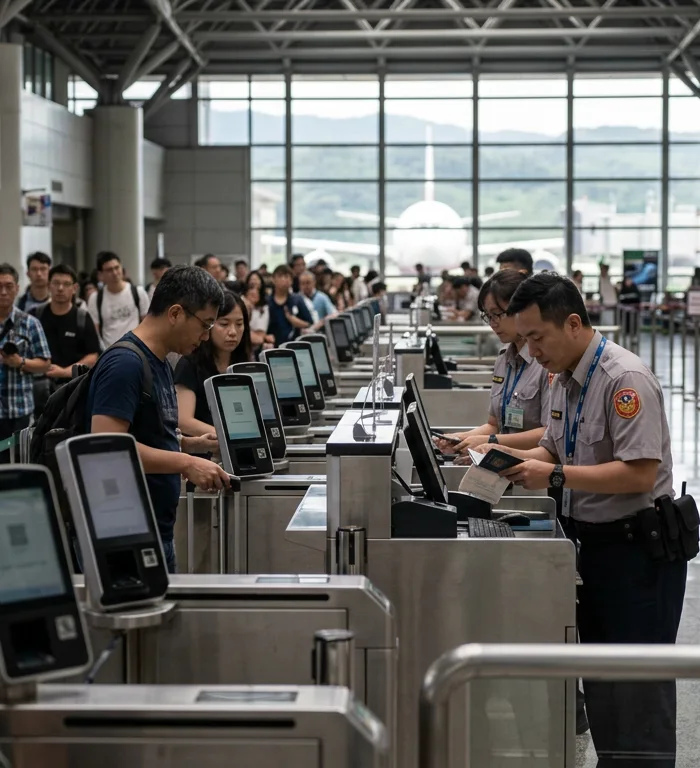
A Taiwanese government minister said Thursday that a Chinese woman accused of spying for Beijing during an affair with Nvidia founder Jensen Huang entered Taiwan eight times in 2024 and 2025.
The allegation matters in Washington because Taiwan dominates advanced semiconductor production and sits at the center of US-China competition over chips, export controls and artificial intelligence hardware.
Jensen Huang
The woman has been accused of spying for Beijing, according to the report. The account did not include a named US law-enforcement action, a charge sheet or a response from Huang or Nvidia.
For US officials, the case would land at the intersection of three policy tracks: counterintelligence, semiconductor security and China export-control enforcement. The FBI handles foreign-intelligence threats inside the United States, while the Commerce Department polices many technology restrictions involving advanced chips.
The Taiwan entries add a travel and access dimension to the allegation. If investigators treated the visits as part of an intelligence operation, the central issue would be whether the woman had contact with people or information tied to Nvidia, Taiwan’s chip ecosystem or US-controlled technology.
Congress has already treated China’s access to advanced semiconductors as a national-security issue. A case involving the personal life of a leading AI-chip executive would give lawmakers a narrower question: whether existing counterintelligence briefings and travel-risk practices cover executives whose companies sit inside strategic supply chains.
The limits are important. The public account, as reported, does not establish what the woman did during the eight Taiwan visits, whether she obtained information, or whether any US agency has opened a formal investigation.
The next observable test is whether congressional committees or US agencies move beyond the allegation. If they request briefings from the FBI, Commerce Department or intelligence community, the matter becomes a Washington counterintelligence issue; if they do not, it is more likely to remain an unproven personal and political allegation.
More stories
- Germans oppose Ukraine aid as poll shows support slipping
- Kim Jong-un receives 10 envoys after constitutional shift
- Ukraine claims Libya strike sinks Russian naval corvette
- COP31 climate talks collapse over fossil fuels and funds
- Russian military faces 1,087 recorded suicides in Ukraine war
- US faces China, Russia in Africa minerals contest
- Barcelona clashes follow housing march as Spain strikes
- Germans’ democracy satisfaction falls to one-third
- Lula wins fourth term in Brazil with 51.8% vote
- Singapore studies geothermal power after 60-times resource estimate
Latest news
- Trump prepares tariffs on China and other major exporters
- New-car buyers pay record average $50,087 in October
- Banks face ECB reserve debate over liquidity and profits
- Investors see Anthropic debut gains fade below $83 a share
- Iraq orders federal control over Kurdish-area oilfields
- Nvidia shares retreat as AI rally cools before PCE data
- Macy’s parade faces balloon limits as storm winds approach