

Emulate Secures $700m Funding Round Led by Nvidia and Unity
Emulate has raised $700 million from investors including Nvidia and Unity to scale its digital twin and AI simulation technology, reflecting a trend of…
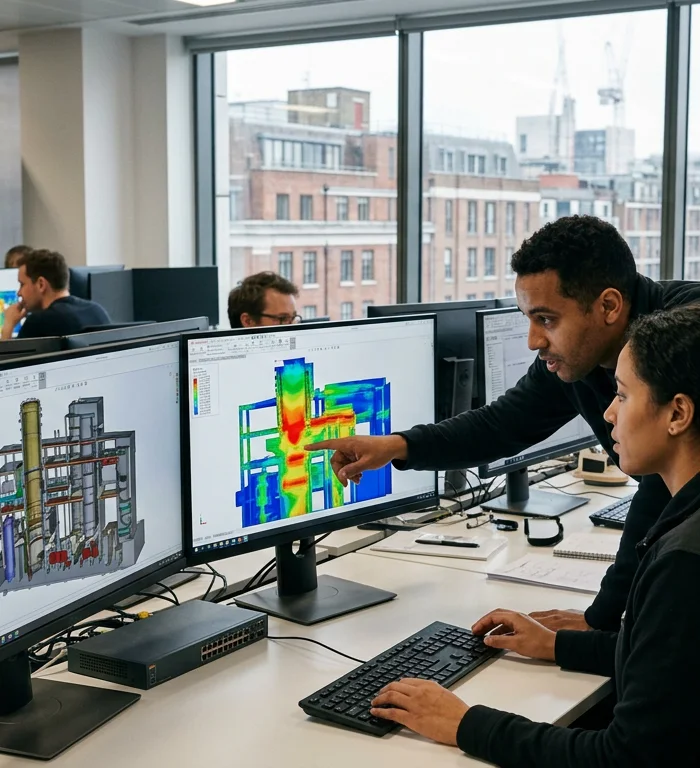
London-based technology firm Emulate has successfully closed a $700 million funding round, with participation from Nvidia’s investment arm, NVentures, and software developer Unity. This capital injection follows a previous valuation of approximately $4.4 billion, underscoring continued investor appetite for high-growth artificial intelligence and digital simulation infrastructure.
The investment highlights a broader trend of strategic capital allocation by major hardware and software incumbents into specialized AI research entities. By integrating with platforms such as Nvidia’s Omniverse, Emulate aims to scale its digital twin technology, which is increasingly utilized for complex industrial and scientific modeling. This development aligns with the current macroeconomic cycle, where institutional liquidity is increasingly concentrated in firms capable of demonstrating tangible applications for generative AI and large-scale simulation.
For policymakers and financial stakeholders, the involvement of Nvidia and Unity signals a deepening consolidation of the AI supply chain. As these firms move to standardize the underlying architecture for industrial digital twins, the barrier to entry for smaller competitors may rise, potentially impacting market competition dynamics. The shift toward “AI-native” simulation tools is expected to accelerate productivity gains in sectors ranging from pharmaceutical research to advanced manufacturing.
Looking ahead, market participants should monitor the integration of these simulation tools into broader enterprise workflows. The ability of Emulate to maintain its valuation trajectory will depend on its capacity to scale its proprietary AI models against established competitors. Furthermore, the strategic alignment between hardware providers and simulation software developers suggests a long-term shift toward vertically integrated AI ecosystems, which may invite increased regulatory scrutiny regarding market dominance and data interoperability standards.
More stories
- The Week in Games: GTA 6 turns attention into cash
- US data centres emit 25.7m tonnes of CO2, Harvard says
- German founders need 3,942 hours to open small business
- Leaked Deutsche Bank files test Sewing's reform narrative
- UAE employers plan 2.8% pay rises for 2027
- Bessent urges Nvidia to seek outside CEO as scrutiny grows
- BCP Investment seeks ICMB merger at 126% premium
- Woolcott avoids jail over AI-assisted Touchstone takeover fraud
- Lapu-Lapu’s 6,019 rice payouts signal the state as pop-up distributor
- Tata Boeing’s 400th Apache fuselage puts India in Boeing’s critical supply line
Latest news
- Social Security raises 2027 benefits 3.6%
- Hull City 2–0 Brighton: When Resilience Beat Reputation
- David Parr House to honor Victorian art-workman with blue plaque
- Iran's attacks hit 25 tankers near Strait of Hormuz
- FCC approves prison cellphone jamming despite 2.5-mile warning
- Russia strikes Ukraine as Odesa faces electricity strain
- Bahrain reports two injuries after Iranian aerial attacks
- Congress tests Black Democrats' growing policy influence