North Korea sailors rescued, Japan weighs their return
Japan recovered three North Korean sailors off Shimane while one remained missing, adding a repatriation dilemma to renewed missile and cyber tensions.
Mei Lin ·
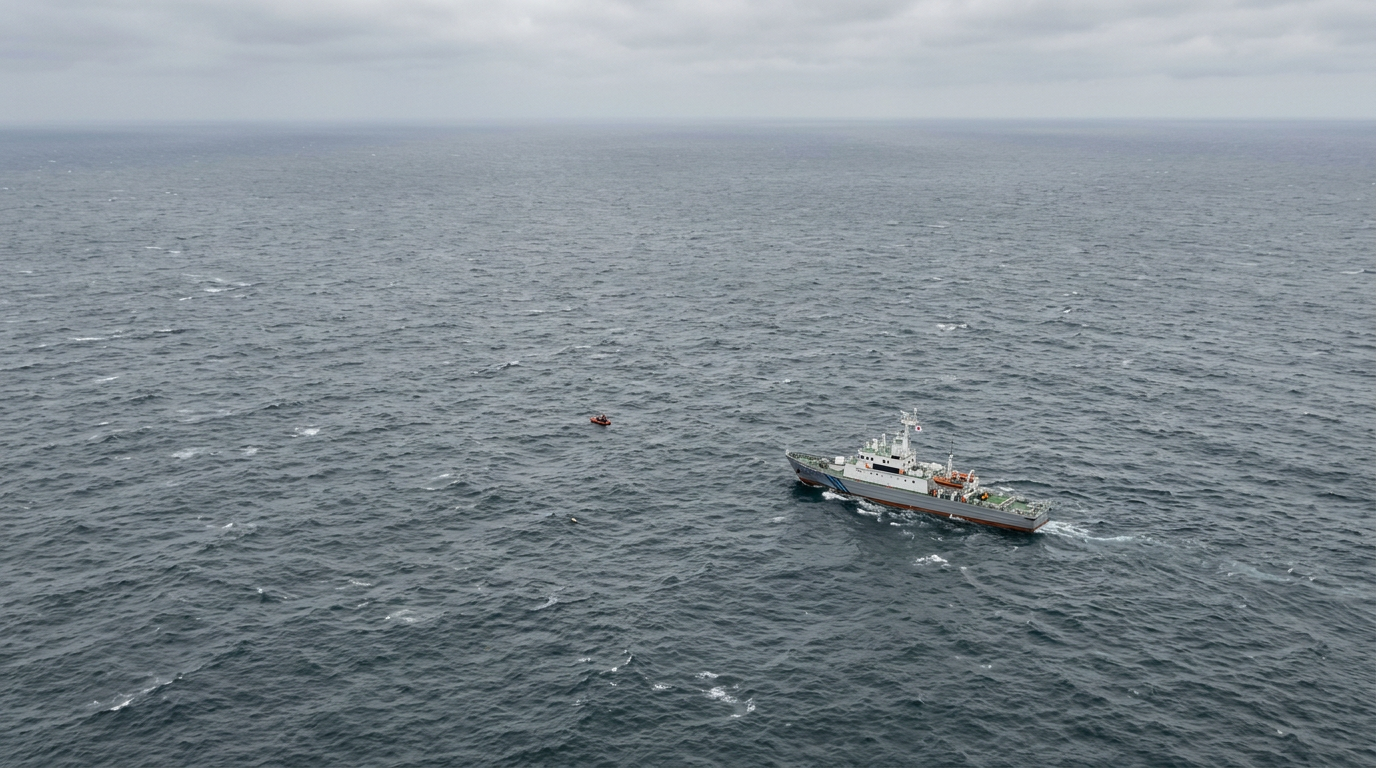
North Korea sailors rescued off Japan face uncertain repatriation after three were found and one remained missing, complicating a frozen diplomatic channel.
The Japan Coast Guard recovered the three sailors off Shimane Prefecture on Thursday, according to the available account. One other person was still missing at sea, leaving Japanese authorities with both a search operation and a diplomatic problem.
Three found off Shimane
Pyongyang made an unusual request for international help in recovering its personnel, the report said. That request put Tokyo in the rare position of deciding how to return North Korean nationals while formal ties with Pyongyang remain stalled.
For Japan, the case sits at the intersection of maritime rescue law, security screening and unresolved diplomacy. Any handover would likely require a channel acceptable to both governments, even as disputes over missiles and abducted Japanese citizens continue to constrain contact.
The human stakes are narrow, but the diplomatic setting is not. A routine rescue becomes more sensitive when the people involved come from a state with limited official communication with Japan and a record of military activity near Japanese waters.
Missiles and cyber pressure
The maritime episode came as North Korea was reported to have fired a second missile from its eastern coast on Sunday evening. That followed an apparent short-range ballistic launch from the same area hours earlier, with the previous ballistic firing reported on Sept. 12.
The sequence matters for Tokyo because rescues and missile alerts draw on different parts of the same state machinery. Coast guard officials must manage humanitarian obligations at sea while defense and security agencies track launches that can affect air and maritime warnings.
Japan’s National Police Agency also said a North Korean hacker group was behind a cyberattack spanning more than 100 countries, including Japan. The agency tied the operation to the theft of about 1.7 billion yen in cryptocurrency, adding a digital-security layer to the pressure from missile tests.
Those claims, if sustained through investigation and legal process, would broaden the field of exposure beyond military agencies. Cryptocurrency platforms, compliance teams and financial investigators would face the practical burden of tracing funds across jurisdictions where enforcement cooperation is uneven.
Tokyo faces narrow routes
The broader political file includes the Shiokaze shortwave radio program for Japanese nationals abducted to North Korea. The program’s reach has come under strain as the number of transmitters dwindles, according to the report.
Another unresolved thread is Shiro Akagi, 78, a member of the group that hijacked a Japan Airlines jet in 1970. His supporters said he is believed to have died in North Korea, a reminder that legacy cases still shape public and political views in Japan.
If the rescued sailors are returned quickly through a limited channel, the macro effect would probably stay contained, with the incident treated as a maritime case rather than a strategic shift. For the Japan Coast Guard, the mechanism would be procedural: complete the rescue, confirm identities and transfer custody through an agreed route. For shipping and fisheries operating in the Sea of Japan, the main effect would be a reminder that distress cases can become diplomatic events.
If the missing person is not recovered or the return process stalls, the same incident could harden public attention on Japan’s limited leverage with Pyongyang. That path would not by itself alter the global economy, but it could add friction to regional coordination at a time when missile activity is already keeping security agencies on alert.
If North Korea continues launches from its eastern coast, the mechanism becomes wider than the rescue. Regional risk perceptions could rise, defense planners in Japan and allied governments would have another data point for surveillance and interception planning, and companies exposed to compliance, cyber risk and maritime routes would have less room to treat North Korea as a remote political issue.
The immediate question is how Japan handles the rescued sailors while the search for the missing person continues. The larger test is whether Pyongyang keeps the case separate from missile activity and the unresolved disputes that have long narrowed diplomatic space.